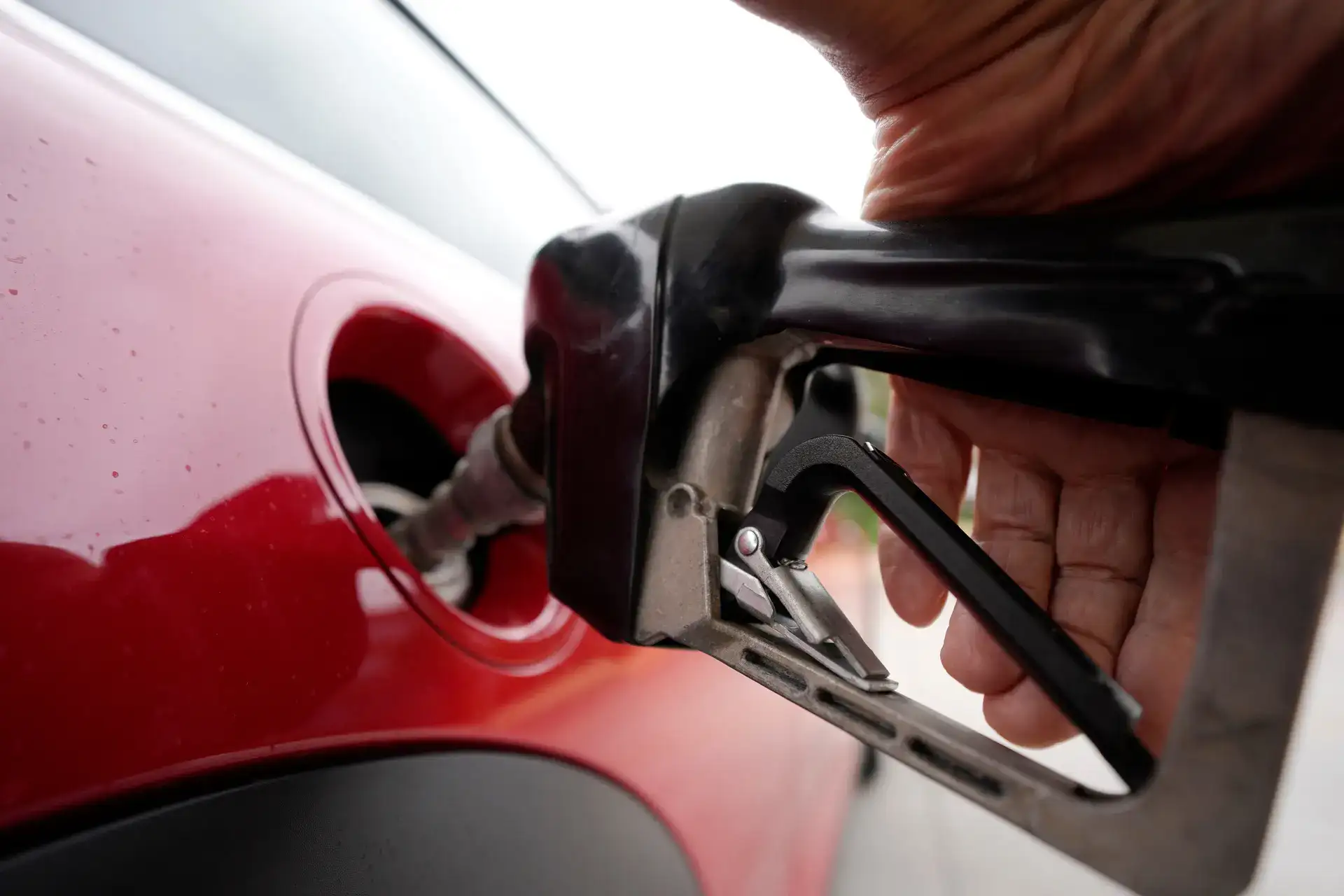
Governments worldwide are trying to shield consumers from soaring energy costs resulting from the U.S.-Israeli war on Iran.
Here's how different countries are responding:
ARGENTINA
Argentina's government partially increased fuel taxes while postponing further increases until June, according to a decree.
AUSTRALIA
Australia is releasing petrol/gasoline and diesel from domestic reserves to ease shortages affecting rural supply chains, mining and agriculture.
Its prime minister has encouraged citizens to use public transport.
BANGLADESH
Bangladesh is seeking billions in external financing to secure fuel and liquefied natural gas imports.
BRAZIL
The Brazilian government announced measures, including subsidies for diesel and liquefied petroleum gas, as well as lower taxes on jet fuel and biodiesel.
Brazil's government is looking at ways to accelerate testing of higher biodiesel blends in diesel.
CHINA
China's top leadership pledged to strengthen the country's energy security while pursuing rapid technological development and greater self-sufficiency.
In mid-March, Beijing tightened restrictions on exports of most fertiliser products to protect its farmers.
EGYPT
Egypt will slow down large state projects that involve high fuel and diesel consumption for at least two months, while fuel allocations for all government vehicles will be cut by 30%.
Egypt has capped the price of unsubsidised bread sold in private bakeries.
ETHIOPIA
Ethiopia has increased fuel subsidies.
EUROPEAN UNION
The European Union will let governments spend more on subsidising companies affected by soaring fuel and fertiliser prices.
The European Union is considering requiring countries to hold stockpiles of jet fuel and potentially redistribute it based on regional needs and shortages.
The European Commission set out plans to cut electricity taxes and coordinate the summer refill of countries' gas storage.
GREECE
Greece will offer subsidies for fuel and fertilisers and ferry ticket discounts worth a total 300 million euros ($346 million) in April and May to shield consumers and farmers, the prime minister said.
Athens has announced 500 million euros ($588 million) in extra aid to households and farmers struggling with the impact of the Iran war after a higher primary budget surplus for 2025 offered headroom for fresh support.
JAPAN
Japan said it will relax rules for the fiscal year that began in April to increase the use of coal-fired power plants. The country has also opened up its oil stockpiles, rolled out gasoline subsidies and is seeking energy supplies beyond the Middle East.
The country plans to increase imports of intermediate chemical products such as plastics, as it faces tighter naphtha supplies due to the conflict.
INDIA
Indian Prime Minister Narendra Modi urged citizens and businesses to conserve fuel and revive work-from-home practices to cut petrol and diesel consumption.
India further raised a windfall tax on exports of diesel and aviation turbine fuel to ensure adequate domestic supply.
The country has barred consumers with piped natural gas from retaining or refilling LPG cylinders and has invoked emergency powers directing refiners to maximise LPG production, widely used for cooking.
INDONESIA
Indonesia announced a slew of measures intended to counter soaring energy prices, including limiting fuel sales and implementing a "work from home" policy for civil servants.
President Prabowo Subianto wants to increase the country's coal production, and the government is considering a windfall tax on exports.
Indonesia will start implementing the B50 biodiesel programme on July 1. B50 — a blend of 50% palm oil-based biodiesel and 50% conventional diesel — is part of a government programme to mitigate Iran war risks.
ITALY
Italy extended a cut in excise duties on fuels, with the extension focusing more on diesel than on petrol.
MALAYSIA
Malaysia's treasury has ordered all federal ministries, departments and agencies to cut their operating budgets for 2026 due to Iran war costs.
Malaysia will raise spending on petrol subsidies to 2 billion ringgit ($510 million) from 700 million ringgit to maintain the fixed price of the fuel.
The government said it is applying measures to shore up fertiliser supply amid a domestic supply crunch.
MAURITIUS
Mauritius said it would introduce energy-saving measures. Restrictions announced include curbs on grid power for non-essential uses such as decorative lighting, swimming pool heating and fountains, the government said.
NAMIBIA
Namibia's government will temporarily reduce fuel levies by 50% for at least three months until the end of June.
THE NETHERLANDS
The Dutch government announced temporary tax breaks to compensate for rising fuel prices and said it would prepare further measures in case the energy crisis worsens.
NIGERIA
Nigeria's Dangote refinery, the largest in Africa, has increased exports of gasoline and the widely used chemical urea to African countries hit by supply disruptions caused by the war.
PHILIPPINES
The energy market regulator said it had suspended the wholesale electricity spot market across its three grids until further notice due to fuel supply risks and price volatility.
It plans to curb power bills by boosting coal-fired power generation and regulating electricity tariffs.
The Philippines is working with Washington to secure waivers so it can obtain oil from U.S.-sanctioned countries and guarantee supplies.
The energy ministry said it was activating a 20 billion peso ($333 million) emergency fund to strengthen fuel security amid oil price volatility.
POLAND
Measures introduced by Poland to keep fuel prices under control due to the war in the Middle East may still be in place after May 15 if the situation requires this, Polish Finance Minister Andrzej Domanski said.
ROMANIA
The government said it will reduce excise tax on diesel by 0.30 lei ($0.0679) per litre.
SERBIA
Serbia will cut excise duties on crude oil by a cumulative 60% and has extended a ban on crude oil and fuel product exports.
SINGAPORE
Singapore will deliver a support package worth almost S$1 billion ($780 million), including cash handouts and fuel vouchers, to offset the economic impact of the conflict.
SLOVENIA
Slovenia temporarily limited fuel purchases to tackle shortages at the pump caused in part by cross-border fuelling and stockpiling.
SOUTH KOREA
South Korea is easing limits on coal-fired power generation capacity and raising nuclear plant utilisation to as high as 80%.
It has begun enforcing a ban on naphtha exports to boost domestic supplies.
SPAIN
Spain's government proposed measures worth 5 billion euros ($5.8 billion) to counter the economic impact of the Middle East conflict on local energy prices.
SRI LANKA
Sri Lanka is relying on $1.73 billion in funding from international agencies and India to help it manage the financial impact of the soaring price of energy imports.
It introduced fuel rationing and declared Wednesdays a public holiday.
SWEDEN
Sweden warned of a potential shortage of jet fuel, with the country's energy minister telling travellers they needed to build some flexibility into their plans where possible.
Sweden's government will cut fuel taxes and hike electricity subsidies in its spring mini-budget.
THAILAND
Thailand's Commerce Ministry tightened crude palm oil exports and controlled bottled palm oil prices.
The government is planning a borrowing guarantee for an oil subsidy fund, along with other support measures, to mitigate the impact of high oil prices.
The Thai Planning Agency said the government will freeze prices of some goods and provide support for farmers.
UK
Britain plans to weaken the link between electricity costs and volatile gas prices, saying it would push older wind and solar generators onto fixed contracts to reduce energy bills.
VIETNAM
Vietnam will switch fully to ethanol-blended gasoline earlier than planned to help curb fossil fuel use, a government document showed.