On the night of 9 October 1963, one of the worst dam-related disasters in European history unfolded in northern Italy. A massive section of Monte Toc collapsed into the Vajont Reservoir, displacing millions of cubic metres of water in seconds. The resulting wave rose hundreds of metres above the reservoir, overtopped the dam and surged down the narrow valley below, obliterating entire communities.
Get breaking news anytime, anywhere. Download the TOI app now!
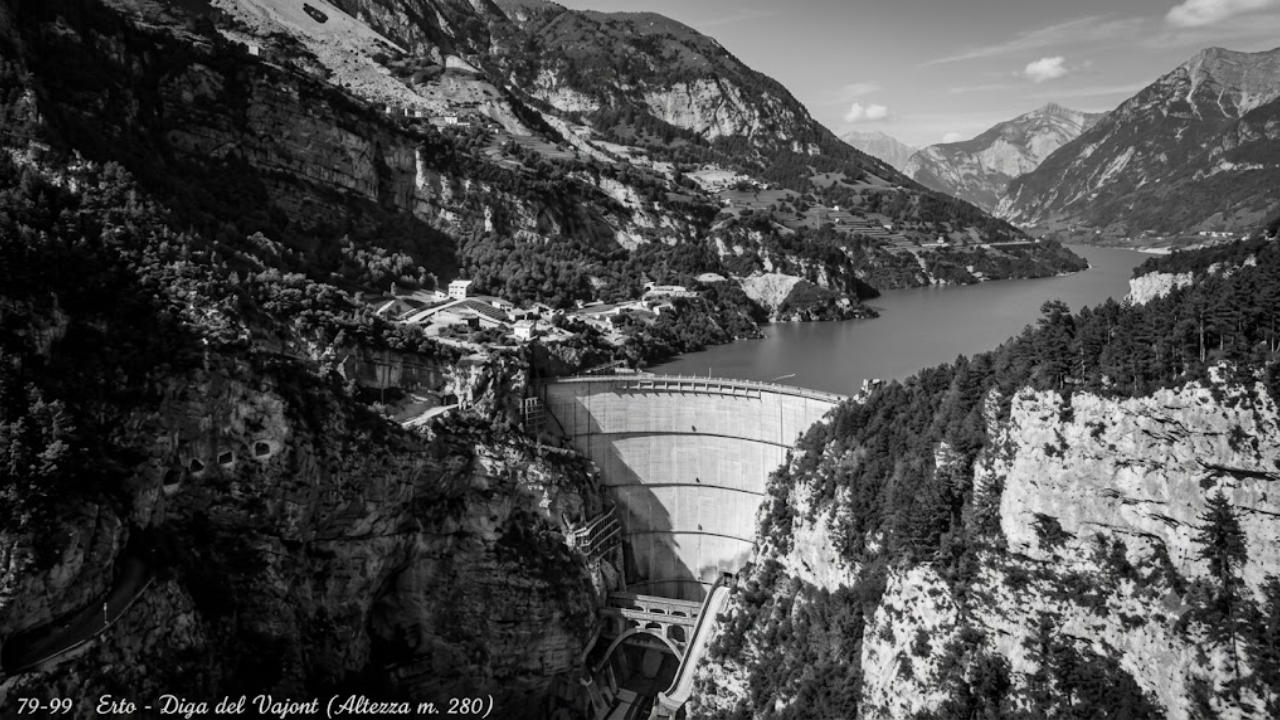
Remarkably, the 261.6-metre-high Vajont Dam, then one of the tallest dams in the world, remained almost structurally intact. It was not the dam that failed, but the mountain beside it. Nearly 2,000 people lost their lives within minutes in a catastrophe that later became a symbol of how ignored scientific warnings and human decisions can turn a natural hazard into a preventable tragedy.
A mountainside collapsed into the reservoir and unleashed a devastating wave
The Vajont Dam was completed in 1960 in the Dolomite region of northeastern Italy. Built across a narrow gorge, it was considered a remarkable feat of engineering and designed to generate hydroelectric power by storing water in the Vajont Valley.
However, the surrounding landscape had a long geological history of instability.
According to information from the Association of State Dam Safety Officials , engineers and geologists documented signs that the slopes around Monte Toc were prone to landslides even before the reservoir reached full capacity. Cracks widened across the mountainside, small landslides became increasingly frequent and instruments recorded gradual ground movement as the water level changed.
Despite these warning signs, the reservoir continued operating.
At 10:39 p.m. on 9 October 1963, approximately 260 million cubic metres of rock broke away from Monte Toc and plunged into the reservoir at tremendous speed. The impact displaced an enormous volume of water, generating a wave estimated to have reached around 250 metres above the dam before crashing into the Piave Valley below.
The dam survived exactly as designed, but the disaster unfolded downstream
One of the most extraordinary aspects of the Vajont disaster is that the dam itself did not collapse. Designed as a double-curvature concrete arch dam, the structure absorbed the immense forces generated by the landslide and remained standing after the catastrophe. The disaster occurred because the enormous wave overtopped the crest of the dam rather than breaking through it.
Within moments, billions of litres of water thundered into the valley below. Entire towns, including Longarone, along with several villages such as Pirago, Rivalta, Villanova and Faè, were devastated. Buildings were swept away, roads disappeared and thousands of people were killed while they slept.
According to information from UNESCO, nearly 2,000 people died, making Vajont one of the deadliest engineering-related disasters in modern European history despite the structural survival of the dam itself.
Scientists and local residents had warned of the danger years before the disaster
The tragedy was not entirely unforeseen. Information from the Environment & Society Portal explains that concerns about the stability of Monte Toc had been raised throughout the planning and operation of the reservoir. Local residents reported unusual cracking, falling rocks and ground movement, while geologists repeatedly warned that filling the reservoir could destabilise the mountainside.
As the water level fluctuated, the slope continued moving. Monitoring equipment recorded increasing displacement in the weeks leading up to the disaster, prompting authorities to lower the reservoir in an attempt to reduce pressure on the mountainside.
The effort came too late. The catastrophic landslide demonstrated that although engineers recognised the growing instability, they underestimated both the scale of the potential collapse and the destructive force that such a landslide could generate within the confined reservoir.
The Vajont disaster changed engineering and environmental risk assessment
The aftermath extended far beyond the physical destruction. According to UNESCO, criminal investigations concluded that the disaster was not simply a natural event but one in which human decisions played a critical role. Court proceedings examined whether engineers, company officials and government authorities had ignored geological evidence and continued operating the reservoir despite mounting risks.
The case became one of Europe's most significant legal examinations of engineering responsibility and environmental negligence.
Today, the Vajont Dam still stands in the valley as a stark reminder that sophisticated engineering alone cannot overcome the forces of nature when geological realities are ignored. The disaster fundamentally changed approaches to dam construction, landslide monitoring and environmental impact assessments around the world.
More than six decades later, Vajont remains one of history's clearest examples that catastrophic failures are not always caused by collapsing structures. Sometimes, the greatest danger lies in overlooking the landscape that surrounds them.