At the weekend the World Health Organization (WHO) declared an outbreak of Ebola in the Democratic Republic of the Congo (DRC) a “public health emergency of international concern”. This designation is the highest alarm level the WHO has to notify its member states about a health crisis that is considered extraordinary, has multi-country risk and requires a coordinated international response. Usually, the director general, Dr Tedros Adhanom Ghebreyesus, would convene a meeting of international health experts to discuss whether an outbreak meets the legal criteria, but for the first time in the agency’s history, he went ahead and declared it after consulting the governments of the DRC and Uganda, and analysing the data presented.
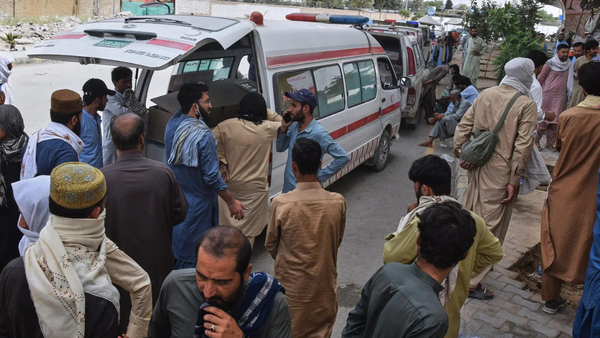
So what is happening now and why are health experts so concerned? We recently learned that there are several hundred suspected cases and 131 suspected deaths from Ebola in the eastern part of the DRC and possibly neighbouring Uganda. Ebola is one of the world’s most deadly infectious diseases, with symptoms progressing from fever and vomiting to internal bleeding and organ failure.
Most of the 16 previous outbreaks of Ebola in the DRC have been caused by the Zaire strain. For Zaire, we have a highly effective vaccine, targeted therapeutics and rapid diagnostics. Unfortunately, this latest outbreak is of the Bundibugyo strain, which does not have any medical countermeasures. Part of the reason that Ebola has been spreading for weeks undetected in communities, and into hospitals, is because rapid diagnostics for Zaire failed to identify the Bundibugyo strain. Without specific drugs, the treatment for Bundibugyo is general medical support, with death rates estimated at between 30% and 40% of those infected.
Ebola spreads through the body fluids of infected people: think saliva, blood, sweat, vaginal fluids or semen. Those most at risk are healthcare workers and family members taking care of sick patients, as well as those involved with the burial and treatment of dead bodies. Stopping the spread requires ensuring those caring for Ebola patients have adequate personal protective equipment (PPE) to protect themselves, as well as tracing contacts and ensuring they isolate before further transmission can occur. Ebola outbreaks have been controlled in the past, so it’s less a knowledge gap and more one of enough staff, PPE, lab capacity and logistics.
A couple of other factors make the situation in the DRC difficult. The outbreak is in a conflict-affected, high-traffic mining region where communities have little trust in government or external aid agencies. This makes even routine healthcare such as vaccination campaigns difficult, given the political instability and violence. Public health officials are considering using a combination of the existing approved vaccines for the Zaire and Sudan strains. Doses are available, but there are concerns that, if it isn’t as effective as hoped in reducing severity or transmission, trust in future vaccination campaigns may be undermined. Also, the outbreak is in the province of Ituri, close to the border with Uganda, so there are concerns about community spread to urban Kampala (a major regional hub), which would make it much more difficult to stop. Uganda has closed certain land crossings, but given a 950km (590-mile) border and mobile populations it’s very difficult to stop cross-border spread.
In addition, foreign aid cuts mean we are less prepared than we were even several years ago. The 2014 west Africa Ebola outbreak relied on US leadership from USAID, the Centers for Disease Control and Prevention (CDC) and the US military. Since then, the USAID team dedicated to Ebola-like diseases was cut by Elon Musk (he says accidentally), then partly restored (the team going from about 30 members to just a few). The CDC funding given to the lab networks operating in low-income settings to quickly identify specific pathogens and outbreaks was also cut. With the US government withdrawing from the WHO, the budget for the WHO’s emergency-response programme has also been cut by 37% since 2024. UK foreign aid funding has fallen to its lowest level in two decades.
The concern is less about this becoming a global pandemic, which is unlikely given how the Ebola virus spreads, and more about the devastation it can cause in the lives lost and to the already fragile healthcare systems in the DRC and neighbouring countries. During the west Africa Ebola outbreak (which I worked on), hundreds of healthcare workers died due to treating patients without having adequate PPE. Healthcare workers are a scarce and precious resource, and the knock-on effect was increased maternal and infant mortality due to lack of trained staff, and a rise in child mortality from disrupted standard vaccination campaigns.
Right now, the DRC and Uganda governments need the world’s attention, cooperation and support to get the necessary resources to stop this outbreak. If your neighbour’s house is on fire, you don’t wait and watch. You help to put it out before the fire spreads to yours. That’s the interconnected world we live in, and an important lesson for all politicians watching the crisis unfold.
-
Prof Devi Sridhar is chair of global public health at the University of Edinburgh, and the author of How Not to Die (Too Soon)
-
Do you have an opinion on the issues raised in this article? If you would like to submit a response of up to 300 words by email to be considered for publication in our letters section, please click here.