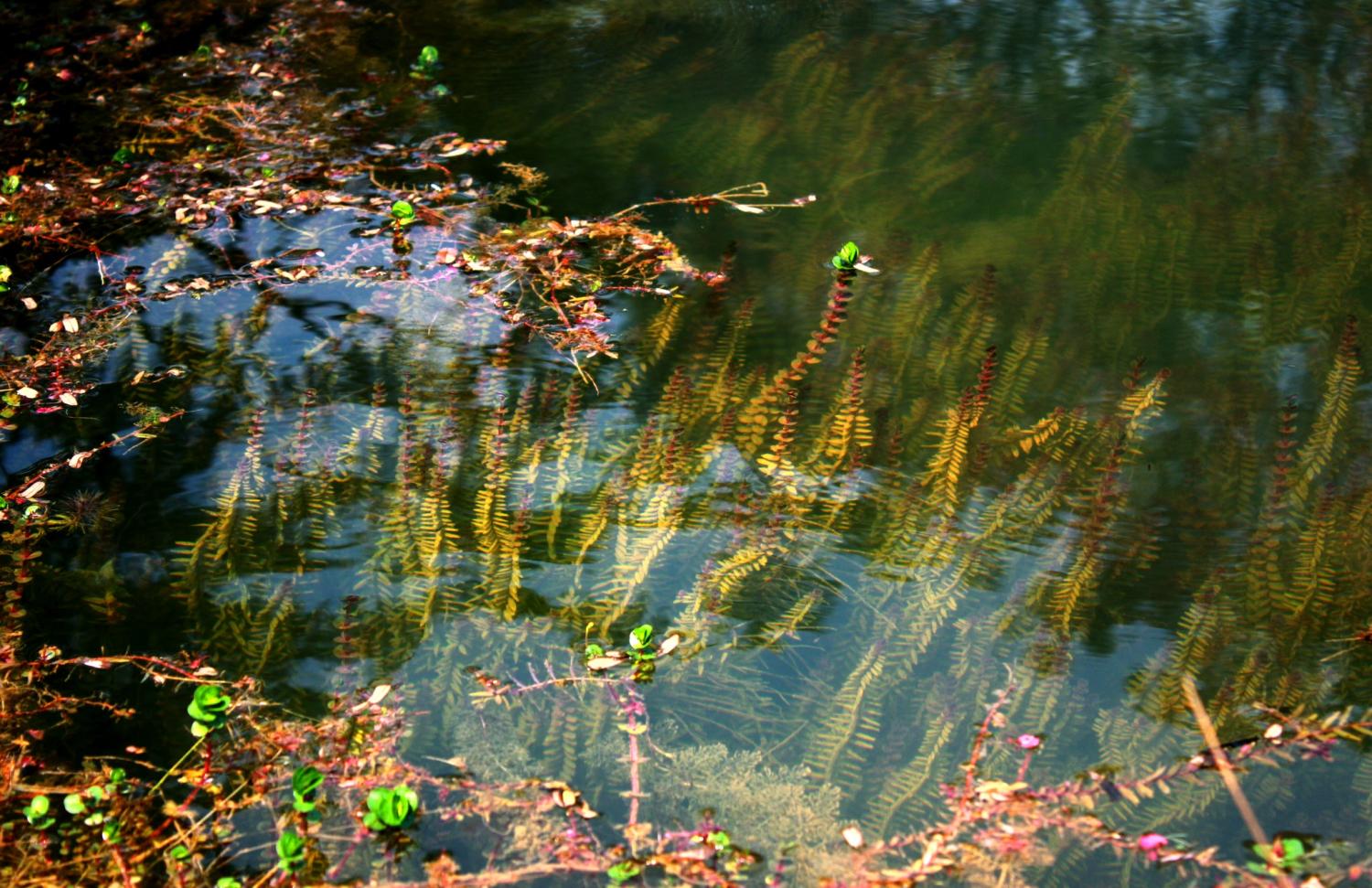
According to the international Ramsar Convention (1971), wetlands are areas of marsh, fen (grassy), peatland (a type of wetland) or water -- whether natural or artificial, permanent or temporary, with static or flowing, fresh, brackish, or salt water. They provide habitat for plants, animals and bird species that thrive in aquatic environments rich in nutrients. They filter contaminants out of water and are a rich source of food for the communities nearby.
Although wetlands are very important to the ecosystem, in Thailand, they have steadily declined in both size and quality because people mistook them for being wastelands or swamps that should be filled in or drained for agriculture and housing.
Last year, the Royal Irrigation Department dredged the Wiang Nong Lom wetland in Mae Chan, Chiang Rai, to improve storage and utilisation of water. However, the dredging process has had a negative impact on the Wiang Nong Lom wetland. To discuss this issue and raise awareness about other wetlands, the Siam Society under Royal Patronage by the Natural History Section organised a panel discussion titled "Wiang Nong Lom: The Significance Of Wetlands" in April at the Siam Society Auditorium.
The discussion kicked off with Muangchuen Jindatham, a representative of Pa Sak Luang community situated right next to Wiang Nong Lom wetland, who told the audience about the abundance of flora and fauna that the wetland has to offer.
"Wiang Nong Lom is the largest source of freshwater shrimp in the country. Villagers can earn approximately 1,000 to 2,000 baht per day catching small freshwater shrimps. Many people can support their children's education up to bachelor's and master's degrees by catching these shrimps. Wiang Nong Lom also has hot springs because there is an earthquake fault line underneath," said Muangchuen.
Muangchuen admitted that the local people wanted the dredging to resolve water-related issues, but they did not want the wetland to be filled. The locals are concerned about the large soil mounds which are forming and the environmental change of the wetland which affects fishing. Previously, fishermen could catch a full basket of fish, but now they get very little.
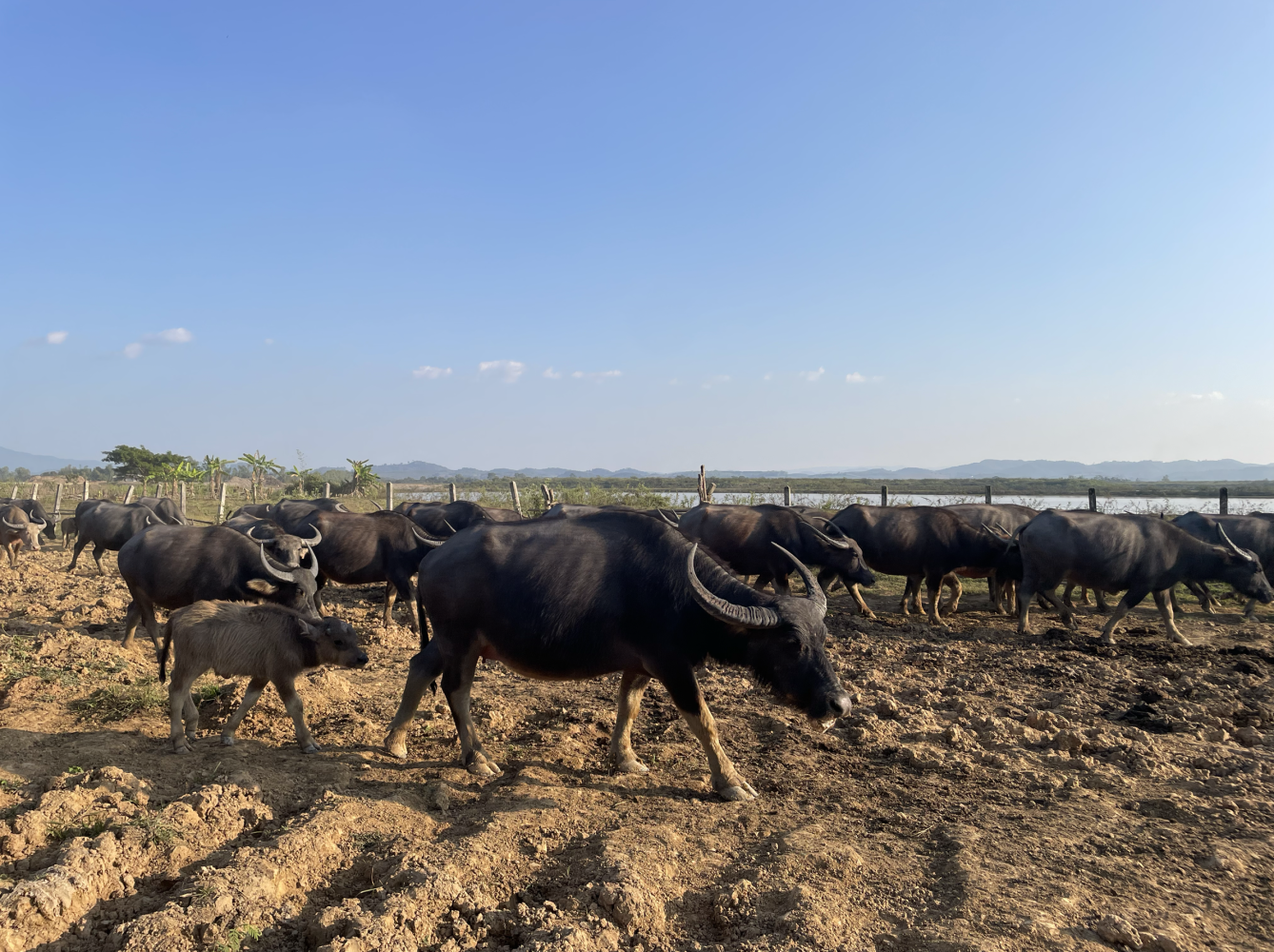
"Wiang Nong Lom wetland is also the largest buffalo-raising area in the country. In the past, there were over 3,000 buffaloes raised naturally by letting them forage for food. Now, there are slightly more than 2,000 left. The farmers now want to sell the buffaloes because there is not enough grazing land for them," said Muangchuen.
As a birdwatcher, cardiologist, conservationist and nature communicator, Dr Rungsrit Kanjanavanit revealed that he has been connected to Wiang Nong Lom wetland for almost 30 years. He explained that the wetland is unique because of its biodiversity and the presence of rare species. A grass owl, an incredibly rare species in Thailand, was found nesting in the freshwater peat forest in this wetland.
As a cardiologist, Dr Rungsrit compared Wiang Nong Lom to the human body, stating that it is like a bladder that controls the amount of water and gradually releases some during the dry season. It serves as the ecosystem's liver and kidneys, which detoxifies excess nitrogen from chemical fertilisers and prevents eutrophication (excessive nutrients in a water body which leads to a decrease in the oxygen level of the water body).
Dr Rungsrit explained that the dredging operation did not just remove sediment; it involved steep excavations and also landfilling. The affected area is not small; it is the heart of this ecosystem. As a result, the operation changed the environment and that rare grass owl left the wetland.
Pornmongkol Chidchob, director of Project Planning Division, the Royal Irrigation Department of Thailand (RID), explained that Wiang Nong Lom covers an area of 10,000 rai, with portions of wetland and a large area inhabited by an invasive alien flora species -- giant mimosa.
Pornmongkol explained that the RID proceeded with dredging because it was assigned by the National Water Resources Committee led by Gen Prawit Wongsuwon at the time. The total budget of approximately 3.8 billion baht was allotted to develop five areas: land and water management, infrastructure, tourism or archaeology, and occupational development.
Pornmongkol insisted that the dredging has been completed and there will be no further work. After this, the accumulated soil piles will be managed and the environment will be restored.
However, Assoc Prof Kitichate Sridith, a biologist and independent scholar, shared bad news with the audience: "The area that used to be grassland is completely gone because the soil is dry and the water level has dropped significantly. The hot springs have also dried up. I believe this area will never be able to return to being a grassland again. In the past, hot springs enriched the water with mineral composition that mixed with the water in the aquifer [an underground layer of water-bearing rock, sand, gravel, or silt that holds and allows water to move through it]. Therefore, a large number of trees like ton an or cephalanthus can be found in this wetland, while only a few ton an are found in other areas. I hope that this kind of situation will not happen to other wetlands in Thailand."
Hannarong Yaowalert, an expert member of the Wetlands Technical Working Group, Department of Water Resources, explained that Thailand has 16 officially designated Ramsar sites of international importance. He also pointed out that Thailand has a mandate to protect its wetlands.
The Cabinet Resolution of Aug 1, 2000, amended on Nov 3, 2009, states that wetlands characterised as water bodies and green spaces are strictly prohibited from being claimed as ownership by any agency. Additionally, Clause 10 of the Cabinet Resolution states that any project with potential environmental impact must undergo an environmental impact assessment (EIA) prior to implementation.
However, after the 2011 floods, this resolution, which exempted the need for an EIA, was lifted in 2013. As a result, dredging proceeded without prior ecological study. To protect wetland ecology, Hannarong commented that all construction or irrigation projects involving wetlands of national, international importance, as well as Ramsar sites, must conduct EIA reports. In addition to EIA reports, there should be a master plan for wetland management which specifies which areas can be developed and which must be preserved.
Bunthida Plengsaeng, deputy director of the Department of Water Resources, Ministry of Natural Resources and Environment of Thailand, insisted that the DWR adheres to the 17 measures under the Cabinet Resolutions of both Aug 1, 2000, and Nov 3, 2009. She stated that the DWR is trying to develop sustainable use of wetlands through a participatory process and by listening to all stakeholders.
Assoc Prof Kitichate pointed out the negative impacts on the wetlands occurred because those in power lack knowledge about wetlands.
"The Wetland Committee must complete courses in Biology 101 and General Ecology which will provide fundamental knowledge of the relationship between living organisms and their physical environment. The problems we face every day are caused by people in power who lack this knowledge, leading to immense damage to the ecosystem."