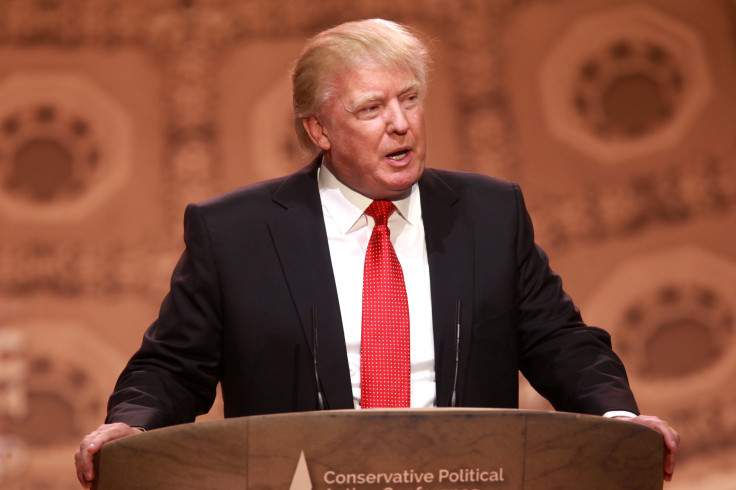
Donald Trump's disapproval rating has climbed to 63 per cent in the United States, according to new Gallup polling released this week, putting the President at a similar stage of his time in office as Richard Nixon's Watergate-era low point.
Gallup compared Trump's numbers with those of the previous 12 Presidents at roughly day 491 of their Presidencies. That is where Trump now sits in his second term. Nixon's disapproval stood at the same 63 per cent around the period when the Watergate scandal was consuming his administration.
In the Gallup ranking that follows, George W Bush sits next with a 60 per cent disapproval rating, followed by Joe Biden on 54 per cent, Trump's first‑term figure on 53 per cent, Barack Obama's second‑term rating on 51 per cent and Jimmy Carter on 42 per cent.
At the other end of the spectrum, several Presidents at the same point in their tenure were nowhere near those levels. Gerald Ford registered 38 per cent disapproval, Lyndon B. Johnson 34 per cent, Bill Clinton's second term 30 per cent, Ronald Reagan's second term 22 per cent, George H. W. Bush 20 per cent and John F. Kennedy just 13 per cent.
Disapproval Rating Outpaces His First Term
The headline Gallup figure for Donald Trump is not an outlier. An analysis by RealClearPolitics, which aggregates major national polls, puts the President's disapproval at an average of 58.3 per cent. That is higher than the worst point of his first term, which stood at 57.9 per cent and followed the storming of the US Capitol on 6 January 2021.
🇺🇸 Trump's disapproval rating has hit 58.3%, and that number is consistently climbing.
— Mario Nawfal (@MarioNawfal) May 25, 2026
What's driving it this time:
- Tariffs are hurting household finances
- Majority concerned about executive overreach
- Some say military intervention has gone too far
- Iran war feeding… pic.twitter.com/sjIiloGaB5
'Trump's disapproval rating today (58.3 percent) is higher than its highest point in his first term (57.9 percent), which occurred after January 6, 2021,' RealClearPolitics co‑founder and president Tom Bevan said, citing data from The Wall Street Journal, Fox News, Daily Mail, Reuters/Ipsos, CBS News and The New York Times.
The same RealClearPolitics overview suggests the public mood around Trump himself is souring further. Some 55.9 per cent of voters in the aggregated surveys said they had an unfavourable view of the president personally, underscoring how his broader reputation is sliding alongside assessments of his job performance.
This picture of eroding support appears especially pronounced among voters who were crucial to Trump's 2024 victory.
A new UnidosUS poll, focusing on 32 competitive congressional districts, found that a quarter of Latino voters who backed Trump in 2024 now say they would not vote for him again. That is a 9‑point increase from April 2025 and 13 points higher than in November last year, suggesting a steady and measurable drift away from the Republican incumbent.
Economic Jitters Drive Disapproval Numbers
If there is a single theme running through the recent polling, it is economic anxiety. A separate Gallup survey found that 76 per cent of Americans believe the economy is getting worse. That sentiment is hardly academic. Prices have been climbing in ways that are visible on every forecourt and supermarket receipt.
AAA figures put the national average petrol price at $4.459 per gallon as of Wednesday. In California, the most expensive state in the country on this measure, the average is $6.094 a gallon. Inflation has also quickened.
The Labour Department's consumer price index rose 3.8 per cent last month, the highest annual rate for three years, after what officials described as weeks of price spikes linked to the ongoing war in Iran.
Researchers at Brown University's Watson Institute for International and Public Affairs have tried to quantify the cost of that conflict for American drivers. Their latest estimates suggest that US consumers have spent an additional $41.5 billion due to higher petrol and diesel prices since the war began on 28 February. That is, they calculate, equivalent to about $316 per household.
Jeff Colgan, a political science professor at Brown, framed it bluntly. 'We are spending this huge amount of money as a country on extra fuel costs, which we could have used in a whole bunch of more constructive ways to improve America's transportation infrastructure, which, frankly, could use the love,' he said.
Taken together, those numbers help explain why Trump's disapproval rating has edged into Watergate territory. Presidents are usually judged less on global macroeconomics than on what people feel they can afford in a given week. When petrol passes $6 in California, and inflation hits a three‑year high, it is not difficult to see how even a loyal base might start to waver.
🚨TRUMP: “I don’t think about Americans financial situation, I don’t think about anybody.” pic.twitter.com/4Ay2KKSrwd
— Spencer Hakimian (@SpencerHakimian) May 12, 2026
The White House, however, has chosen to play down the domestic strain. Asked about the squeeze on household finances earlier this month, Trump offered a strikingly narrow answer. 'I don't think about Americans' financial situation – I don't think about anybody,' he told reporters. 'I think about one thing: We cannot let Iran have a nuclear weapon.'
On one level, that reflects the administration's argument that national security must trump short‑term economic discomfort. On the other hand, it risks sounding detached at a moment when major pollsters are recording the highest disapproval of Trump's Presidency and the worst ratings for any president since Nixon at this point in a term.
Trump himself has routinely dismissed unfavourable surveys as 'fake,' and his campaign is likely to argue that a noisy economy and geopolitical turbulence make for volatile numbers that can still be turned around before voters next head to the polls.