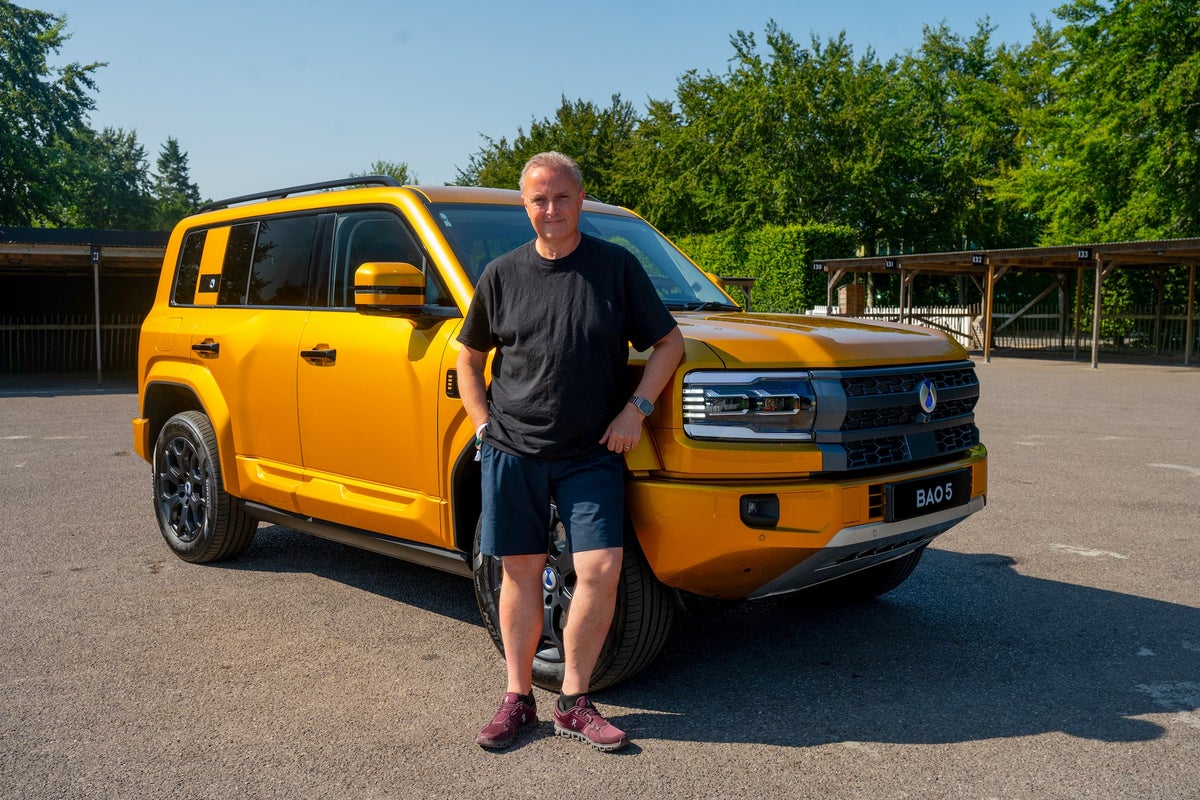
Denza is a new name to most UK buyers, but there’s serious backing behind it. The brand sits within the BYD Group, was originally founded in 2010 as a partnership between BYD and Daimler, and is now being introduced to Europe as a premium, design- and technology-led brand.
The Bao 5 is its first SUV for European customers, and it arrives in a part of the market where buyers aren’t short of choice. Big premium SUVs are everywhere, while plug-in hybrids have been making a bit of a comeback for people who want the quietness and low running costs of electric driving for shorter trips, but still want petrol-powered range for longer journeys.
This, though, isn’t just another large, soft-edged SUV with a plug socket. The Bao 5 is based around Denza’s DMO Dual Mode Off-road plug-in hybrid system, which is designed for rougher conditions. It has a 1.5-litre turbocharged petrol engine, two electric motors, a 31.8kWh Blade Battery integrated into the chassis, electronic differential locks front and rear, an energy centre lock and, in Ultimate trim, DiSus-P intelligent body-control suspension.
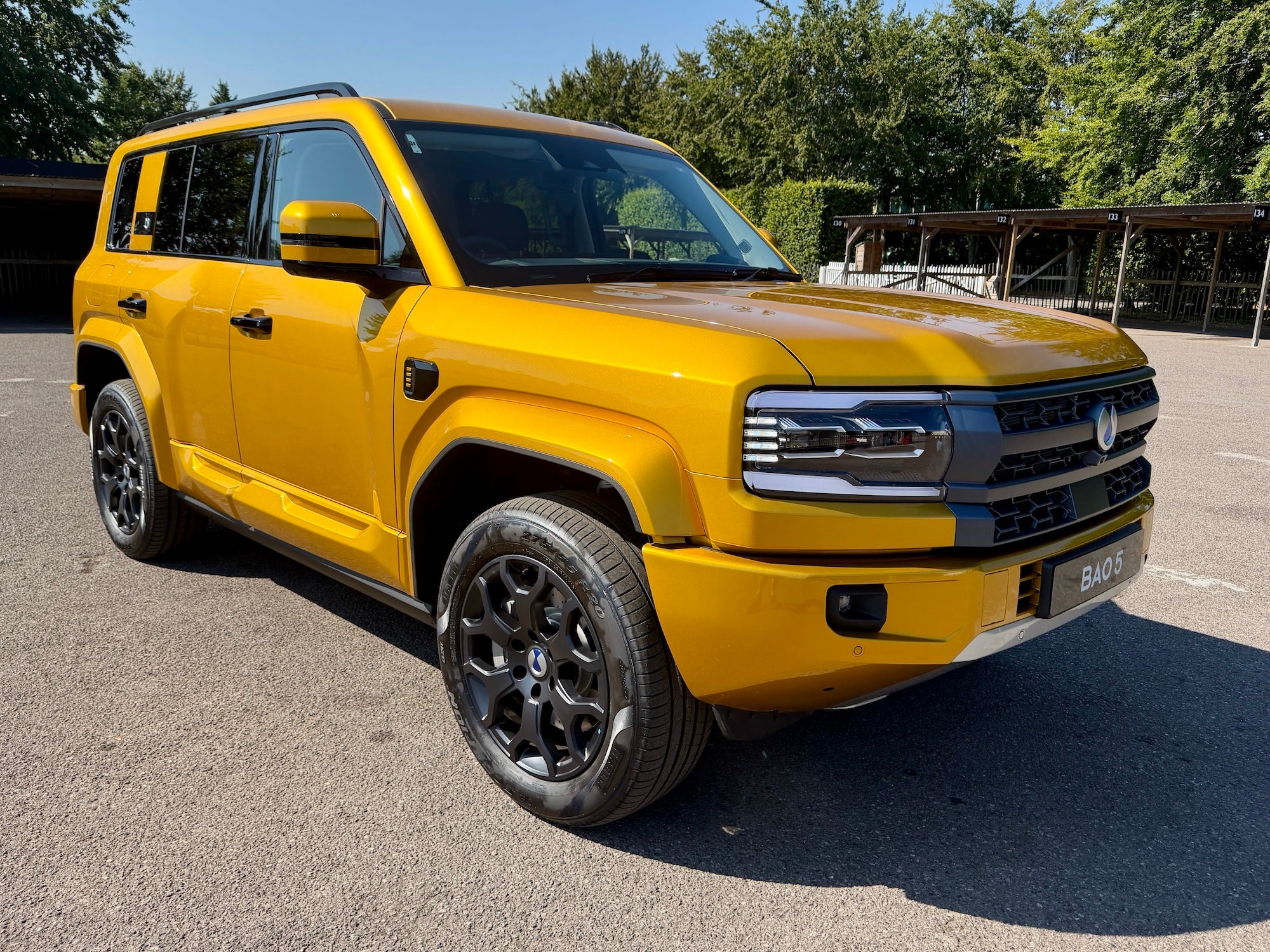
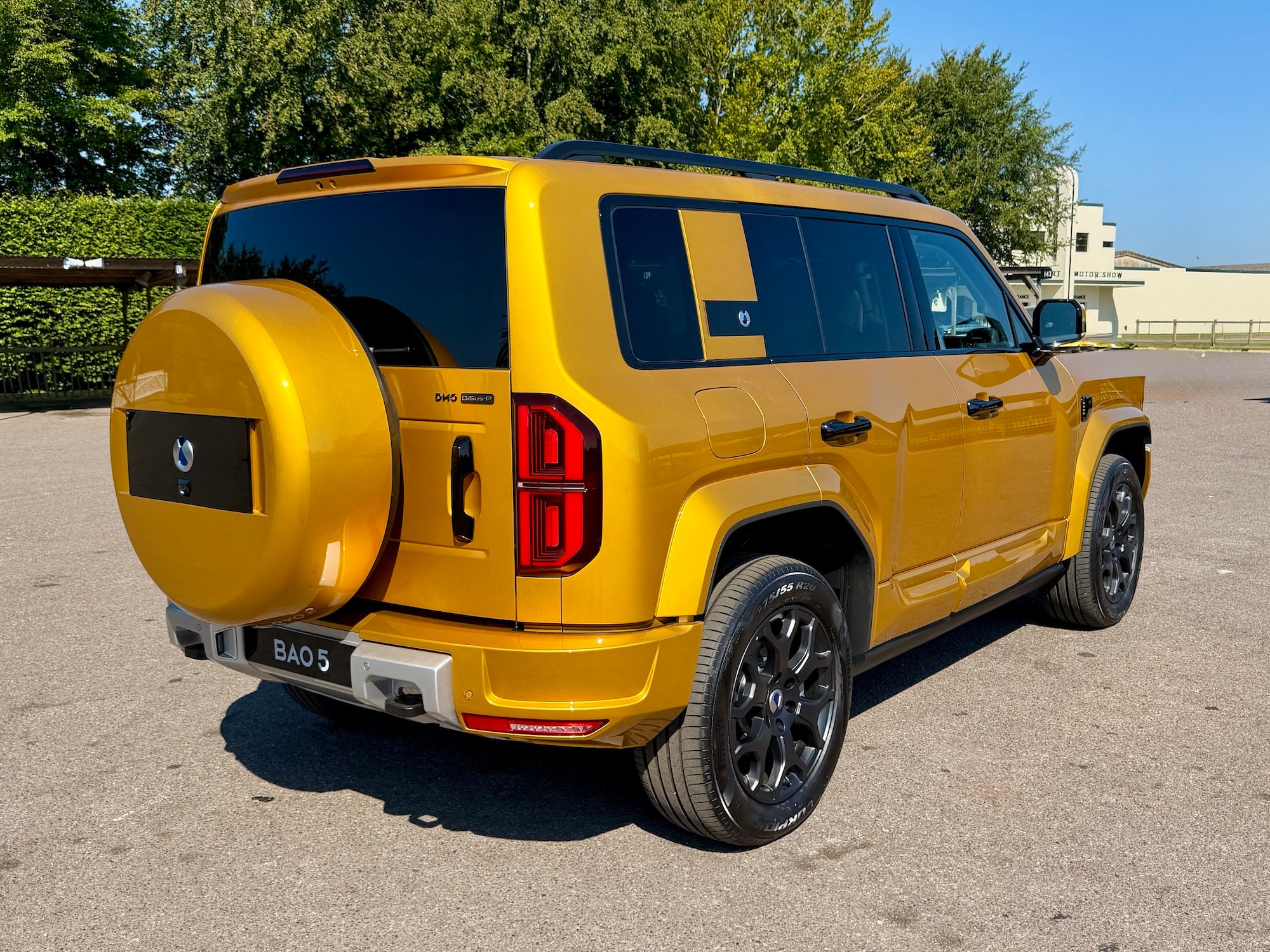
It also looks the part. The Bao 5 is square, upright and beefy, with a spare wheel mounted on the back, chunky lighting, a dark grille, skid-plates and side steps. It has the sort of shape that suggests it would be quite happy heading away from the road, while still being pitched as a premium SUV with a cabin full of screens, leather, massage seats, a heated and cooled storage compartment and a Devialet sound system.
There’s an odd identity question, too. In the UK the car is badged as a Denza, but in China it is a Fangchengbao, and my test car still answered to “Hey BYD”. It’s a small thing, but it does rather sum up the challenge ahead. Denza is trying to establish itself as a premium name in Europe, and that takes time. No matter how much profile comes from Daniel Craig’s odd adverts or from Jenson Button, who was at Goodwood as a Denza ambassador, premium buyers need convincing before they treat a new badge in the same way as longer-established rivals.
That’s the bigger story around the Bao 5. The quality is there, the kit is certainly there, and the plug-in hybrid system is seriously impressive. But this is also a big, heavy, ladder-frame off-roader and, even with all the modern technology underneath, it’s drive can feel a bit old-school in many ways.
How we tested
I drove the Denza Bao 5 at a Denza launch event based at Goodwood Motor Circuit. My test route took in towns and villages around West Sussex and across the South Downs, using the sort of British A- and B-roads that quickly show up how a big SUV really behaves. I also spent time assessing the space, boot, audio system, technology, quality and practicality.
Denza Bao 5: from £69,500, Denza.com/uk
Independent rating: 7/10
- Pros: Impressive quality, huge kit list, smooth plug-in hybrid system, strong refinement, lots of space, serious off-road hardware
- Cons: Bobbly ride, vague steering, lots of body roll, inconsistent brakes, shallow front seats, Denza badge still has work to do
Denza Bao 5 specs
- Price: from £69,500
- Battery size: 31.8kWh
- Maximum claimed range: 537 miles
- Electric-only range: 56 miles
- Charging : Up to 100kW – 30 to 80 per cent in 16 minutes
Battery, range, charging, performance and drive
The Bao 5 uses Denza’s DMO plug-in hybrid system, which combines a 1.5-litre turbocharged four-cylinder petrol engine with front and rear electric motors. The petrol engine produces 148bhp and 240Nm on its own, but its main job is to supply electricity to the battery and motors rather than simply drive the car in the traditional way.
The front electric motor produces 268bhp, while the rear motor produces 383bhp. Total system output is 537bhp and 760Nm of torque, which is a huge amount for a car of this type. Denza quotes 0-62mph in 4.8 seconds for the Elegance and 5.0 seconds for the heavier Ultimate, with a top speed of 112mph.
On the road, though, the performance doesn’t feel quite as explosive as those numbers suggest. The Bao 5 can feel a little sluggish away from the line, then it quickly gathers momentum and starts to feel much stronger once it’s moving. That’s partly because this is a very heavy car. The Elegance weighs 2,940kg, while the Ultimate is 3,035kg, so even with plenty of electric shove, there’s a lot of SUV to shift.
The best bit of the powertrain is its smoothness. The Bao 5 will go a useful distance on electric power alone, with an official electric range of 56 miles from its 31.8kWh Blade Battery. On a full tank and a full charge, the total range is 537 miles. The weighted fuel economy figure is 68.9mpg, while Denza quotes 26.4mpg with the battery depleted, and CO2 emissions of 30g/km.
The way the system switches between battery and petrol power is impressive. It feels totally seamless in normal driving, and that helps make the Bao 5 feel quieter and more relaxed than you might expect from something with such serious off-road hardware underneath. Refinement is one of its strongest points. At town speeds, on faster A-roads and when cruising, it stays impressively quiet.
Charging is good for a plug-in hybrid, too. There’s 11kW three-phase AC charging as standard, which can fill the battery from 15 to 100 per cent in just over three hours. DC rapid charging is also standard, with a peak rate of 100kW, allowing a 30 to 80 per cent charge in 16 minutes when connected to a suitable charger.
Underneath, the Bao 5 is much more rugged than many plug-in hybrid SUVs. It uses a ladder-frame chassis, a battery integrated into the chassis using Cell-to-Chassis technology, double-wishbone suspension at the front and rear, and electronic differential locks at both ends. The energy centre lock can distribute torque between the axles 30 times faster than a traditional mechanical set-up, while the rear motor assembly can deliver up to 8,000Nm of wheel-end torque.
Ultimate models add DiSus-P intelligent body-control suspension, which uses data from more than 20 sensors to adjust the car’s dynamic set-up. It can vary damping continuously, adjust body height by up to 140mm, raise ground clearance by 90mm to 310mm, and self-level the body when parked on uneven ground. Ultimate models have approach and departure angles of 39 and 34 degrees respectively, which puts the Bao 5 closer to the serious off-road end of the SUV market than the school-run soft-roader end.
The on-road driving experience is the trade-off. In some ways the Bao 5 feels usefully compact on the road, helped by its square shape and good visibility. The minimum turning radius is 5.9 metres, which is impressive for something this large, and it doesn’t feel as intimidating through villages or tighter roads as the dimensions suggest.
But it also feels like an old-school ladder-frame off-roader, because that’s exactly what it is. Even with the modern battery integration and clever suspension technology, the ride is always bobbly at best and bouncy at worst. The steering is old-school, too. It’s vague, and there’s plenty of body roll when you corner. That doesn’t make the Bao 5 feel especially settled on the kind of flowing British B-road where a more road-biased premium SUV would feel calmer and more precise.
The brakes are another weak point. They can swap from vague to sharp with little warning, which is never ideal in a big, heavy SUV. There’s plenty of performance once the Bao 5 gets going, but stopping it smoothly takes a bit more care than it should.
Interior, practicality and boot space
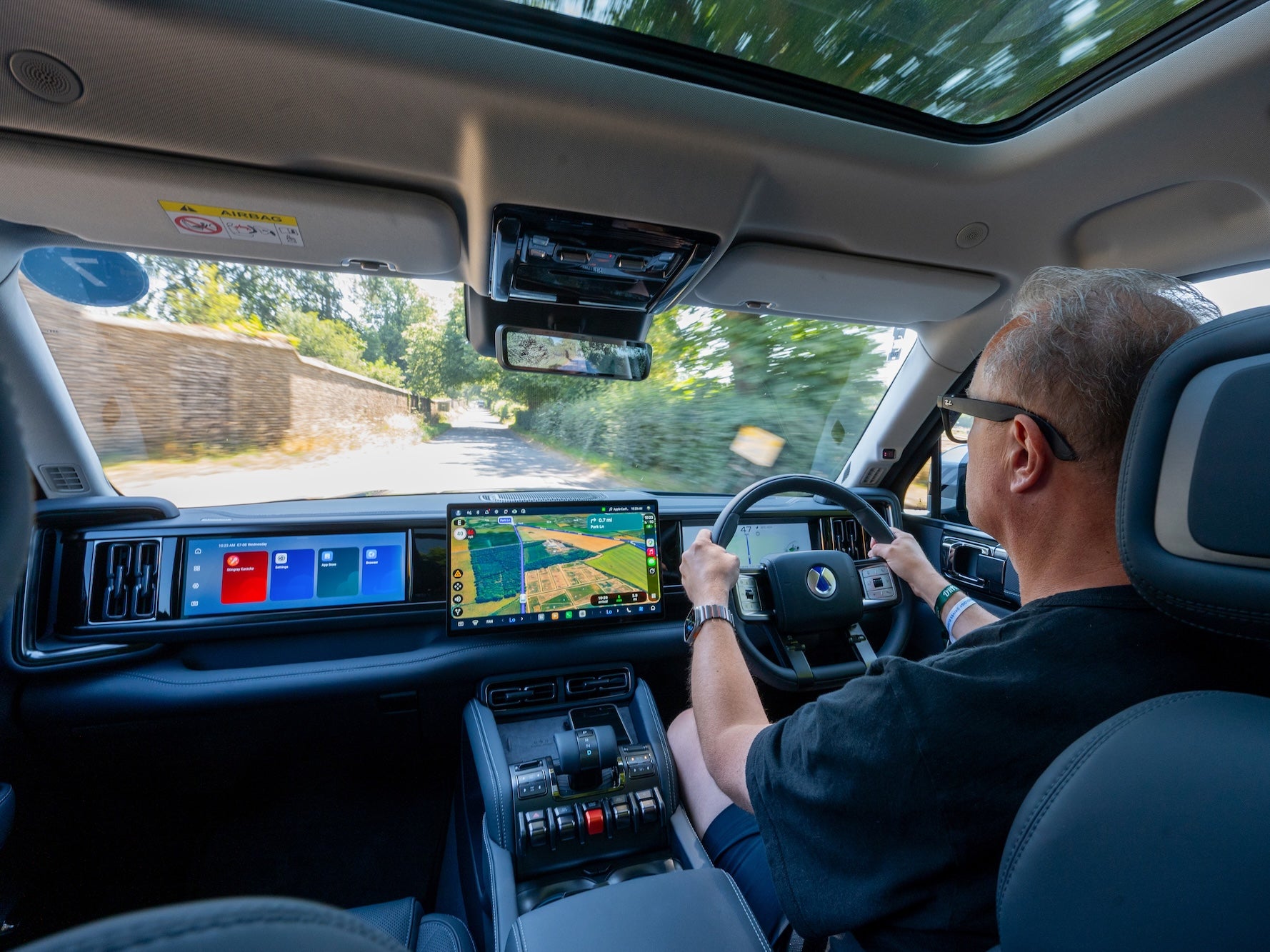
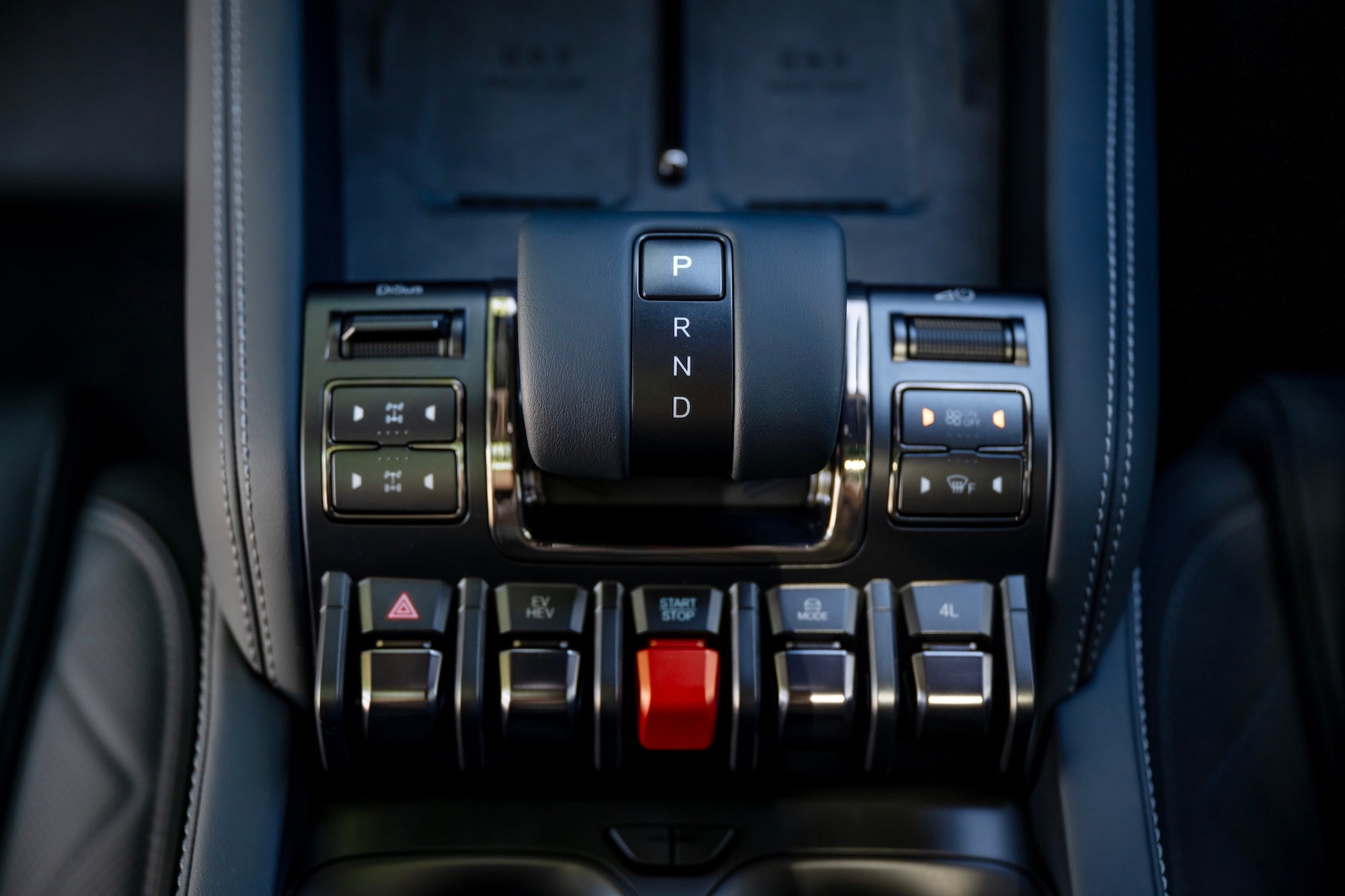
There’s no questioning the quality or the kit inside the Bao 5. The cabin feels impressively built, with a strong, chunky design that suits the car’s off-road positioning. There are prominent grab handles, a wide horizontal dashboard layout, a substantial centre console and a row of big physical buttons for key controls. In a car designed to cope with rougher conditions, the fact you can easily find and use those controls, even with gloves on, feels sensible.
The driving position is high and commanding, as you’d expect, and the square body makes it fairly easy to place on the road. The seats are comfortable overall, although the front cushions feel a bit shallow. That’s a shame, because in most other ways they’re very well specified: the driver’s seat has eight-way electrical adjustment, the front passenger seat has six-way adjustment, and both have four-way electrical lumbar support and a 10-point massage function.
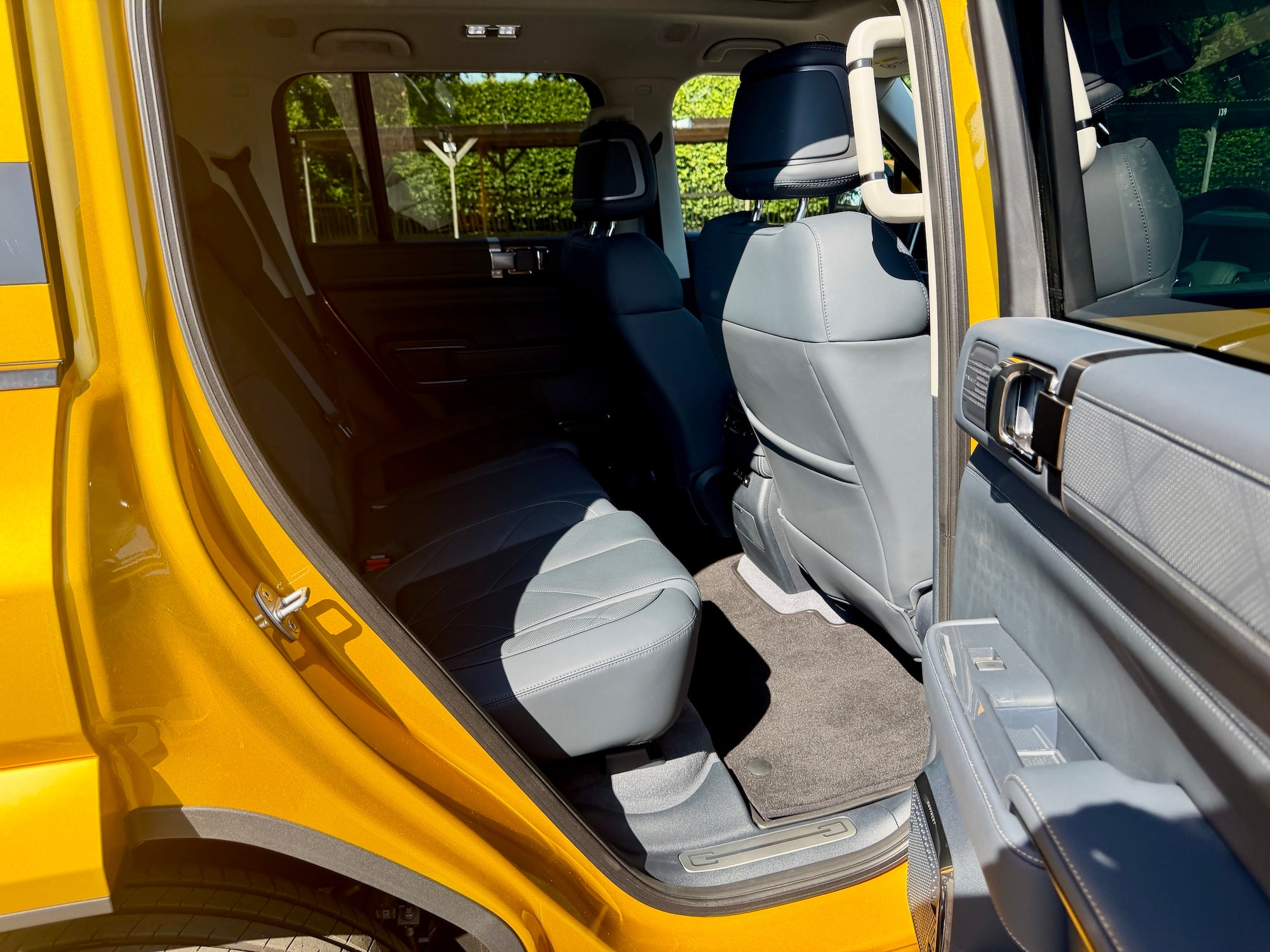
All Bao 5s get leather upholstery, while Ultimate versions move up to Nappa-grade leather. Front-seat heating and ventilation are standard, as is a heated steering wheel. Rear passengers get heated seats in Elegance trim, while Ultimate adds rear-seat ventilation as well.
Space in the back is one of the Bao 5’s strengths. The upright stance gives the cabin generous headroom, even with the standard panoramic sunroof fitted, and the 2,800mm wheelbase helps deliver lots of rear legroom. The rear seats also have adjustable backrests, which adds a useful extra bit of comfort for passengers on longer trips.
The front passenger seat can also recline fully to create an extended footrest for the rear passenger sitting behind. It’s the sort of feature you’d expect to see in something trying very hard to feel properly premium, and it fits with the Bao 5’s general approach to equipment. There’s a lot here.
Boot space is decent, too. With the rear seats up, Denza quotes 475 litres measured to the top of the rear seats. Fold the rear seats down and that rises to 1,069 litres, or 1,736 litres when measured to the roof. Those are useful figures, and the square body helps make the luggage area feel practical and easy to load.
There is one complication, though, and it’s the usual one you get with this kind of SUV. The tailgate is side-hinged and carries the spare wheel, so it needs more space behind the car to open than a conventional top-hinged tailgate. That’s fine in a field, on a driveway or in a big open car park, but it can be more awkward in tight supermarket spaces or when someone has parked close behind you.
The side steps help with access, and Ultimate versions get electrically deployable steps. Elegance versions have fixed side steps. Ultimate also adds a fully enclosed spare-wheel cover, while both versions have a powered soft-closing tailgate.
There are plenty of thoughtful storage touches. The centre console includes an electrically adjustable cup holder with a powered lifting function, while the 4.5-litre heated and cooled storage compartment is a proper talking point. It can hold up to eight drinks bottles, cool items to between -6C and 15C, and heat them to between 35C and 50C. It has power-off memory, object detection and can be started remotely through the Denza app.
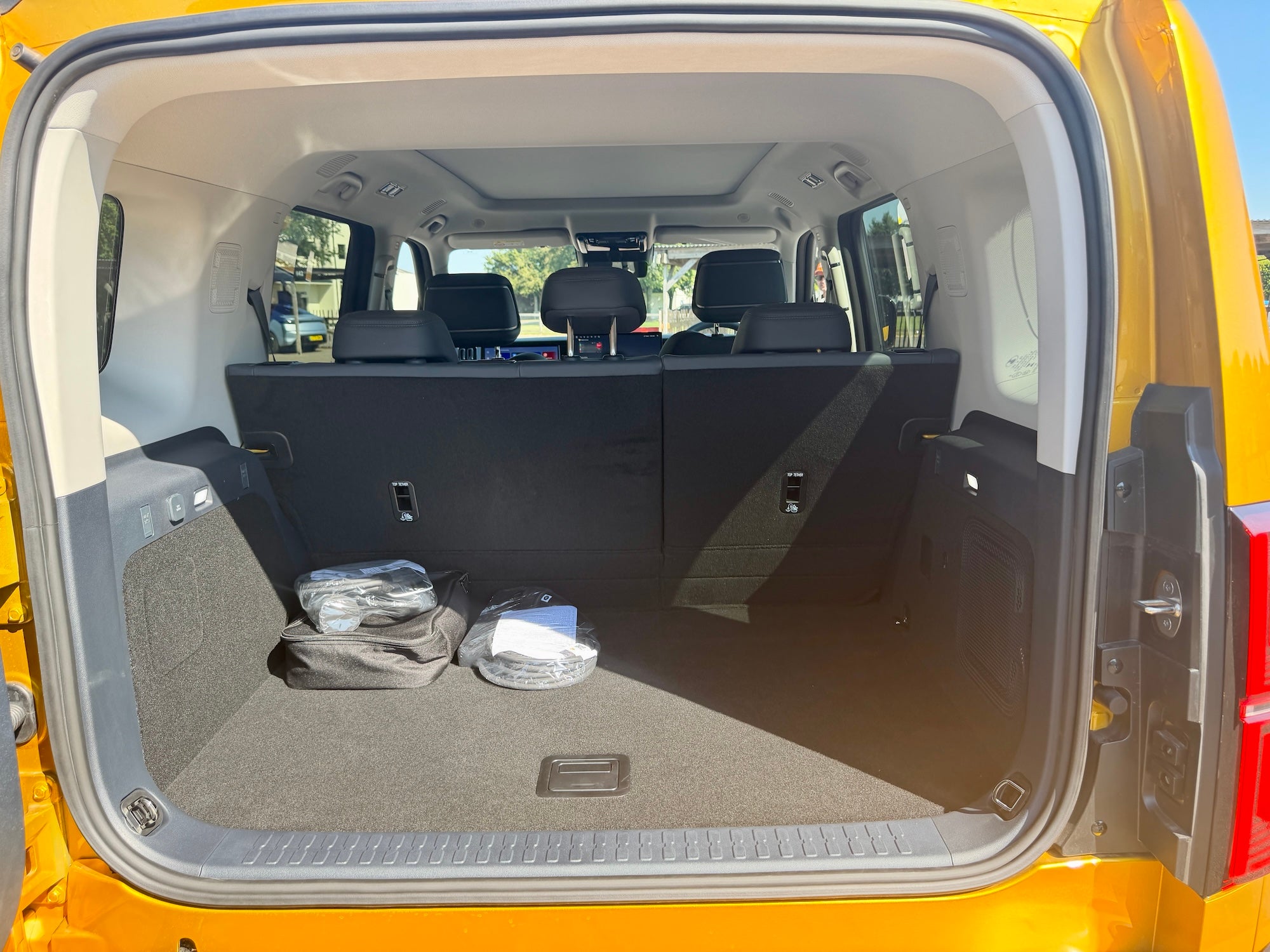
The Bao 5 is, then, a roomy and very well-equipped five-seat SUV. It has loads of rear space, a decent boot and a cabin that feels more expensive than the Denza badge will yet suggest to many UK buyers. The practicality is strong, but the side-opening rear door and the sheer size of the car are worth thinking about if most of its life will be spent in town.
Technology, stereo and infotainment
The Bao 5 is packed with screens, audio kit and comfort technology. Up front, the driver gets a 12.3-inch digital instrument display and a head-up display, while the centre of the dashboard is dominated by a 15.6-inch infotainment touchscreen. There’s also a separate passenger multimedia display, so the front passenger can use entertainment functions independently.
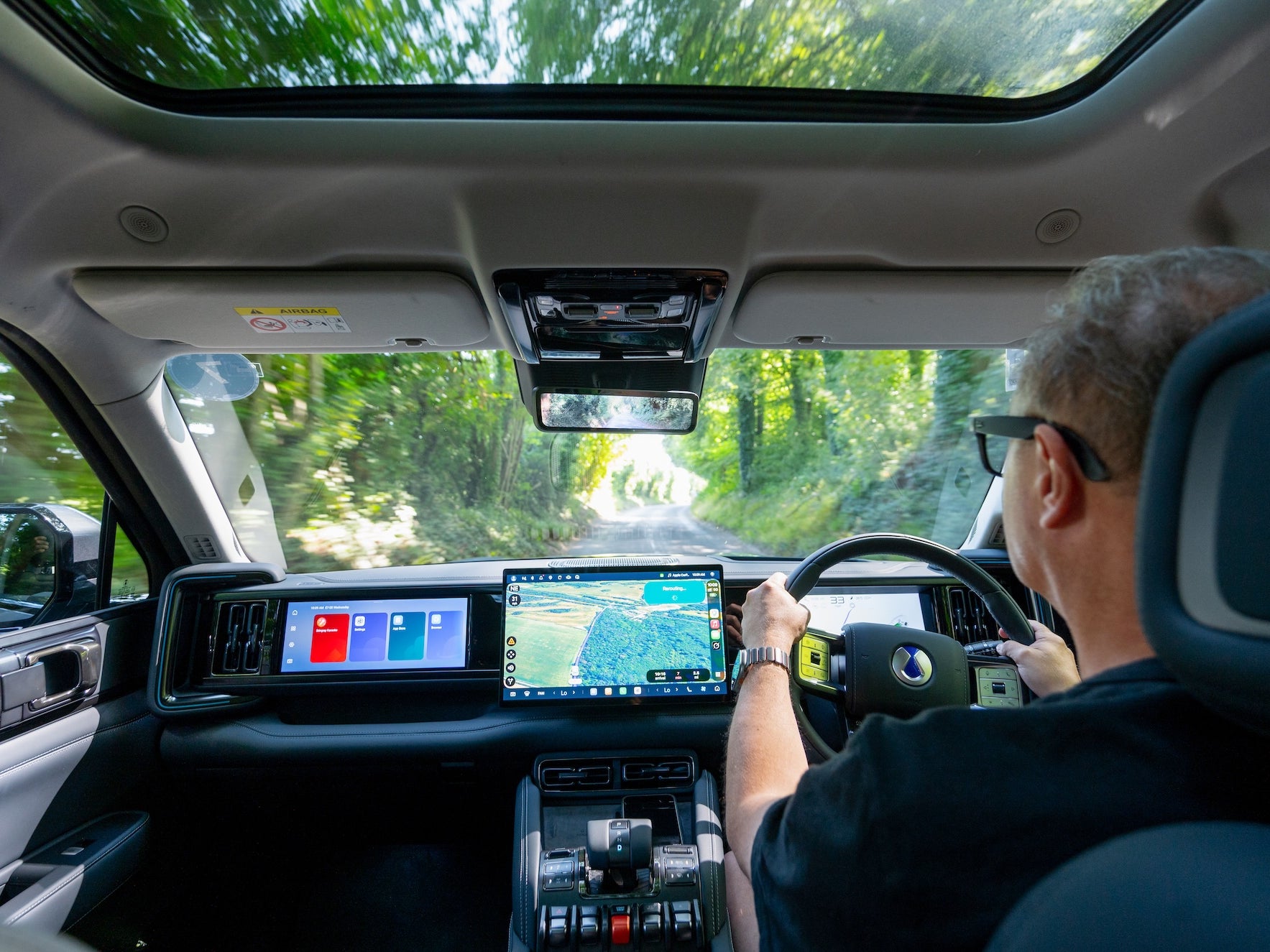
The infotainment system comes with Google built-in, including Google Maps, Google Assistant and Google Play Store, allowing extra apps to be installed. The Bao 5 also has its own voice assistant with four-zone audio detection, designed to let different occupants interact with more than 300 vehicle functions.
That’s the theory. In practice, the voice assistant still comes with the slightly odd identity issue mentioned earlier. Although this car is sold as a Denza in the UK, it still responds to “Hey BYD”. Given it is also a Fangchengbao in China, the Bao 5 can feel as if it is still working out which badge it wants to wear.
The physical controls are much easier to like. The big buttons on the centre console suit the car, and they’re far more useful than burying everything in a touchscreen. The chunky layout works with the Bao 5’s character, and it helps stop the cabin feeling like technology has been added simply for show.
The audio system is a major part of the car’s premium pitch. Elegance models get a 16-speaker Devialet system, while Ultimate versions upgrade that to 18 speakers, including headrest speakers. It’s a serious set-up and fits with Denza’s attempt to position the Bao 5 as something more luxurious than a typical rugged plug-in hybrid SUV. I’m not usually a fan of Devialet systems in cars, but this was one of the better ones I’ve listened to.
Device charging is well covered. There are three USB ports in the front, with two Type-C ports and one Type-A, plus two in the rear, with one Type-C and one Type-A. Elegance models get one 50W wireless smartphone charging pad, while Ultimate versions get two.
The Denza app adds more convenience and can be used to share the car’s digital key, allowing the vehicle to be unlocked, locked and started. There’s also an NFC digital key for a smartphone that still works without a phone signal and in low-battery situations.
The safety roster is comprehensive, too. The Bao 5’s frame is made from 96 per cent high-strength steel, with Denza claiming a 30 per cent reduction in frontal-crash intrusion and a 25 per cent reduction in side-pole intrusion. The roof can resist static compression forces of up to 12 tonnes.
There are 11 airbags as standard, including driver and passenger frontal airbags, a driver’s knee airbag, front and rear side airbags and side curtain airbags. Driver-assistance systems include Intelligent Cruise Control, Front and Rear Cross Traffic Alert and Brake, Lane Keep and Lane Departure Assist, front and rear parking sensors, a 360-degree camera and Hill Descent Control.
Ultimate models also get a digital rear-view mirror, which can help provide a wider view behind the car, especially useful when the spare wheel and boxy body shape affect rear visibility. However, as with all digital mirrors, they’re never as clear as a mirror and can be problematic if you’re long-sighted and need glasses to use a computer screen.
Prices and running costs
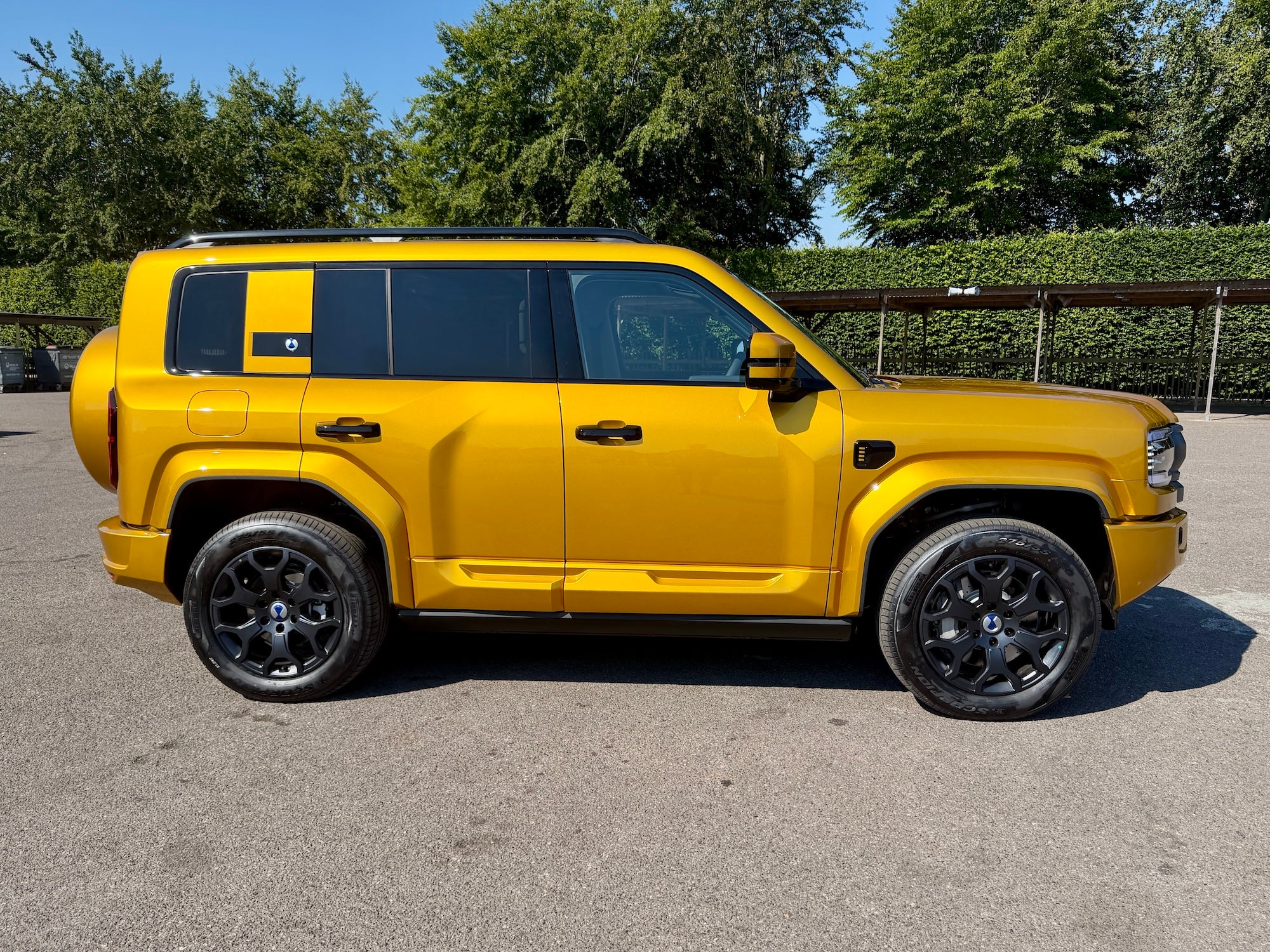
The Denza Bao 5 starts at £69,500 for the Elegance, while the Ultimate costs £78,880. Orders open in line with the first Denza dealership opening in late summer, with deliveries of the Z and Bao 5 expected around November.
Given the size, quality and kit count, that’s a reasonable price – but whether premium buyers would be happy to own a Denza might be more problematic.
Both versions are very generously equipped, though. Elegance gets 18-inch alloy wheels, fixed side steps, integrated roof rails, puddle lights, a panoramic sunroof, a charging-port light, heated and ventilated front seats with massage, a heated steering wheel, heated rear seats, multi-coloured ambient lighting, a Devialet audio system, the 12.3-inch digital instrument display, 15.6-inch touchscreen, passenger screen and 50W wireless charging.
Ultimate adds the DiSus-P intelligent suspension, 20-inch alloy wheels, ventilated rear seats, a fully enclosed spare-tyre cover, a digital rear-view mirror, the upgraded 18-speaker Devialet sound system and an additional wireless smartphone charging pad.
The plug-in hybrid numbers are useful. A 56-mile electric range should cover plenty of shorter journeys without using petrol, provided the car is charged regularly. The 537-mile total range gives it the long-distance flexibility that some buyers still want from a large SUV, while the 30g/km CO2 figure could help with running costs.
The Bao 5 also has a 2,500kg towing capacity, which will be useful for buyers who want something capable of pulling a trailer or caravan. The battery can be charged from 30 to 80 per cent in 16 minutes on a suitable DC charger, or from 15 to 100 per cent in just over three hours using 11kW AC charging.
The verdict: Denza Bao 5
The Denza Bao 5 has quality, kit, space and a very smooth plug-in hybrid system, but its old-school off-roader feel, unsettled ride and the challenge the Denza badge has at this price point hold it back.
Denza Bao 5 rivals
- Land Rover Defender 110 PHEV
- BMW X5 xDrive50e
- Mercedes-Benz GLE 450e
FAQs
How long does it take to charge?
The Denza Bao 5 can charge from 30 to 80 per cent in 16 minutes using a suitable DC rapid charger, thanks to peak DC charging of 100kW. It also has 11kW three-phase AC charging as standard, which can charge the battery from 15 to 100 per cent in just over three hours.
How much does the Denza Bao 5 cost - is it worth it?
The Bao 5 starts from £69,500 for the Elegance and rises to £78,880 for the Ultimate. It brings a huge amount of standard kit, a smooth plug-in hybrid system, serious off-road hardware, 56 miles of electric range and 537 miles of total range, but the unsettled ride, vague steering and newness of the Denza badge make it a very different choice from more established premium SUVs.
Does Denza replace batteries for free?
Warranty details haven’t been confirmed, but expect Denza to mirror BYD’s cover for the battery, which is eight years or 155,000 miles of warranty cover making it one of the best battery warranties on the market
Why trust us
Our team of motoring experts have decades of experience driving, reviewing and reporting on the latest EV cars, and our verdicts are reached with every kind of driver in mind. We thoroughly test drive every car we recommend, so you can be sure our verdicts are honest, unbiased and authentic.