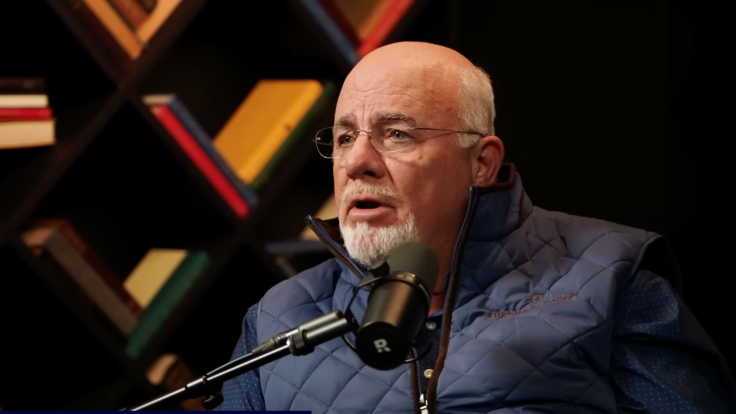
Dave Ramsey dismissed credit card rewards as a wealth-building tool during a sit-down on the Young and Profiting podcast, calling the entire points system 'bad math' and citing a landmark study from his firm that surveyed 10,167 millionaires.
'We did the largest study of millionaires ever done at Ramsey Research, 10,167 of them,' Ramsey told host Hala Taha. 'And the number of them that said I became a millionaire because of my points is zero. None.'
Taha pushed back on Ramsey's long-standing hardline against credit cards, noting that Gen Z and millennial listeners are 'all about our points, getting free travel, free hotel, free flights.' Ramsey held firm. The exchange, which aired as part of a wider conversation about debt and high-income money mistakes, has since circulated widely on social media.
'You Gave Up a Dollar to Get a Penny'
Ramsey grounded his argument in spending psychology. Research from Dun & Bradstreet has shown that credit card users spend between 12 and 18 per cent more than those paying with cash. Ramsey argued that layering a rewards incentive on top of that gap only widens it further.
'And if you add to it, oh, I'm getting points — then I'll even increase my spending yet more,' he said. 'So, you gave up a dollar to get a penny. How's that increase wealth?'
He singled out Apple Pay as the extreme end of frictionless spending. 'You don't even see an expenditure. It's just you wave a wand and stuff happens,' he said. He also questioned the basic arithmetic behind cashback programmes.
'I get 2% back. So you spend $100,000 (£75,000) and you got two grand. How does that equate to wealth? It doesn't. It's bad math.'
Dave Ramsey reveals why 0 out of 10,167 millionaires got wealthy using credit card points
— Hala Taha (@yapwithhala) May 18, 2026
Hala Taha: "A lot of people are really interested in points, especially Gen Z, millennials. We're all about our points, getting free travel, free hotel, free flights. Why is that still a… pic.twitter.com/8rvwPFCA0o
Ramsey added that the rewards model ultimately serves card issuers, not consumers. He claimed that 78 per cent of airline miles are never redeemed, a figure he presented as evidence that loyalty programmes benefit banks and airlines far more than the people using them.
'It's a game and you're playing with a multi-billion dollar company who has more algorithms tracking your behaviour patterns than you can even imagine,' he said. 'And believe me, they're not coming out on the short end of this. The consumer is.'
Ramsey Solutions Runs on Debit Cards, Not Credit
Ramsey's firm walks the line he draws. Ramsey Solutions, which generates roughly $300 million (£225 million) in annual revenue, operates without a single corporate credit card. Around 85 employees carry company-issued debit cards instead.
'The debit card does every single thing the credit card will do,' he said. 'I'm not going to chase pennies with dollars.'
His comments land at a moment when American household card debt sits at record levels. Total US credit card debt stood at $1.252 trillion (£939 billion) as of the first quarter of 2026, according to LendingTree, citing Federal Reserve Bank of New York data. The average annual percentage rate across all card accounts sat at 21 per cent. That figure has remained stubbornly high despite the Federal Reserve cutting rates in September, October, and December 2025. The Fed has held rates steady at its January, March, and April 2026 meetings.
What the Millionaire Study Actually Found
Ramsey offered a broader picture of what his research says does build wealth. The Ramsey Research millionaire study found that a well-funded retirement plan invested in good mutual funds, combined with a paid-off home, accounted for the bulk of the average millionaire's first $1 million (£750,000) to $5 million (£3.75 million) in net worth. No respondent pointed to credit card perks as a factor.
'Personal finance is 80% behaviour. It's only 20% head knowledge,' Ramsey said.
He acknowledged the persistent criticism his no-credit-card stance attracts but framed the consistency as intentional. 'You may or may not agree with Ramsey, but you 100% know we're going to say it again exactly the way we said it before because we really do believe it,' he said.
Disclaimer: Our digital media content is for informational purposes only and does not constitute investment advice. Please conduct your own analysis or seek professional guidance before investing. Remember, investments are subject to market risks, and past performance does not guarantee future results.