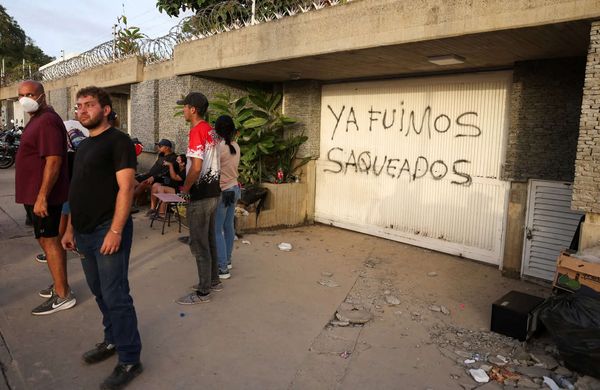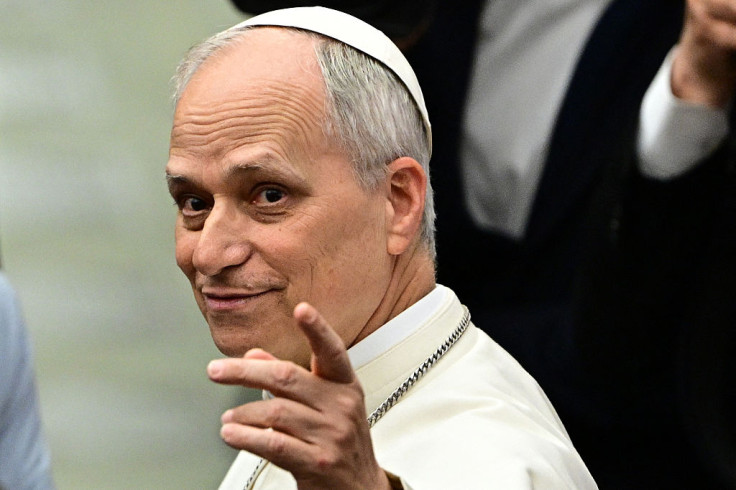
Cuban officials have asked Pope Leo XIV to mediate between them and the United States to ease the oil blockade that has the island on the brink of collapse, according to a new report.
The Washington Post detailed that Cuban officials have met with the pope with that purpose, seeking to facilitate talks with Washington D.C. Havana is asking the Holy See to determine the "lowest common denominator" concession that it would have to make to the U.S. for the country to relax the measure.
However, a people familiar with the matter showed skepticism about the chances of the strategy succeeding. "The administration is not going to let the Vatican dictate its Cuba policy," one person told the outlet. "They're welcome to speak, but the response is, 'You're right, there are problems, but we didn't cause them.'"
The Trump administration has made it clear that it seeks profound changes in the island, with Marco Rubio saying on Friday that the "people in charge" of Cuba need to be changed for the country to prosper.
Rubio claimed that the only way for Cubans to become successful is "if they leave the country," something he described as "very sad."
"You see Cubans go all over the world and find success except in Cuba. That has to change and for that to change you need to change the people in charge, you need to change the system that runs the country, and you need to change the economic model that it's following," Rubio added.
He went on to claim that such a change is the "only way forward if Cuba wants a better future," and that "maybe now there's an opportunity to do it."
Cuban authorities have recognized negotiating with the Trump administration, with President Miguel Díaz-Canel recently saying that Raul Castro is playing a leading role in the conversations.
In an interview with Spanish politician Pablo Iglesias, Díaz-Canel said Castro "is one of those who has directed, together with me and other institutions of the party, government and state, how we should conduct this dialogue process." He added that the talks are taking place "under the direction of the army general," referring to Castro, whom he described as the "historic leader of the revolution," despite no longer holding formal office.
Díaz-Canel indicated that Cuba is open to discussing a broad range of issues, including "investments," U.S. participation in the Cuban economy and "migration issues." He also mentioned potential cooperation on security, environmental matters, and scientific and educational exchanges.
However, he set clear limits, stating that any dialogue must respect "our sovereignty, our independence and our political system," adding that those elements "are not up for discussion."

© 2025 Latin Times. All rights reserved. Do not reproduce without permission.