Few celebrities have fueled more plastic surgery discourse than the Kardashian–Jenner clan. Kris, Kylie, and Khloé’s recent transparency about the work they’ve had done has been both welcome and unexpected (if a little too late in the grand scheme of things). Speculation, however, still swirls around the rest of the family. Take Kendall, for instance. In a January 2026 podcast episode of “In Your Dreams With Owen Thiele,” she clapped back against rhinoplasty rumors: “I swear to God on everything, everything, that I love that I’ve never had a nose job.” She claims that she “grew into” her nose while also crediting Accutane (aka isotretinoin) to shrinking it—a phenomenon that TikTokers and Redditors have long asserted is a thing.
When I first heard this, the cynic in me scoffed and thought this was just another example of celebrities crediting so-simple-it-can’t-be-true hacks behind their jaw-dropping transformations. (Respectfully, there’s no way two tiny braids single-handedly lift Anne Hathaway’s entire face on the daily.) But then the beauty journalist in me got curious. Is it possible that a prescription acne medication can actually make your nose smaller? To my surprise, I quickly discovered that the ‘Accutane nose job’ is pretty legit… at least to an extent.
Ahead, plastic surgeons and a dermatologist break down what the drug can and can’t do to refine your nose. Plus, find out if it’s worth taking Accutane yourself to alter the size of your nose without going under the knife.
Can Accutane Make Your Nose Look Smaller?
In a word, yes. Accutane works by reducing the activity of sebaceous (oil) glands, thus bringing acne to a halt. Since the nose has such a high concentration of them, shutting down this activity—especially in those who overproduce oil—can result in visible transformation. “As oil production decreases, the pores appear smaller and the nose can appear more defined,” says Forum Patel, MD, FAAD, a board-certified dermatologist at Arya Derm in San Francisco. She offers an analogy of your nose consisting of a bunch of tiny balloons (in this case, oil glands). “When the glands are overactive, those balloons fill up, making the nose look fuller,” she explains. “When oil production is reduced, it’s like letting some of the air out, and the nose can appear slimmer and smoother.”
Donald B. Yoo, MD, FACS, a double-board certified facial plastic surgeon in Beverly Hills, California, agrees, saying that Accutane can reduce the size of the nose but that it’s limited to certain areas. “The skin envelope over the nasal tip and ala (nostrils) will have the thickest and most densely packed sebaceous glands (relative to the dorsum or bridge of the nose) and will thus display the greatest volume reduction,” he sats. In patients with thicker or oilier skin, that can translate to a noticeable reduction in the width and volume of the nasal tip, and even thinner-looking nostrils.
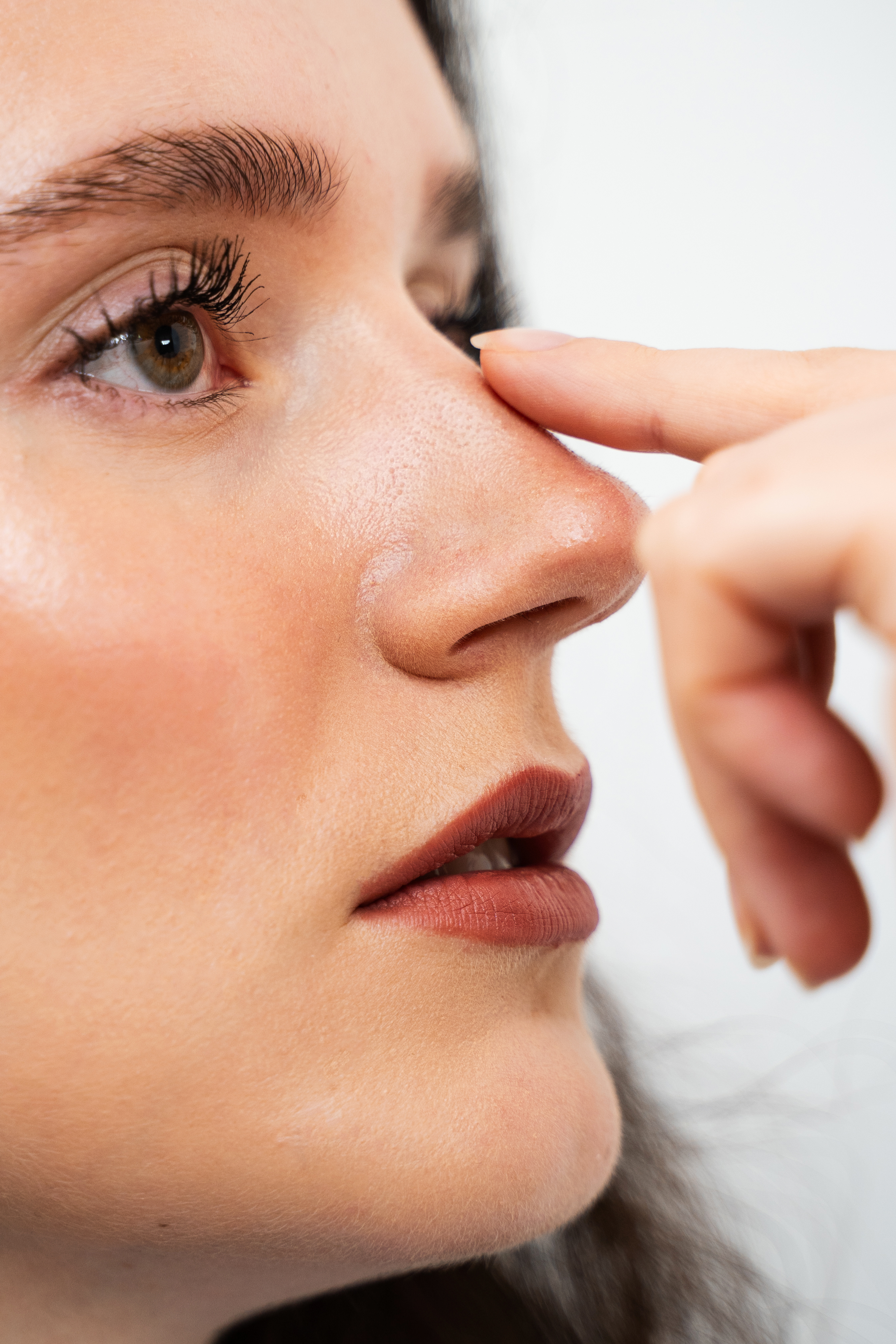
As chaotic as the ‘Accutane nose job’ conversation sounds online, it’s not just clickbait. According to a 2025 review in the journal Cureus, prescribing isotretinoin as an adjunct to rhinoplasty can improve surgical outcomes—particularly in patients with thick skin—not only by reducing sebaceous activity but also minimizing postoperative swelling. “Its use in carefully selected patients is common practice amongst myself and my colleagues specializing in rhinoplasty,” adds Dr. Yoo.
Because the mechanism is tied to oil production, it’s not surprising that spironolactone—another medication that’s prescribed off-label to treat hormonal acne—enters the chat, too. “Spironolactone can do something similar to your skin by blocking the effects of testosterone on the skin,” says Jeffrey Lisiecki, MD, a board-certified plastic surgeon in New York City. However, Dr. Patel says that the results are less predictable and pronounced than those with Accutane.
Just How Much Can Accutane Shrink Your Nose?
If you’re hoping to save five figures on a rhinoplasty, pause before sprinting over to your dermatologist. The acne medication can only go so far to change the appearance of your nose. “Lasting changes to the actual shape and structure of the nose—the cartilage and bone—are impossible without surgery,” says Dr. Lisiecki. “The height and shape of the bridge, the projection and rotation of the nasal tip, and the width or flare of the nostrils are aspects that will not change without injectables or surgery,” adds Dr. Yoo. Again, Accutane has the most potential to shrink the nostrils and tip of the nose only.
Moreover, the slimming effects aren’t guaranteed for everyone. “If Accutane is used in a patient with a wide or poorly defined nasal tip cartilage, it will not transform into a defined nose no matter how much the skin is thinned unless the nasal framework is reshaped,” Dr. Yoo explains. He adds that the volume of the nasal skin won’t change significantly if your skin is naturally thin. “Isotretinoin works best for patients with thick skin and with good underlying nasal structure,” he reiterates.
Lasting changes to the actual shape and structure of the nose—the cartilage and bone—are impossible without surgery.
Dr. Jeffrey Lisiecki
Plus, Dr. Patel notes that your baseline oil production has a major bearing on how dramatic any changes will appear. “People who are naturally more oily or acne-prone may see more visible changes, while those with dry or eczema-prone skin may notice little to no change,” she shares.
Should You Take Accutane to Slim Down Your Nose?
As tempting as it may be to pop a pill and watch your nose whittle down, the experts suggest that this isn’t a sound route to take. For starters, research shows that it works well as an adjunct to rhinoplasty—not as a replacement for it. “I don’t prescribe Accutane just for the purpose of making a nose appear smaller in someone who has not had surgery,” says Dr. Lisiecki. Even with his rhinoplasty patients, he estimates that a small percentage of them will actually benefit from it. The jury’s also out on how permanent the results are. “Some studies show a sustained improvement while some show an earlier improvement during the healing process that diminishes with time,” he shares. He adds that the optimal Accutane dosage and timing are also still up for debate, though a low dose for up to six months appears to be the standard.
Dr. Yoo agrees, noting that taking Accutane to get a makeshift nose job is ill-advised for several reasons. First, it’s unlikely to yield the result you desire. Second, there are serious side effects associated with the medication. Dry skin, lips, and eyes are common, as are joint and muscle aches and temporary hair thinning. Mood changes, stomach pain, and blurry vision can also occur. Even more serious is the potential for liver damage and birth defects—the latter of which is important to note for any woman who’s planning to conceive.
Bottom line: If you and your dermatologist agree that Accutane is the best solution to get your acne under control, go ahead and take it. If you happen to notice unexpected but welcome changes in your nose à la Kendall Jenner, that’s a bonus. But for everyone else, experimenting with Accutane solely for the sake of shrinking your nose isn’t worth the risk or uncertainty.