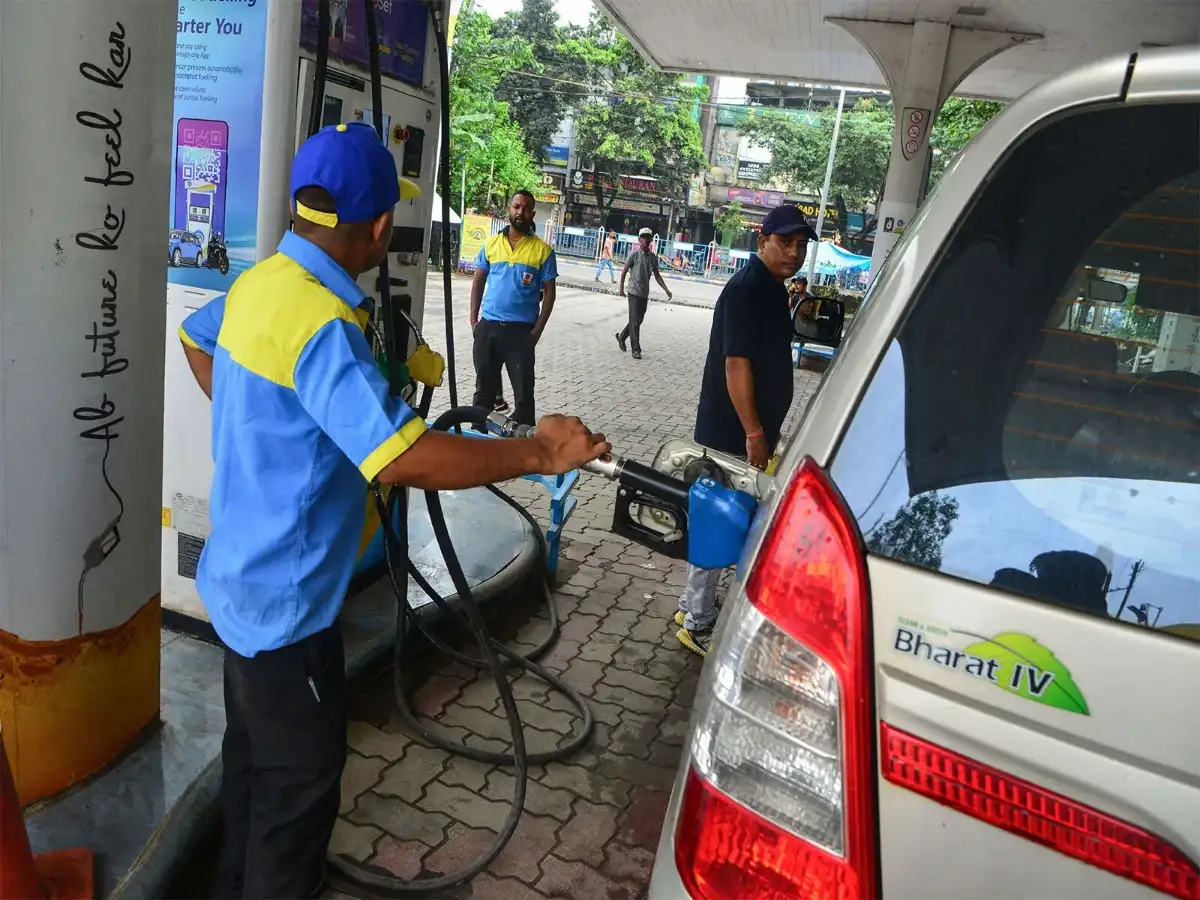
The government has acknowledged that car owners using E20 petrol in vehicles originally designed for E10 fuel could see a decline in fuel efficiency, while reiterating that the impact is significantly lower than what many have clamied on social media.
In a written reply in the Lok Sabha on July 30, the Ministry of Road Transport and Highways said studies conducted by the Automotive Research Association of India (ARAI), the Society of Indian Automobile Manufacturers (SIAM) and Indian Oil Corporation found that fuel efficiency in BS-III, BS-IV and BS-VI vehicles designed for E10 petrol could decline by 2-6% when these vehicles are operated on E20 fuel.
The extent of the reduction varies depending on the vehicle segment as well as its age, it added.
The figure cited by the Road ministry caught attention as it differed from what another ministry had cited just days ago, a ToI report said.
It may be noted that the Ministry of Petroleum and Natural Gas, replying to a similar question in the Rajya Sabha, had said the reduction in fuel economy for older vehicles engineered for E10 petrol is generally restricted to around 3-5%.
Also read | E20: No pressure on auto companies to hide fact, says govt
However, while the two ministries cited different ranges, both stressed that the actual impact on mileage is influenced by multiple variables, including driving style, traffic conditions, vehicle maintenance and operating environment, ToI's report (by Dipak K Dash) said.
The government's clarification follows growing public discussion over the nationwide rollout of E20 petrol, with several social media posts claiming that motorists would suffer a sharp decline in mileage after switching to the higher ethanol blend.
Govt and various concerned authorities rejected those assertions, saying available scientific studies do not support claims of substantial fuel economy losses.
The transport ministry's response was based on joint assessments undertaken by ARAI, SIAM and Indian Oil Corporation to evaluate the performance of vehicles not specifically calibrated for E20 fuel.
Also read | Govt says E20 fuel safe for vehicles, defends ethanol blending programme
The findings suggest that although ethanol contains less energy per litre than conventional petrol, the real-world impact on fuel economy remains within a limited range for most older vehicles.
The petroleum ministry has also highlighted the technical advantages of E20 petrol. It said the fuel delivers a higher octane rating, improved resistance to engine knocking and cleaner combustion, factors that contribute to smoother engine performance.
These characteristics help offset some of the energy-density disadvantage associated with ethanol blends, it said.