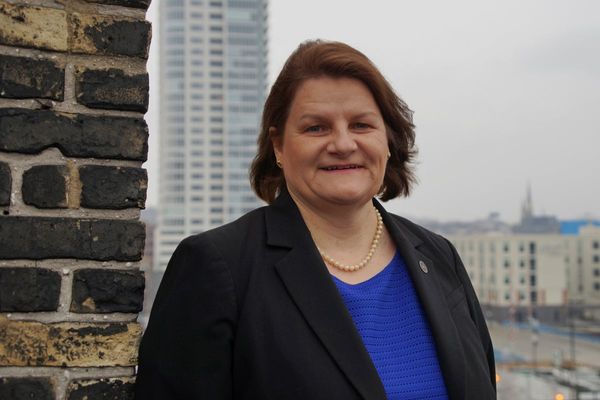

When Karen Adams was diagnosed with type 2 diabetes, she quickly researched the best way to treat it.
Mrs Adams, of West Wallsend, said "I had no inkling that anything was wrong".
"It was a big shock," Mrs Adams said.
She was diagnosed during her normal three-monthly check-up with her doctor.
"My doctor said he'd been watching my blood sugars for a while and 'you've just slipped into type 2 diabetes'," the 66-year-old said.
She said the doctor told her: "I don't want to put you on medication at this stage. I want you to read about it and come back in two weeks and tell me what you think we should do."
"That was a good choice for me because I like to know what's going on," Mrs Adams said.
She adopted a low-carb diet and, within a fortnight, had lost three kilograms.
Within three months, she had reversed her type 2 diabetes through following the Defeat Diabetes program online.
In the three years since she was diagnosed, she has lost 30 kilograms.
"I seem to have got to a level where my weight doesn't want to move any further, but my doctor's happy with me," she said.
"He's taken me off blood pressure tablets and halved my cholesterol tablets.
"If I keep going, I might be able to get off the cholesterol tablets, although that seems to be more hereditary."
A 12-month study by La Trobe University researchers examined 87 people with type 2 diabetes who used the Defeat Diabetes program.
It found 42 per cent of participants reduced their blood sugar levels to below the clinical threshold for the disease.
About 18 per cent of participants achieved remission without medication to lower their glucose levels.
About 13 per cent of participants who were on diabetes medication at the start of the program discontinued it by the end of the 12 months.
Sports medicine physician Peter Brukner said the standard approach to type 2 diabetes had been to "diagnose, medicate and monitor the decline".
Dr Brukner, who founded Defeat Diabetes, has worked at AFL clubs, the Australian Olympic and cricket teams and the Socceroos.
He had a stint in the UK as head of sports medicine at Liverpool Football Club.
He had been pre-diabetic, but reversed his metabolic abnormalities and lost 13 kilograms through a low-carb diet.
"More than $3 billion leaves the Australian healthcare system every year because of diabetes. We cannot keep ignoring what the evidence is telling us," he said.
A Diabetes Australia spokesperson said "there is no one-size-fit-all approach to living well with diabetes".
"Everybody is different and, when it comes to low-carb eating, there is no particular diet or standard approach," the spokesperson said.
"For people living with type 2 diabetes, research has shown that low-carb eating is one option to help you lose weight and manage blood glucose levels.
"We believe that people with diabetes should make their own, informed choices about their diabetes management, including eating plans, in consultation with their diabetes healthcare team."
Royal Australian College of General Practitioners guidelines state that "low and lower carbohydrate eating patterns can be beneficial for some individuals with type 2 diabetes".
"They require careful planning and monitoring to ensure safety and effectiveness," they state.
Mrs Adams' doctor advised her to "keep maintaining the lifestyle".
"I'm quite happy to because I'm not suffering. I don't feel like I'm missing out on anything," she said.
"The biggest thing now is I don't eat a lot of bread, pasta or rice. You can get low-carb potatoes and there are no-sugar alternatives.
"There's a lot of low-carb stuff out there. You've got to learn to read labels. That's the big thing. It won't work for everybody. You've got to try what works for you."