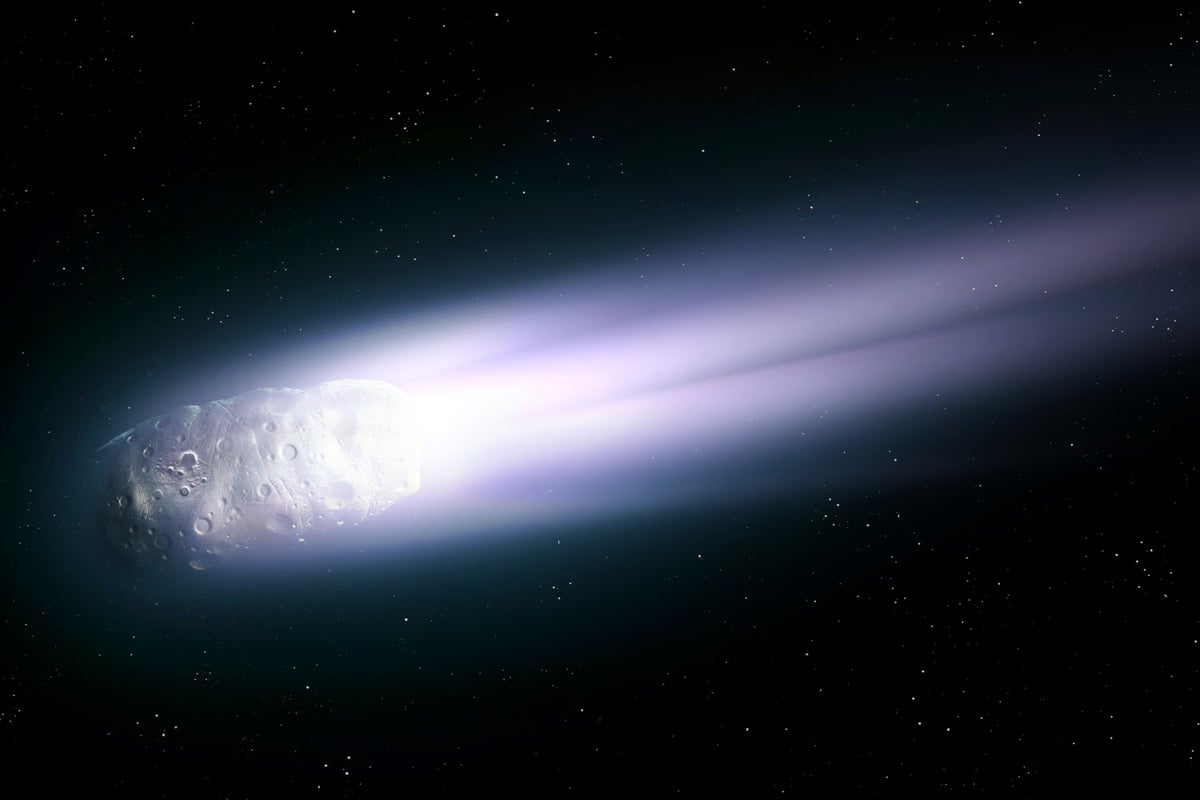
A newly-discovered asteroid will make an unusually close pass of Earth on Monday evening.
Asteroid 2026 JH2, which was only discovered last week by astronomers based at the Mount Lemmon Observatory in Arizona, will make its closest approach at just after 10pm BST (5pm EDT) on 18 May.
It is expected to reach a minimum distance of just 91,000 kilometres (57,000 miles) from Earth, which is less than a quarter of the distance to the Moon.
At this height, Asteroid 2026 JH2 is closer to Earth than some satellites, including the Transiting Exoplanet Survey Satellite.
Measuring up to 35 metres (115 feet) across, the asteroid is larger than a blue whale and could cause significant damage if it actually hit Earth.
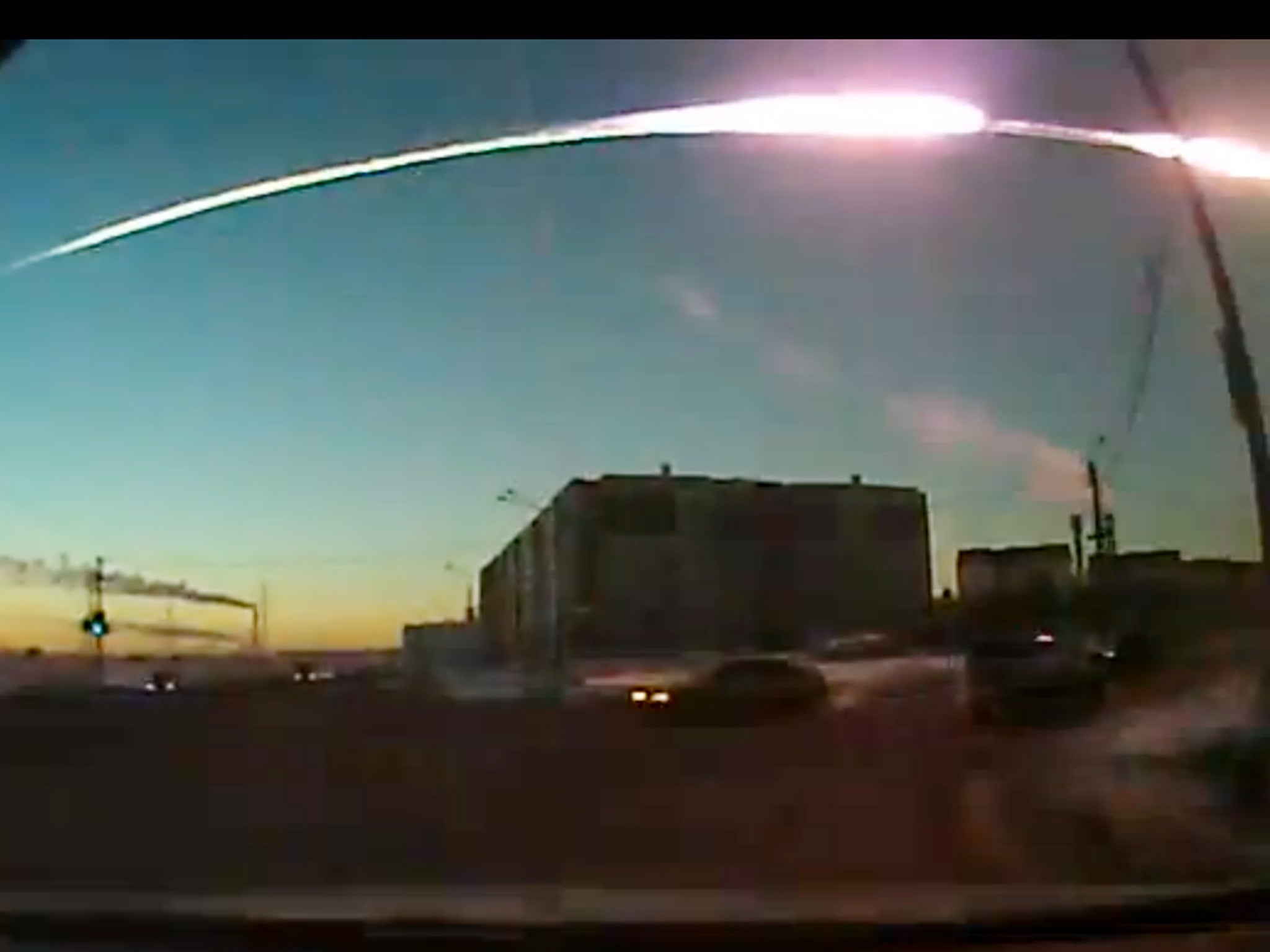
It is similar in size to the Chelyabinsk meteor, which exploded in the atmosphere above Russia in 2013.
The shockwave from the event was powerful enough to shatter windows across the Russian city, causing injuries to about 1,500 people.
Some fragments reached the Earth’s surface, though none near any populated areas.
Astronomers monitoring the near-Earth asteroid say it poses no risk to the Earth or Moon, but will be close enough to observe using a telescope.
A live stream of the flyby will be broadcast by the Virtual Telescope Project from its observatory in Manciano, Italy.
Nasa’s Jet Propulsion Laboratory, who helped verify the space rock, have calculated that Asteroid 2026 JH2 has an elliptical orbit that circles the Sun every 3.7 years.
Its current trajectory means it will not pass by Earth again until 2060, according to the European Space Agency, though it will pass at a much greater distance.
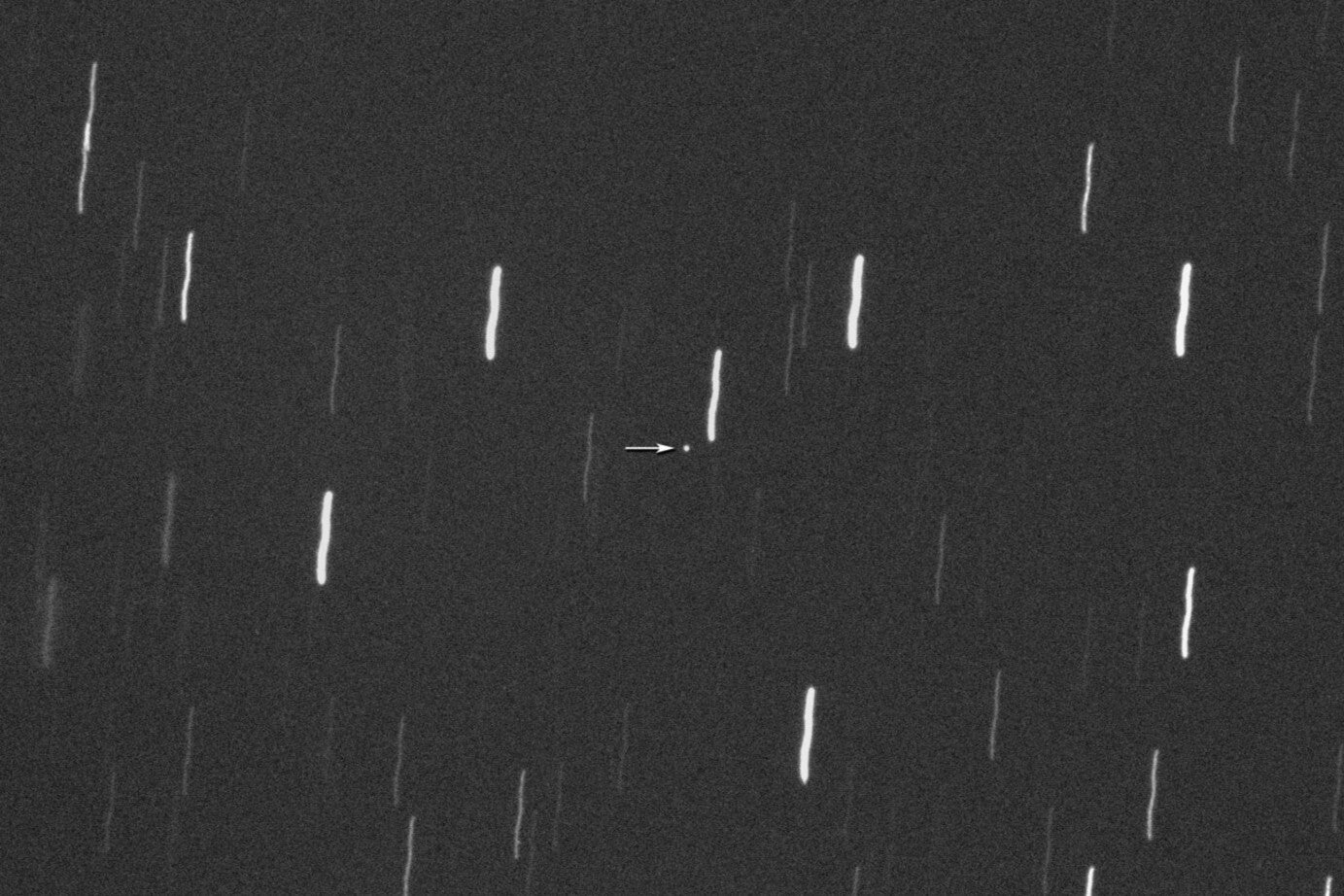
At its peak brightness, the asteroid will be possible to spot with a good pair of binoculars, so long as the stargazer knows where to be looking in the night sky.
The Virtual Telescope Project’s live stream of Asteroid 2026 JH2’s flyby will begin at 8:45pm BST on Monday.
Current weather forecasts suggest there is a chance of intermittent clouds over Manciano.
New shortcut found to Mars that could cut travel time by half
Satellite launches are filling up the atmosphere, study warns
NASA spacecraft to fly close to Mars as it chases rare metal asteroid
Scientists might have finally found a way to spot dark matter
Dante’s iconic 14th-century poem may have been inspired by asteroid impact