
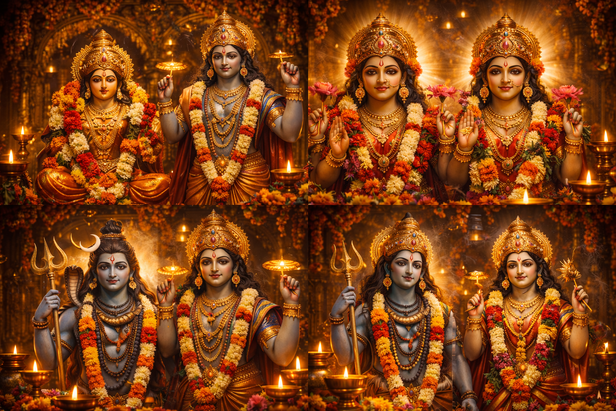
“न तस्य प्रतिमा अस्ति”
Yajurveda 32.3
“There is no image of Him.”
Many people read this line and immediately question idol worship. If the Divine is beyond form, why do millions bow before a murti? Why light a lamp before a statue? Why offer flowers to something made of stone?
These doubts are natural. In a world that values logic and visible proof, idol worship can look confusing, even outdated. Some see it as superstition. Others think it contradicts the idea of a formless God. Even many believers struggle to explain it clearly.
But when we step back and understand the philosophy behind it, idol worship appears less like blind ritual and more like a deeply thoughtful spiritual method. It was not created to limit God to stone. It was developed to help human beings connect with something infinite.
1. Idol worship is not worship of stone but worship through symbol
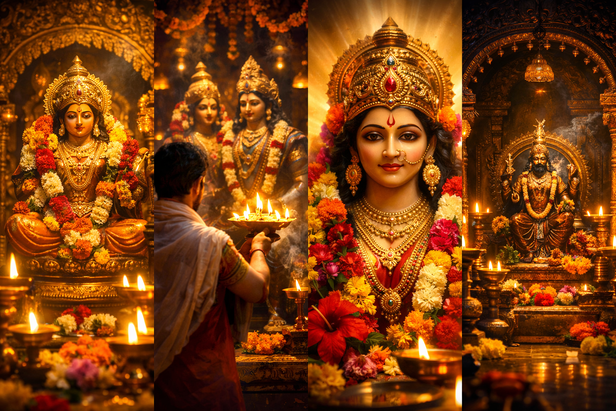
A frequent criticism claims that idol worship means believing that God is a piece of stone or metal. Classical Hindu philosophy does not support this idea. The murti is not treated as an ordinary object. It is considered a symbolic embodiment of divine qualities.
In Sanskrit, the word murti means form or manifestation. The Upanishadic vision describes Brahman as formless and infinite. At the same time, devotional traditions accept that the human mind relates more easily to form and attributes. The image becomes a focal point for concentration, devotion and meditation.
The concept of prana pratishtha, a ritual described in Agama texts and temple manuals, formally consecrates the murti. Through mantra and ritual, the deity is invited to reside in the image. The stone is not worshipped as stone. It becomes a sacred medium. This approach is similar to how a national flag is not just cloth but a symbol of identity and emotion.
The misunderstanding arises when the symbol is mistaken for literalism. The philosophical foundation clearly distinguishes between ultimate reality and its accessible representation.
2. Idol worship does not contradict the idea of a formless God
Another common misunderstanding is that idol worship contradicts monotheism or belief in a formless divine reality. In Hindu thought, the concept of Nirguna Brahman refers to the formless absolute without attributes. At the same time, Saguna Brahman refers to the same reality expressed with qualities and form.
Texts such as the Bhagavad Gita explain that worship of the formless is difficult for many people because the human mind functions through imagery and sensory perception. Therefore, devotion directed toward a visible form becomes a practical spiritual method.
The formless and the form are not opposites in this framework. They are complementary approaches. Just as water can exist as vapor or ice, the divine is understood to transcend form while also being present in form.
The misunderstanding occurs when idol worship is interpreted as a denial of transcendence. In classical theology, it is actually a bridge between transcendence and human experience.
3. Idol worship has psychological and meditative depth
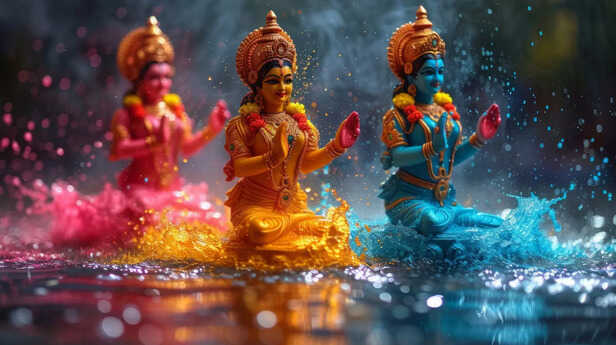
Modern psychology acknowledges that the human mind concentrates better when it has a visual anchor. In temple architecture and ritual design, this insight was integrated long before the rise of cognitive science.
The murti in a temple is placed in the garbhagriha, the innermost sanctum, symbolizing the heart center. The devotee moves from the outer courtyard to the inner chamber, mirroring the inward journey of consciousness. The image provides a focal point for attention, reducing mental distraction.
The repetition of mantra, the offering of light and flowers, and the act of darshan create a multisensory environment that engages sight, sound, smell and touch. This ritual structure helps cultivate devotion, humility and focus.
Rather than being irrational, idol worship functions as a structured meditative practice. It transforms abstract belief into embodied experience. The misunderstanding comes from ignoring the psychological sophistication embedded in ritual practice.
4. Idol worship is rooted in scriptural and philosophical traditions
It is sometimes assumed that idol worship is a later corruption or purely popular practice without scriptural backing. This assumption does not align with historical evidence.
While early Vedic hymns emphasize cosmic forces and natural elements, later Vedic and post Vedic literature gradually develops the concept of personal deities with defined iconography. The Puranas, Agamas and Tantras provide detailed instructions on icon creation, temple architecture and ritual procedure.
Philosophical schools such as Advaita Vedanta, Vishishtadvaita and Dvaita all acknowledge the role of image worship at different levels of spiritual maturity. Even teachers who emphasized non dual philosophy did not necessarily reject temple worship. They saw it as a legitimate path suited to different seekers.
The development of murti worship was not accidental. It was shaped by theologians, philosophers and temple architects who created a system where art, symbolism and devotion merged. The misunderstanding arises when this long intellectual history is reduced to mere ritualism.
5. Idol worship is about relationship, not dependency
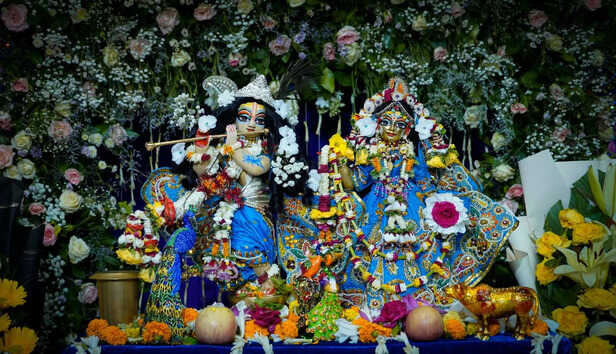
Another criticism suggests that idol worship fosters dependency or magical thinking. However, the core intention in many devotional traditions is to cultivate a personal relationship with the divine.
In bhakti literature, the deity is approached as a friend, parent, child or beloved. The image becomes a visible point of interaction. This relational spirituality encourages ethical living, compassion and surrender of ego.
The rituals associated with idol worship, such as offering food or performing aarti, are symbolic acts of gratitude and service. They remind the devotee that life itself is sustained by a higher order. The practice is less about demanding favors and more about aligning oneself with dharma and divine values.
When viewed in this light, idol worship is not dependency but discipline. It channels emotion and reverence into structured practice. The misunderstanding comes from equating devotion with blind belief, without examining its ethical and transformative aspects