Walking through a supermarket today can feel reassuring. Shelves are lined with products carrying words like organic, protein-rich, gluten-free, and natural. Many of us reach for these items believing we are making better choices for ourselves and our families. The truth is that food marketing is powerful. Certain products have developed what nutrition experts call a "health halo," where a food is perceived as healthy because of a few positive claims, even though its overall nutritional profile may tell a different story. This does not mean these foods should be completely avoided. It simply means consumers deserve to know what they are really eating. Here are five foods that often wear a healthy image but may not be as nutritious as they seem.
Flavored Yogurt Can Be More Dessert Than Breakfast
Yogurt has long been praised for its calcium, protein, and probiotic content. It is commonly recommended as a wholesome breakfast or snack. However, many flavored yogurts sold in supermarkets contain surprisingly high amounts of added sugar. A single serving can sometimes pack as much sugar as a small chocolate bar. Fruit-flavored varieties are particularly misleading because they appear naturally sweet and nutritious. Manufacturers often add fruit concentrates, syrups, and sweeteners to improve taste and shelf life. While probiotics remain beneficial, excessive sugar intake may contribute to weight gain, blood sugar fluctuations, and increased cravings. A better option is plain Greek yogurt topped with fresh fruits, nuts, or a drizzle of honey. This allows consumers to enjoy the benefits of yogurt while controlling sweetness levels.
Granola Is Not Always the Light Choice It Appears to Be

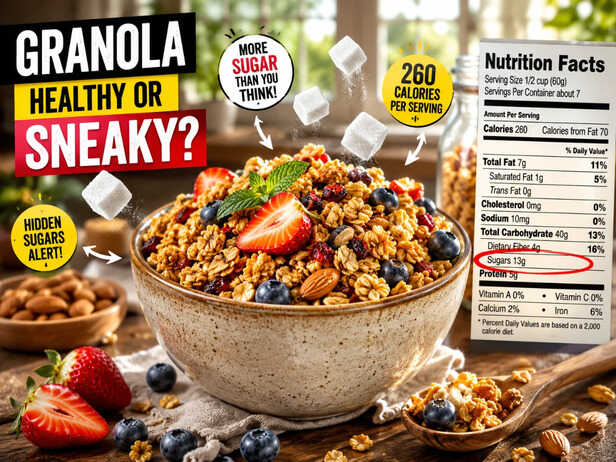
Granola has become synonymous with healthy eating. It appears in smoothie bowls, breakfast parfaits, and fitness meal plans. Yet many packaged granolas are calorie dense and heavily sweetened. Ingredients such as honey, maple syrup, brown sugar, chocolate chips, and dried fruits significantly increase the sugar content. The healthy reputation of oats and nuts can make people overlook portion sizes. Just half a cup of granola can provide more calories than a full bowl of plain oatmeal. That does not mean granola is unhealthy by nature. Homemade versions made with rolled oats, seeds, nuts, and limited sweeteners can be highly nutritious. The key lies in reading labels and treating store-bought granola more like a topping than the main course.
Fruit Juice Often Lacks What Makes Fruit Healthy
A glass of orange juice at breakfast feels refreshing and wholesome. After all, it comes from fruit. The problem is that most fruit juices contain concentrated natural sugars and lack the fiber found in whole fruits. Fiber slows sugar absorption, promotes fullness, and supports digestive health. When fruit is juiced, much of this beneficial fiber is removed. Drinking a glass of juice may require several oranges, making it easy to consume large amounts of sugar quickly without feeling satisfied. Even products labeled "100 percent juice" should be consumed in moderation. Eating a whole orange, apple, or handful of berries offers vitamins, minerals, antioxidants, and fiber in a more balanced package.
Multigrain Bread Does Not Necessarily Mean Whole Grain

Bread packaging can be confusing. Terms such as "multigrain," "stone-ground," and "made with grains" often sound healthy. Unfortunately, multigrain simply means the bread contains more than one type of grain. It does not guarantee that those grains are whole or minimally processed. Many commercial loaves are made primarily from refined flour with caramel coloring added to create a darker appearance that resembles whole wheat bread. Refined grains lose much of their fiber and nutrients during processing. As a result, they may not keep people full for long and can lead to spikes in blood sugar. Consumers should look for labels stating "100 percent whole wheat" or "100 percent whole grain" as the first ingredient. The ingredient list often reveals more than front-of-package marketing claims.
Protein Bars Can Resemble Candy Bars in Disguise

Protein bars have become the ultimate grab-and-go snack for busy professionals, gym enthusiasts, and students. While some protein bars provide balanced nutrition, many contain long ingredient lists packed with sugar alcohols, syrups, artificial flavors, and saturated fats. Some bars deliver over 300 calories and nearly as much sugar as traditional desserts. They may be convenient, but convenience does not always equal health. People often consume protein bars believing they are supporting fitness goals, yet frequent consumption can unintentionally increase calorie intake. Simple alternatives such as boiled eggs, roasted chickpeas, nuts, cottage cheese, or homemade energy bites can offer protein with fewer processed ingredients.
Looking Beyond the Health Halo
Healthy eating is rarely about labeling foods as completely good or bad. It is about understanding what lies beneath attractive packaging and persuasive marketing messages. Flavored yogurt, granola, fruit juice, multigrain bread, and protein bars can all fit into a balanced diet when chosen carefully. The challenge is learning to read nutrition labels, watch portion sizes, and prioritize minimally processed foods whenever possible. The next time you shop for groceries, take an extra moment to flip the package over and examine the ingredient list. Sometimes the healthiest choice is not the one advertised the loudest. Small decisions made consistently can have a lasting impact on overall well-being, energy levels, and long-term health.
Unlock insightful tips and inspiration on personal growth, productivity, and well-being. Stay motivated and updated with the latest at My Life XP.