Federal prosecutors in New York have made one of the most sweeping corruption allegations ever filed against the leadership of the Sinaloa Cartel, accusing Ismael "El Mayo" Zambada,of overseeing a criminal organization that allegedly paid millions of dollars in bribes "at all levels of the Mexican government" to protect its drug trafficking operations.
The accusation appears in a sentencing memorandum filed Monday in the U.S. District Court for the Eastern District of New York ahead of Zambada's July 20 sentencing.
According to the filing, prosecutors argue that under Zambada's leadership, the Sinaloa Cartel "paid millions in bribes at all levels of the Mexican government, police, military, and politicians to ensure the Cartel could operate without interference."
The Justice Department says those alleged payments allowed the organization to traffic massive quantities of cocaine, fentanyl, and methamphetamine while avoiding law enforcement scrutiny. Prosecutors also accuse Zambada of directing armed enforcers who "assaulted, tortured, and murdered" people to advance the cartel's interests. They are asking the court to sentence him to life in prison and impose a $15 billion forfeiture judgment, consistent with his plea agreement.
The allegations represent the U.S. government's most comprehensive public description yet of what it says was the cartel's systematic corruption of Mexican institutions under one of the world's longest-serving drug traffickers.
A long history of corruption allegations
While the language in the sentencing memorandum is striking, accusations that the Sinaloa Cartel bribed public officials are not new.
During Joaquín "El Chapo" Guzmán's federal trial in Brooklyn, witnesses testified about extensive corruption networks involving senior officials.
In 2023, former Mexican Secretary of Public Security Genaro García Luna was convicted in the United States for accepting millions of dollars in bribes from the Sinaloa Cartel while serving as Mexico's top security official.
In his own guilty plea in 2025, Zambada admitted that members of his organization paid bribes to Mexican police and military commanders so the cartel could operate freely. The new filing goes further, describing the bribery as reaching every level of government.
The sentencing memorandum portrays Zambada as one of the principal architects of the modern Sinaloa Cartel, alleging he spent decades overseeing the shipment of millions of kilograms of narcotics into the United States.
Federal prosecutors argue that the scale of his crimes, together with the violence and corruption allegedly directed by him, warrants life imprisonment.
"The defendant's crimes are so vast that the law requires a sentence of life imprisonment," prosecutors wrote in the filing.
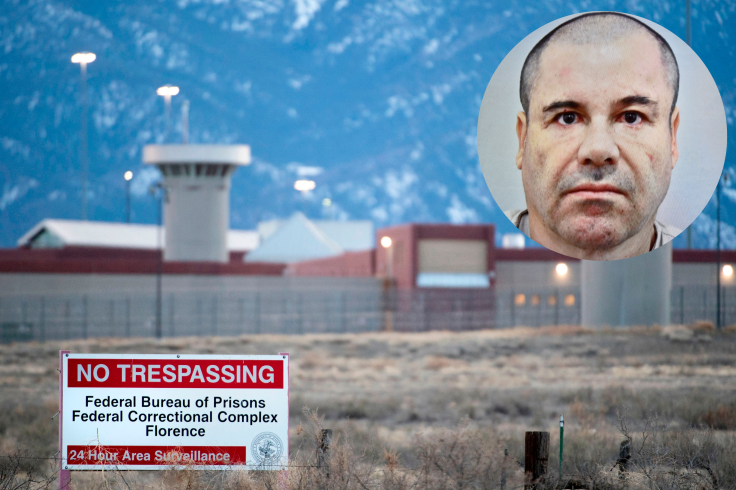
Zambada, 76, has already agreed to accept a life sentence after pleading guilty to multiple drug trafficking charges. His attorneys have instead focused on requesting placement in a federal prison capable of treating his age-related medical conditions rather than a maximum-security facility such as ADX Florence in Colorado.
The filing comes as relations between Washington and Mexico remain strained over the circumstances of Zambada's capture in July 2024.
Mexican President Claudia Sheinbaum's government has demanded that U.S. authorities explain whether the FBI played a larger role in the operation than previously acknowledged, arguing that any unauthorized U.S. action on Mexican soil could represent a violation of the country's sovereignty. Mexican officials have opened an investigation into the circumstances surrounding his transfer to the United States.
Although the sentencing memorandum levels serious allegations against Mexican institutions, it does not identify specific current officials accused of receiving bribes. Instead, prosecutors describe what they characterize as a long-running system of corruption that enabled one of the world's most powerful drug trafficking organizations to operate for decades.