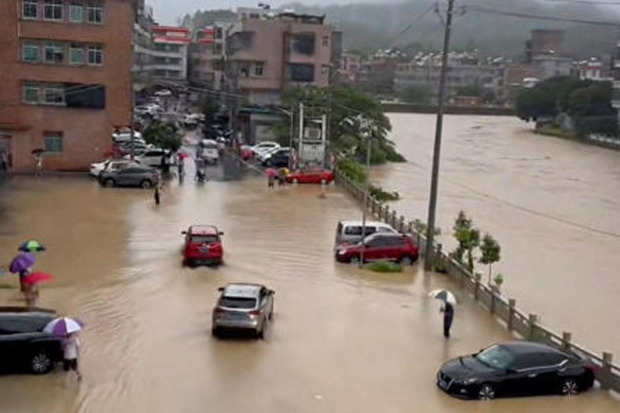
HONG KONG - China evacuated stranded tourists from the Unesco World Heritage site of Jiuzhaigou on Monday after mudslides triggered by heavy rain, state broadcaster CCTV reported, as authorities issued the highest flash-flood alert for parts of the country in the wake of Typhoon Noul.
Jiuzhaigou, in southwestern Sichuan province, is famous for its fairyland landscape with blue, green and purple pools, snow capped peaks, lakes and multi-tiered waterfalls.
CCTV said some of the key tourist sites had been closed and stranded tourists were being safely evacuating.
The closures come as China issued its highest alert for flash-floods across multiple provinces after Typhoon Noul, the strongest typhoon to hit the country this year, brought widespread torrential rains across southern and central regions.
"Due to mudslides, starting July 27, the area above Arrow Bamboo Lake (including Arrow Bamboo Lake) in Rize Valley and the entire Zechawa Valley in Jiuzhaigou Scenic Area will be temporarily closed to tourists," local authorities said.
China's Ministry of Water Resources and the China Meteorological Administration jointly issued a red warning for flash floods from Sunday night through Monday, warning of high risks in parts of Jiangxi, Hunan, Guangdong, Sichuan, Shaanxi, Gansu and southeastern Xinjiang.
Mudslides and soil erosion are common in China's mountainous regions, particularly where steep river valleys intersect, especially during the peak summer rainy season. At least four deadly landslides have occurred across China this month.
In the southwestern city of Chongqing, a massive landslide following torrential rain killed 11 people, with 50 others still missing.
At least 21 people died after a landslide struck Tanchang, a mountainous county in the northwestern province of Gansu, while flash floods at a scenic camping spot in Gansu's Weiyuan county killed 10 tourists and injured 23 others.
In a separate disaster, five people were killed after a loess soil collapse buried a house in a village in northern Shanxi province.
The severe weather coincides with China entering its peak flood control window — known as Qixia Bashang — from mid-July to mid-August.
Weather experts warn extreme rainfall will increase in frequency and intensity over the coming weeks, with much of northern China set to experience 20% to 50% more precipitation than usual.