Donald Trump's approval rating has fallen to 33% in the United States, according to a new poll released on Monday by the University of Massachusetts Amherst, which also found that support for his handling of the war against Iran is even weaker.
For context, the Amherst survey tracks attitudes towards Donald Trump at regular intervals and has recorded a steady erosion in support over the past year. The president's job approval in this polling series stood at 44% last April and 38% in July. Separate national surveys released last week by Quinnipiac University and AP‑NORC both also placed Trump's approval at 38%, while a Fox News poll gave him 41%, suggesting that the Amherst figure is at the lower end of an already narrow range.
Donald Trump Faces Deep Disapproval And Weak Backing On Iran
The latest Amherst poll paints a harsher picture beneath the headline number. While 33% of respondents said they approve of the job Donald Trump is doing as president, 62% said they disapprove, and more than half of that group, 53% of all respondents, registered 'strong' disapproval. That signals not just dissatisfaction but a hardened opposition that is unlikely to be easily shifted by short‑term events.
The poll also asked about identification with Trump's political brand. Exactly 33% of respondents said they 'somewhat' or 'very much' associate themselves with the Make America Great Again movement. That support is heavily concentrated among Republicans, 77% of whom aligned with MAGA, compared with just 4% of Democrats in the sample. The data suggest that while his core movement remains intact inside the Republican Party, the president is struggling to extend his appeal beyond it.
On foreign policy, and specifically the confrontation with Iran, the numbers are starker still. Only 29% of those surveyed said they support Donald Trump's handling of strikes against Iran, while 63% said they disapprove. The Amherst questionnaire did not publish detailed cross‑tabs in the material provided here, so it is not clear how that opinion divides by party. What is clear is that a solid majority is uneasy with the current approach.
The unease is unfolding against an intensifying conflict. The United States and Israel launched joint strikes on Iran at the end of February, killing several senior figures. Trump has claimed that the strikes have 'wiped out' Iran's navy, a characterisation that cannot be independently verified from the polling summary alone and should therefore be treated with caution.
The fighting has continued for more than a month, with both sides threatening further escalation and the U.S. now maintaining more than 50,000 troops in the region, according to the account in the poll briefing. Trump has pointedly not ruled out a ground operation.
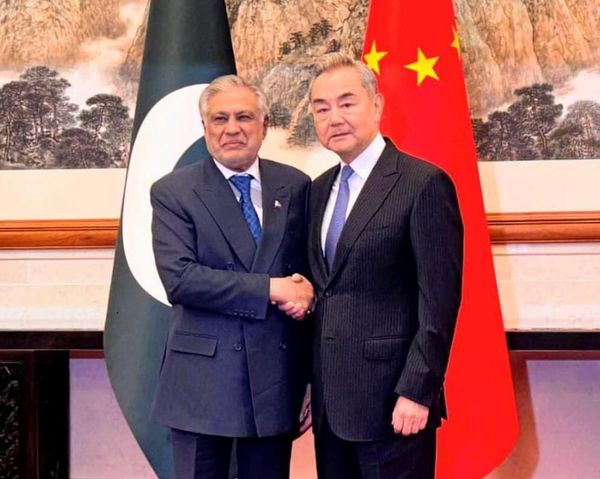
Diplomatic moves have begun in parallel. Pakistan said on Sunday that it has agreed to mediate talks between Washington and Tehran. Yet on Monday morning the president warned that the U.S. would target Iran's electric generating plants, oil wells and Kharg Island — a key oil terminal — if a deal is not 'shortly reached.' That threat followed his own announcement last week of a temporary pause on strikes against Iran's energy infrastructure, underlining how volatile the situation remains.
Inflation, Oil Prices And The Domestic Cost For Donald Trump
Economic concerns, especially inflation, are compounding Trump's political difficulties. The Amherst poll found that only 24% of respondents believe the president is doing a good job on inflation. A large majority, 71%, said he is handling it 'not too well' or 'not well at all'.
The survey links that judgement directly to the fallout from the Iran conflict. Iran has launched counterstrikes on U.S. bases and energy production facilities in Persian Gulf states and has effectively closed the Strait of Hormuz, a vital corridor for global oil shipments, according to the description in the poll material. Disruption in that waterway has helped push up the cost of a range of goods.
By Monday afternoon, international benchmark Brent crude oil was trading at about $108 a barrel, down from nearly $113 at last Friday's close. West Texas Intermediate crude stood at roughly $104. Those prices are feeding through quickly to American consumers. Average U.S. petrol prices climbed to $3.99 per gallon on Monday, more than a dollar higher than a month ago, according to figures cited from AAA. Higher fuel and transport costs are also feeding into the price of flights, fertiliser and even helium, as well as nudging up mortgage rates.
That mix of foreign policy risk and rising living costs is the backdrop against which voters are judging Donald Trump's performance, at least in this snapshot. The Amherst survey, conducted from 20 to 25 March among 1,000 respondents, carries a margin of error of approximately 3.5 percentage points, meaning the president's true approval level could be a few points higher or lower. Even at the top end of that range, however, his rating would remain well below 40% and his disapproval firmly in majority territory.
Nothing in a single poll is definitive, and the figures described here should be read with that basic caution. But taken together with other recent surveys, the Amherst findings indicate that Trump is now contending with a convergence of public anxiety over war with Iran and frustration with inflation — a convergence that, for the moment, is weighing heavily on his standing.