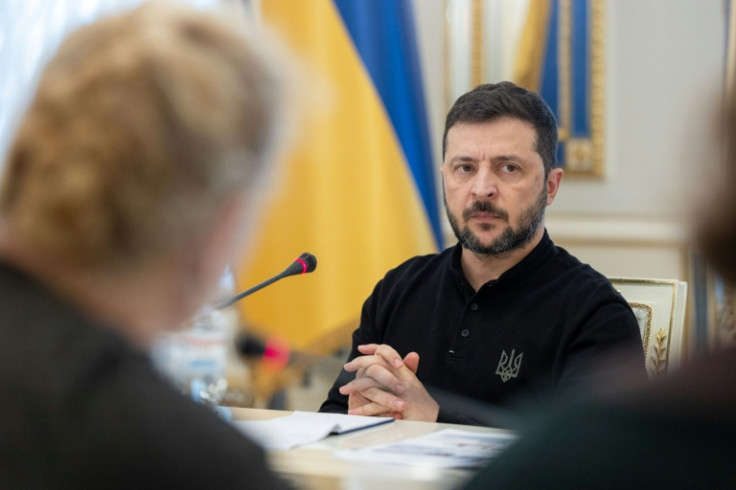
Ukrainian President Volodymyr Zelensky is set to meet US President Donald Trump in the coming days in a bid to push forward peace talks with Russia, raising hopes of a breakthrough in one of Europe's longest-running conflicts.
The announcement comes as Kyiv's US-backed peace proposal is being reviewed by Moscow, with both sides signaling cautious engagement amid ongoing hostilities. Zelensky described recent discussions with Trump's special envoys, Steve Witkoff and Jared Kushner, as "very good" and suggested that the upcoming summit could help secure significant progress before the New Year.
While Moscow has confirmed receipt of the peace proposal, it has yet to respond formally. Russian officials continue to insist on retaining control over much of the Donbas region, a stance that Kyiv firmly rejects. Kremlin sources described the talks as "slow but steady," emphasizing that US involvement is critical to advancing negotiations.
Analysts note that Russia's caution reflects both domestic political pressures and concerns about international perception, while Ukraine is focused on safeguarding its sovereignty and ensuring enforceable security guarantees.
US and European officials participating in the discussions have described recent meetings as constructive, with diplomats noting that the Zelensky-Trump summit could help clarify lingering differences over security guarantees, monitoring mechanisms, and arrangements along contested frontlines.
Observers also point to the importance of ensuring civilian infrastructure protection and humanitarian access, as both sides seek to avoid escalation amid ongoing conflict. Zelensky has expressed cautious optimism that sustained diplomatic engagement could create conditions for a ceasefire, though he acknowledged that major disagreements over territory and enforcement remain unresolved.
Despite these efforts, fighting continues. Ukraine has carried out strikes on Russian infrastructure targets, while Russian forces maintain military operations across several fronts. The persistence of hostilities underscores the fragility of peace efforts and the urgent need for an enforceable settlement. Analysts warn that without tangible diplomatic progress, the conflict could persist, further deepening humanitarian and economic challenges for both countries and the wider region.
International observers emphasize that the coming days are critical. Zelensky's meeting with Trump could pave the way for more detailed discussions involving European powers and other international mediators. Although the peace proposal provides a framework for dialogue, its success depends on both sides' willingness to compromise and the ability of international actors to monitor and enforce any agreement. Diplomatic momentum appears to be building, but experts caution that the situation remains unpredictable, and missteps could derail months of effort.
As attention focuses on Kyiv, Washington, and Moscow, there is cautious hope that high-level diplomacy may finally chart a path toward ending a devastating war. The outcome of the Zelensky-Trump meeting, combined with Russia's response to the peace proposal, is expected to shape the next phase of negotiations and could prove decisive in determining whether a fragile ceasefire can be established before the year ends.