“Matters of war and peace, of human suffering and development, cannot be left only to diplomats”, said the UN Secretary-General, Ban Ki Moon ahead of the World Humanitarian Summit (WHS) in May this year. It was a clear and compelling call to action, for young people, leaders and innovators.
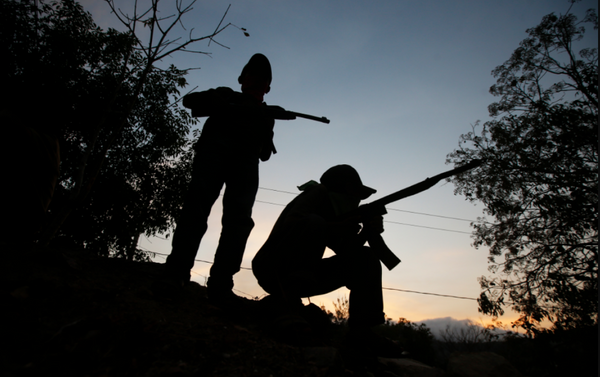
Participation, organisation and new ideas are needed to tackle the biggest humanitarian issues we face today. A staggering 40% of the 1.4 billion people living in countries impacted by crises are under the age of 15. More than 600 million youth are living in fragile and conflict-affected countries.
Young people are both impacted disproportionately by humanitarian crisis, and, most importantly, they are telling us that they can be part of the solution. We have a choice. Those of us working in the humanitarian ecosystem can listen to them and harness their energy, intelligence and compassion, or we can view them only as part of the problem.
Working together
Crown Agents was at WHS to look for new solutions to some old, intractable humanitarian problems. We partnered with leading youth-led development agencies Restless Development, War Child UK, German-based Arche noVa, the UN Association of Zimbabwe and African Youth International Development Foundation, to bring youth voices, their stories and ideas into the summit during a side event.
The message from young people was loud and clear – young people are ready and willing to be leaders. One new idea, a bold and ambitious compact for young people in humanitarian action, was brought to life in the special session on youth at the WHS, entitled Transforming Humanitarian Action with and for Young People.
Signatories to the youth compact are a new group of key donors such as the Department for International Development (DFID), the German government, UN agencies, NGOs, the private sector and philanthropists like the IKEA Foundation, and of course young people themselves. The United Nations Population Fund (UNFPA) were the lead organisers in making the special session happen, and have been working to ensure the participation of young people in humanitarian action.
Crown Agents is working hard to take up Ban Ki Moon’s challenge and become the standard bearer of change. According to Ahmed Alhendawi, the UN secretary general’s special envoy on youth, excitement and interest in the youth compact is snowballing – “it’s getting bigger and bigger”.
The youth compact is action focused. It’s clear about delivering practical action that will bring change – promoting humanitarian programmes that are age & gender responsive; actively including youth in all stages of humanitarian action; supporting youth to be effective humanitarian leaders and actors; increasing resources to youth affected by humanitarian crises; and ensuring we have the right disaggregated age and sex data. The challenge for us all is to drive action, influence others and secure positive change.
Crown Agents and other youth compact members are committed to finding ways to prioritise young people into their own organisations and work. The case for youth-led development has been made. Harnessing the potential of young people in their futures is the best way to secure sustainable development for all – the ambition is to bring the learning of what is working already to tackle humanitarian challenges head on.
Youth action in practice
Restless Development’s work in Sierra Leone with young men and women there is an example of young people taking the lead in a humanitarian crisis. When Ebola hit Sierra Leone, over 2000 young people were mobilised and empowered. They spearheaded a response to the crisis within their own communities. This was highly effective in changing behaviours to protect more than 360,000 people across the country from the devastating effects of Ebola.
When the earthquake struck Nepal last year, hundreds of young people worked with UNFPA to ensure an effective response, clearing rubble, doing needs assessments, delivering dignity kits with safety and hygiene items, and reaching thousands of adolescents with life-saving information and services to protect their sexual and reproductive health.
Plan Kenya’s effective involvement of young people in policy, planning, resource mobilisation and programme implementation is an independently evaluated example of how youth engagement and participation can improve accountability in the management of public resource. Can the same tools of public accountability, driven by young people, be applied to improve the effectiveness and transparency of resourcing for disaster risk reduction, first response, and post crisis recovery in other countries?
In Malawi, young people developed a social scorecard to improve transparency about budget allocations, helping to identify the most vulnerable young people at risk of being left behind. Can these tools be used in Nepal or the Philippines to help minimise the impact of humanitarian crises on particular vulnerable individuals, groups and communities?
It’s early days for the youth compact. We have met once since the WHS and are setting up ways to push our plans and ideas forward. We know that the most tangible evidence of success for the youth compact will be the impact of practical action on the ground, in countries where humanitarian crises strike suddenly, or persist in protracted circumstances.
A recent reminder of why it is so important to harness the potential of young people came from the recent International Development Committee (IDC) report on DFID’s Programme in Nigeria (pdf). Each year, two million young people enter the labour market in Nigeria, but many, particularly in the north where humanitarian need is increasing, are left behind – because of the failure of a) the labour market and b) the system to provide them with the skills to find work or productive self-employment.
In giving evidence to the IDC, the then minister of state for DFID, Nick Hurd, said that harnessing the potential of the rapidly growing numbers of youth is arguably the biggest strategic issue facing Africa and those concerned with Africa. Crown Agents, as part of the youth compact and in our work in international development and humanitarian action, stands ready to do our part.
Content on this page is paid for and provided by Crown Agents, a sponsor of the Guardian Global Development Professionals Network.