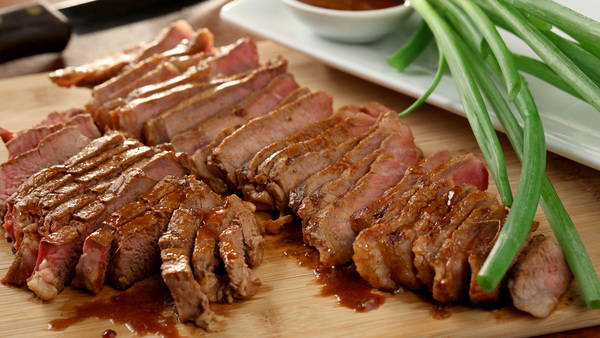
This always happens: I eat one meal while devising the next.
Recently, while tableside cooking thin slices of garlicky pork, golden chicken and spicy mushrooms at a Korean barbecue restaurant, the conversation turned to grilling steak.
Steak, we agreed, is the quintessential summer indulgence. The perfect cut? Easy. Porterhouse _ the best of both worlds _ tender filet, beefy strip. To season or not? Always. Serve with steak sauce? Wow. A division among the ranks. Some eschew the idea; others couldn't imagine the absence.
As if on cue, a waiter arrives with a tray of sliced boneless beef steak heavily coated in a bright red chili sauce. A thrilling aroma rose from our charcoal grill while the steak edges crisped. Sweet, spicy, tangy, utterly delicious; we nearly inhaled the tender bits.
A consensus among the diners. By all means, steak sauce! This one!
Later at home, noodling around in the kitchen with a bevy of condiments ensued. The result: an intensely red, powerful chili sauce that beautifully complements the rich flavor of beef.
The key component: gochujang. This trendy ingredient, made from fermented soybeans, brown rice and red pepper paste, is found in Korean stores and the Asian section of large supermarkets. The Sunchang brand imported from Korea suits my purposes well. Fairly sweet and thick with spicy chili, a container in the refrigerator inspires many a meal.
For a steak sauce, I tame the red chili heat with dark, rich hoisin sauce and bright tangy ketchup. A bit of ginger adds intrigue. I say yes to wine with steak, so I add it to the sauce _ I like rice wine here, but try dry vermouth, red or white wine too. An ounce of brandy makes a potent, but delicious, substitute for the wine.
Turns out, this sauce doubles as a secret weapon for summer grilling, seasonal stir-fries and more. Just go easy, so the sauce doesn't overwhelm the steak or other food.
Of course, you can select other steaks in addition to porterhouse. I like strip for its meatiness, especially when I can find it sold on the bone. T-bones, like porterhouse, contain both the strip and the filet (although the filet is skimpier on a T-bone). Believe it or not, the super-rich mouthfeel of rib-eye pairs well with the red chili. Smear a flank steak or flat-iron with this sauce, and leave it in the refrigerator for a day or two; when it's grilled to medium rare, you'll be delighted with the tenderness and flavor. Skirt steak (select the outside skirt when you can), coated with the sauce and grilled, makes the best steak sandwich ever.
While I usually opt to purchase the cut of steak the market puts on sale, I always buy USDA grade choice (or prime when the budget allows). If the steak does not clearly display the grade, ask questions. Lean USDA grade select is fine for a weekday stir-fry or sandwich but for steak dinner, choice proves more meltingly tender because, quite simply, it has more fat marbled throughout. Grass-fed beef doesn't carry the USDA grade but is deliciously beefy if not quite as tender (or rich) as grain-fed beef. Always look for white, moist fat _ gray fat can mean an older animal or improper storage.
Steaks taste great cooked in cast iron over high heat or a couple of inches from the broiler element. In good weather, the grill adds a smoky element that cannot be beat. Also, the combination of high heat and spicy chili cooking indoors can be hard to handle because the capsaicin released in the air tends to make us cough.
Is this the best steak sauce ever? Could be. For doubters, we offer the steakhouse standby condiment: butter. Try it, you'll like it _ especially with leaner steaks or grass-fed beef.