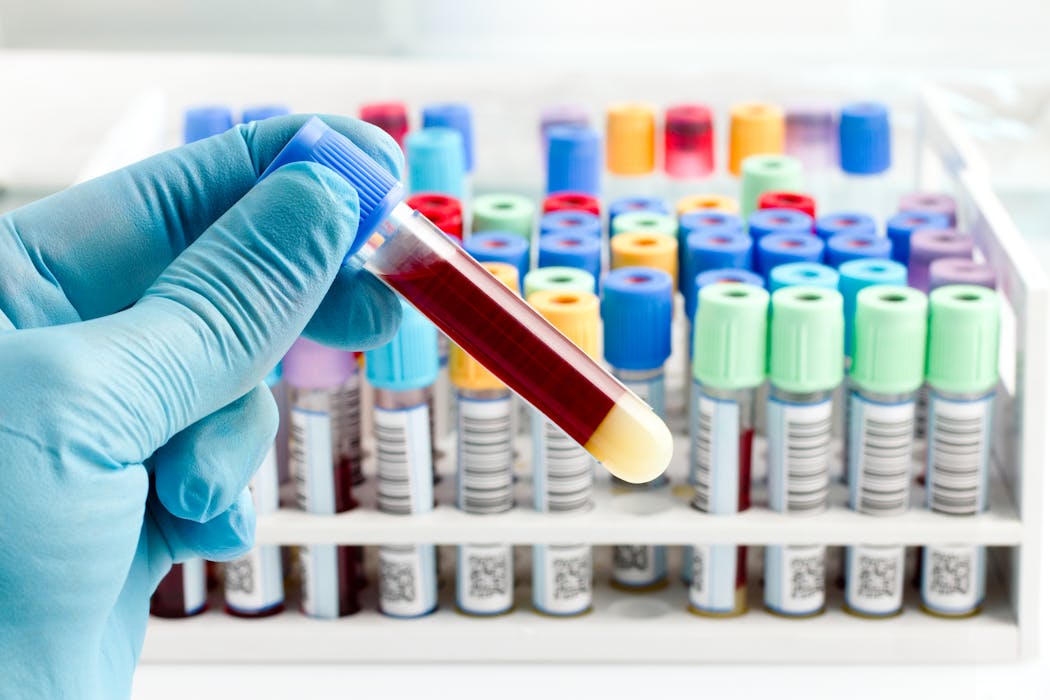
Imagine if a simple blood test could offer a glimpse into your future health. Not just whether you have heart disease or cancer today, but whether your overall risk of dying in the next five or ten years is higher or lower than expected.
It is the kind of idea that has hovered on the edges of medicine for decades, appearing in headlines every time a new biomarker is discovered. In practice, though, predicting long-term health has remained frustratingly imprecise. Doctors still rely heavily on age, weight, smoking history and a handful of routine blood tests, most of which provide only broad, population-level estimates.
At the same time, modern medicine is moving rapidly towards earlier detection and prevention. Health systems around the world are grappling with rising rates of chronic disease and ageing populations. Clinicians increasingly need tools that can identify risk before symptoms appear, allowing earlier intervention. The question is whether the clues to future health might already be circulating in our blood.
That is what our latest study explores. By measuring thousands of blood proteins in tens of thousands of people and tracking who survived or died over time, we found that certain protein patterns appear to be linked to a greater risk of dying from any cause other than accidents.
The analysis used data from more than 38,000 adults aged 39 to 70 who took part in the UK Biobank study. This is a long-running national health resource that collects biological samples and health information from half a million UK volunteers. Participants provided blood samples and ongoing comprehensive health and lifestyle data. We examined nearly 3,000 proteins in each blood sample and looked for proteins whose levels correlated with death within five or ten years.
After accounting for risk factors already known to adversely affect life expectancy, such as age, body mass index (BMI) and smoking, we identified hundreds of proteins linked to the overall chance of dying from any cause, and to the chance of dying from specific diseases, including cancer and cardiovascular disease.
Our research team then sifted those long lists to isolate a small number of proteins known as protein panels. These panels contained ten proteins that associated with ten-year risk of all-cause mortality, and six proteins that associated with five-year risk.
They improved forecasting ability over traditional models that rely on age, BMI and lifestyle factors. In statistical terms, models based only on demographic and lifestyle data performed poorly, with accuracy close to random. Models that incorporated the protein panels performed better, although the gains were still limited.
This suggests that some proteins in blood may carry hidden signals about long-term health that go beyond current disease. Traditional risk factors such as age, weight, smoking, alcohol consumption and physical activity offer important but often imprecise clues about health decline.
Blood proteins, by contrast, provide real-time snapshots of what is happening inside the body. Some may reflect slow chronic changes such as low-level inflammation, tissue breakdown or subtle organ stress. Others may indicate more immediate risks linked to the heart, blood vessels or immune system. Our study shows that the risk of dying can also be partially captured in the levels of circulating proteins.

Even so, this is far from a perfect test. The predictive power is better than chance but still modest. These protein signatures cannot be treated as definitive indicators of when someone will die. They could however, with further validation, function more like a warning that may prompt early action.
For example, a GP might advise more frequent check-ups or suggest earlier screening for cardiovascular problems if a patient’s protein profile looks concerning. An elevated profile does not signal imminent death. It signals a higher risk compared with someone who has a different protein pattern, everything else being equal.
Beyond diagnosis of current disease
The study also merely focused on associations. The proteins may not be causing the increased risk. They may simply be markers of underlying biological processes that have not yet produced symptoms. The authors further note that combining all causes of death into one outcome makes interpretation difficult. This is because the pathways leading to death vary widely. Heart disease, cancer, infections and organ failure each involve very different biological mechanisms.

Even with these caveats, the findings point to a future where routine blood tests may look beyond diagnosing current disease. A simple snapshot could alert doctors that a patient faces an elevated risk of health decline even when nothing obvious appears wrong. This could trigger earlier action such as closer monitoring, lifestyle guidance or preventive treatments.
This type of risk stratification is becoming increasingly important as populations age and chronic disease rates rise, placing growing pressure on healthcare systems. Such a test could help doctors target care more effectively.
Future research will determine how realistic this vision is. Large-scale validation studies in diverse populations will be needed to ensure that protein panels are accurate and reliable across different ages, ethnicities and health backgrounds. Only then can they be considered suitable for routine clinical use.
Further, any results would still need to be interpreted alongside a person’s medical history, lifestyle and symptoms. Protein panels could offer an extra layer of insight, helping clinicians build a fuller picture rather than replacing traditional assessments.

Nophar Geifman receives funding from UK Research & Innovation (UKRI), Kidney Research UK, the Human-Animal Bond Research Institute (HABRI), and Zoetis Inc.
This article was originally published on The Conversation. Read the original article.