As artificial intelligence (AI), digital disruption and geopolitical uncertainty reshape enterprise technology strategies, leading century-old Thai conglomerate Yip In Tsoi Group is leveraging its long-standing trust and business heritage to position itself for its next era of growth through the launch of Yipintsoi Next Co Ltd, a strategic transformation aimed at strengthening its agility, competitiveness and innovation capabilities.
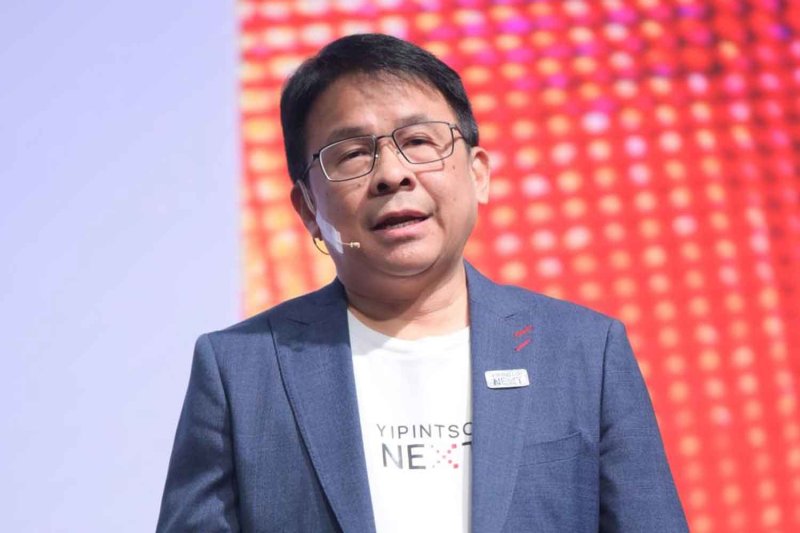
Supak Lailert, chief executive of Yipintsoi Next, said the creation of the firm and its strategic business realignment within the group provide greater operational flexibility and agility, enabling the company to adapt more quickly, respond to evolving customer needs, and define a clearer direction for future growth.
Yip In Tsoi Group has undertaken this first major organisational restructuring in its history by consolidating its IT business units and technology-related subsidiaries under Yipintsoi Next as it prepares for its next century of growth.
The restructuring brings together four affiliate companies and the group's IT business under Yipintsoi Next, covering systems integration, cloud, cybersecurity, AI and enterprise solutions.
The restructuring strengthens cross-functional collaboration between public and private sector teams, allowing the company to offer more integrated end-to-end services while improving internal resource sharing and efficiency.
"I expect the restructuring to improve operational capacity, accelerate delivery timelines and enhance cost efficiency by roughly 20-25%," Mr Supak said.
The "Next" brand reflects the company's ambition to evolve beyond traditional systems integration into a more agile, business-driven technology organisation, he said.
"In the next era, the role of systems integrators is evolving towards more strategic advisory partnerships. Our role must increasingly become that of an adviser and a technology partner to our customers," Mr Supak said.
Customers today no longer want to simply purchase infrastructure or software. Instead, they expect technology investments to generate clear returns, improve operational efficiency and support revenue growth, he noted.
As a result, Yipintsoi Next increasingly engages not only with IT departments, but also with chief financial officers, marketing executives and business leaders.
NAVIGATING VOLATILITY
Cost optimisation has become one of the company's key priorities for enterprise customers, Mr Supak said.
He said many organisations are under growing pressure to reduce IT maintenance and operational expenses, while ensuring investments deliver clear returns.
To help customers navigate these challenges, the company provides cloud optimisation services that evaluate cloud usage, right size infrastructure, and migrate workloads to more cost-effective platforms.
It also helps organisations streamline operations by consolidating security tools and improving system maintenance efficiency.
On the revenue side, Yipintsoi Next focuses on upgrading core backend systems such as core banking platforms, enabling enterprises to launch products faster, process transactions more efficiently and improve customer responsiveness.
The company is also deploying AI and machine learning technologies to help clients analyse customer behaviour and strengthen sales targeting.
The company's broader technology strategy centres on four key pillars: cybersecurity; cloud infrastructure; environmental, social and governance (ESG) technology; and AI-driven analytics.
In cybersecurity, Yipintsoi Next is advising organisations, particularly financial institutions, to prepare for post-quantum cryptography as future quantum computing developments could eventually threaten existing encryption standards.
Although fully realised quantum computing is still years away, Mr Supak said organisations should begin mapping their cryptographic assets now, as migrating systems could take between three and seven years.
The company is also helping enterprises modernise cloud and infrastructure systems while maintaining control over mission-critical operations and data residency requirements.
In manufacturing, the company is working to bridge IT and operational technology systems to reduce downtime and improve operational resilience.
Meanwhile, Yipintsoi Next sees ESG technology becoming increasingly important for export-oriented industries and SET listed firms.
The company is deploying sensors, monitoring platforms to help organisations turn sustainability targets into measurable and verifiable operational data.
AI transformation remains another major focus area. Mr Supak believes the market is moving beyond AI hype towards more practical enterprise adoption.
"I believe AI will eventually become just another core technology. Right now, it's at a peak of hype where it looks exciting, but ultimately it will become integrated into standard project development workflows," he said.
According to the company, successful AI implementation depends on two critical foundations: strong data infrastructure and clearly defined business use cases.
"Implementing AI just for the sake of having it will not lead to true digital transformation," Mr Supak said.
Another key focus is reducing technology dependency by helping customers avoid overreliance on a single vendor, cloud provider or technology ecosystem.
The company advocates a more balanced and open IT architecture strategy that allows enterprises to diversify technology providers, distribute infrastructure across multiple locations and carefully evaluate geopolitical risks tied to technology origins.
This approach is particularly important for mission-critical national infrastructure and financial systems, where resilience and operational continuity are becoming strategic priorities.
Despite the restructuring, Yipintsoi Next remains committed to retaining and upskilling its 1,500 employees rather than reducing headcount.
The company is investing heavily in reskilling technical staff to better understand business operations and transition from technical product discussions to more consultative advisory roles.
"We are a company that highly values our people. We'll bring everyone along with us into this new era," Mr Supak said.
PARTNER OF CHOICE
Looking ahead, the company is shifting towards more recurring revenue streams to strengthen long-term resilience and profitability.
Recurring revenue currently accounts for 35% of income, with a target to increase that figure to 50% over the next few years.
Launching an initial public offering and undertake private investment are also parts of the company's medium-term strategy to raise capital for business expansion and talent development.
"Our ultimate goal is to become the 'partner of choice', " Mr Supak said.
"We want customers to choose us first for our reliability, technological independence and long-term commitment.
"Our philosophy has always been simple: we never abandon our customers, regardless of how challenging a project becomes," Mr Supak said.