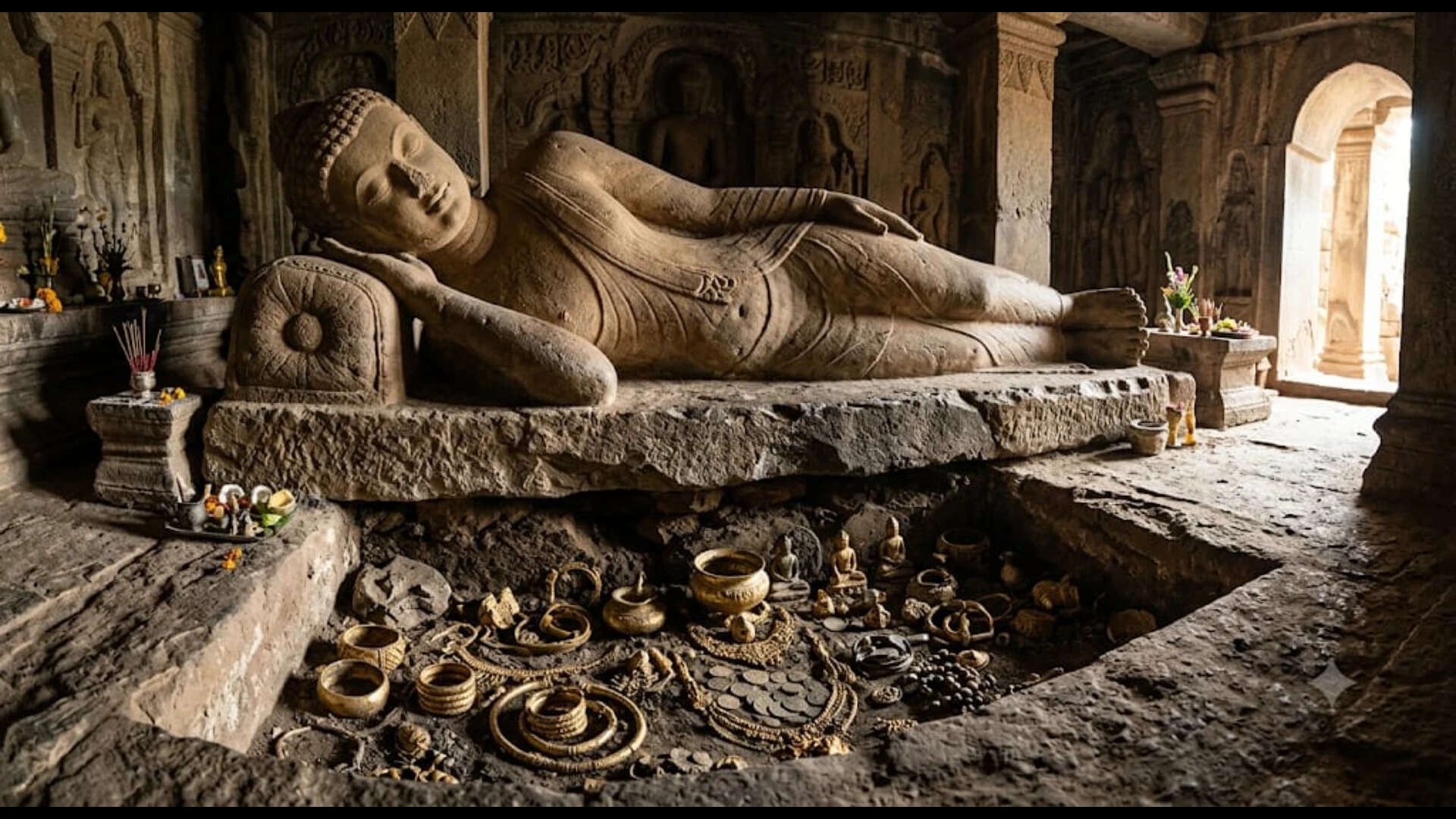
What began as a routine drainage project at an ancient Thai temple quickly turned into one of the country's most remarkable archaeological discoveries in recent years. While installing an underground drainage system beneath a 1,300-year-old reclining Buddha statue, workers unexpectedly uncovered a ceramic container filled with 33 gold, silver and bronze artefacts hidden for more than a millennium. The discovery, announced by Thailand's Fine Arts Department and reported by Tim Newcomb for AOL, has revealed exquisite examples of Dvaravati-era craftsmanship, including rare repoussé metal sheets depicting the Buddha, ceremonial jewellery and ritual offerings. Archaeologists believe the objects were intentionally buried beneath the monument during its construction, providing an extraordinary glimpse into Thailand's early Buddhist traditions.
Get breaking news anytime, anywhere. Download the TOI app now!
A routine drainage project led to an extraordinary archaeological discovery
The remarkable find was made at Wat Dhammachak Semaram in Nakhon Ratchasima Province, northeastern Thailand, during conservation work at the Phra Non archaeological site.
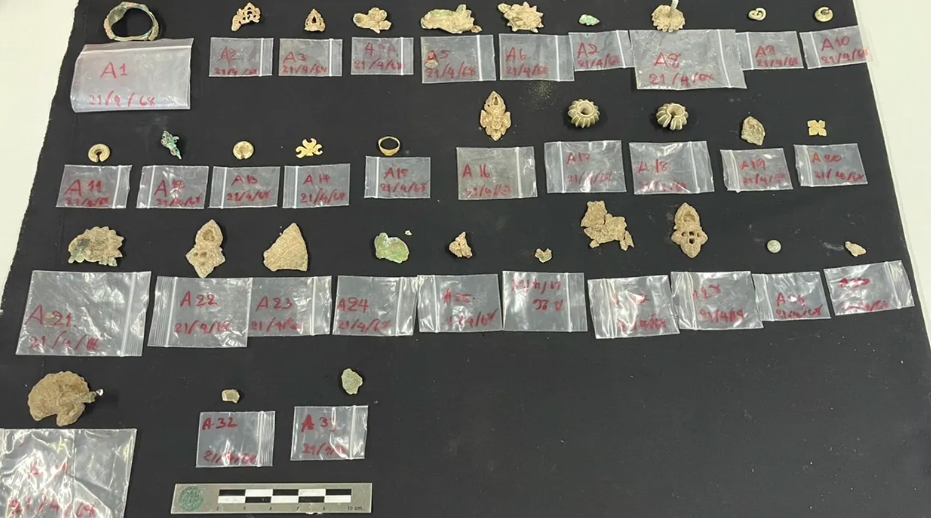
According to the Thailand's Fine Arts Department, workers were excavating a drainage trench roughly 1.3 metres (over four feet) beneath the sandstone reclining Buddha when they uncovered a damaged ceramic container. Inside were 33 ornaments crafted from gold, silver and bronze, including gold rings, silver earrings and a distinctive pair of bronze hoop earrings typical of the Dvaravati period, which flourished between the 6th and 11th centuries CE. The discovery was reported by AOL.
The reclining Buddha itself is believed to have been carved around 657 CE and measures approximately 13 metres (43 feet) in length, making it one of Thailand's oldest and longest sandstone reclining Buddha statues.
Rare repoussé artworks reveal the exceptional skill of Dvaravati artisans
Encouraged by the initial discovery, archaeologists expanded the excavation around the statue and uncovered three additional groups of artefacts.
Among the most significant were repoussé metal sheets, created by hammering thin sheets of metal from the reverse side to produce raised decorative images.
One rectangular gold sheet, measuring roughly 3 by 5 inches, depicts the Buddha seated in the vitarka mudra, a gesture symbolising teaching and discussion. The figure is portrayed with spiral curls, a large halo, elongated earlobes and a robe draped over one shoulder. A small hole near the top suggests the piece may once have been suspended with a cord, possibly serving as a devotional ornament or ceremonial decoration.
Another repoussé panel, made from a lead-tin alloy, portrays a standing Buddha beneath an arched frame accompanied by two attendants. Although part of the artwork has been damaged, experts believe one surviving figure may represent a local artistic interpretation of the Hindu deity Brahma.
The hidden objects were likely buried as sacred offerings
Archaeologists also uncovered a third deposit consisting of multiple metal sheets embedded within compacted clay and thin layers of cement. Because the objects have deteriorated over time, researchers are still determining how many individual sheets remain and what images they contain.
According to Phanombutr Chantrachot, Director-General of Thailand's Fine Arts Department, the location of these artefacts, directly behind the reclining Buddha's head, strongly suggests they were ritual foundation offerings intentionally placed beneath the monument during its construction or consecration. Such deposits were believed to bring blessings, protection and spiritual merit to sacred structures.
The discovery offers rare archaeological evidence of these ceremonial practices, many of which are known primarily from historical records rather than intact excavations.
What the discovery reveals about Thailand's early Buddhist civilisation
The artefacts date to the Dvaravati civilisation, one of mainland Southeast Asia's earliest Buddhist cultures. Flourishing between the 6th and 11th centuries CE, the Dvaravati kingdoms helped spread Theravāda Buddhism, Indian artistic influences and sophisticated metalworking traditions throughout present-day Thailand.
The newly discovered ornaments demonstrate not only the high level of craftsmanship achieved by Dvaravati artisans but also the important role that ritual offerings played in constructing sacred monuments.
Researchers say discoveries of precious-metal foundation deposits in their original archaeological context remain exceptionally rare, making the find especially valuable for understanding the religious beliefs, artistic traditions and ceremonial practices of early Buddhist communities.