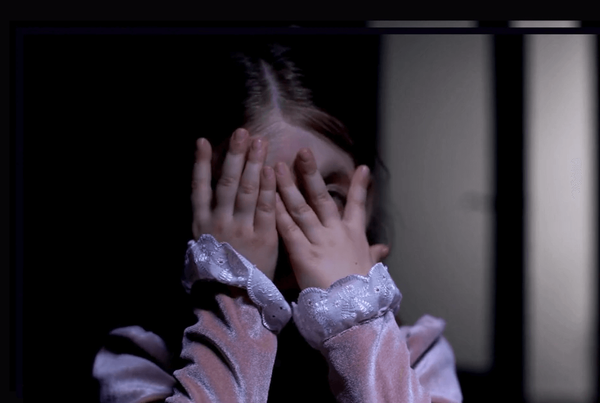
JOSEPHINE "Josie" Dun - the little girl from Newcastle who inspired a global community to raise thousands of dollars for research into a "ferocious" brain cancer, has lost her battle with the disease.
Her father, University of Newcastle and HMRI cancer researcher - Dr Matt Dun - said four-year-old Josie had been a "remarkable fighter" since her diagnosis with the deadly DIPG less than two years ago.
Via Twitter on Saturday, Dr Dun said: "Today Phoebe, George, Harriet and I shared Jojo's last breath. Words cannot describe our pain. Josephine Laura Dun, forever four."
Two weeks ago, Dr Dun urged people to keep advocating for kids like "Jojo", who had been dealt the "crappiest of hands".
"Her legacy will mean other innocent angels get a fighting chance," he said.
"A sincere thank you to everyone for your support."
Dr Dun had already spent close to a decade unearthing insights into rare children's cancers when his crusade became painfully personal.
Josie was diagnosed with a brain stem cancer called Diffuse Intrinsic Pontine Glioma - DIPG - in February, 2018.
She was two years old.
Dr Dun previously told the Newcastle Herald DIPG was a ferocious, inoperable cancer that almost exclusively affected children. He said it had an average survival of about 10 months.
Since Josie's diagnosis, Dr Dun has worked tirelessly to try to find an effective way to treat children with DIPG - even while knowing it was unlikely to happen in time to save his own little girl.
His team of researchers continue to search for the missing pieces of the DIPG puzzle.
Josie was the first child to receive a drug that Dr Dun discovered in trials for adult brain cancer.
She had lived twice as long as expected, despite not responding to radiotherapy, and the experimental treatment had cost about $900 a week.
"When it's experimental, you have to pay for it all yourself, because the drugs are not on the PBS," he said.
The family raised money for Josie's treatment.
But to fund his research into DIPG, Dr Dun - joined by his friends, family, acquaintances and even strangers across the globe - began running marathons.
Their charity, RUN DIPG, has since raised in excess of $116,000 through supporters running, hiking, swimming, paddling, and dancing for the cause.
Dr Dun said it was "just not viable" for pharmaceutical companies to invest money in rare childhood diseases, as the pipeline was "too long" and "too expensive".
"So it is up to people like me and HMRI and the University of Newcastle, and other academic institutions, to tackle rare childhood diseases, because otherwise, there will be no improvement. That's what we are facing.
"It's a real battle. A really expensive battle.
"And it's a battle that needs to be funded by the government, and things like RUN DIPG and other fantastic philanthropic organisations, because otherwise, we are never going to make headway for any of the rare childhood cancers that take more kids than any other disease."
Dr Dun has previously told the Newcastle Herald that while DIPG may be rare, it was responsible for the most paediatric-associated disease deaths.
"It's something that we just shouldn't stand for," he said. "We shouldn't stand for a less than 1 per cent survival rate. These kids didn't do anything to anyone else, they need our support, and the government needs to get on board with this."
Dr Dun's advocacy for DIPG research has attracted $100,000 in support from Tour de Cure, and $600,000 in Federal Government funding.
On Childhood Brain Cancer Awareness Day in September, Dr Dun told the Newcastle Herald that in Australia, 100 kids died of cancer each year, and 36 of those were from brain cancer.
"Of those 36, more than half of them are from one particular brain cancer, which is totally untreatable - there is no recognised treatments whatsoever.
"Until we do the work to really understand the biology of the disease, kids are still going to face a bleak prognosis, which is 300 days from diagnosis to death."
To support Dr Dun's DIPG research, visit https://everydayhero.com.au/event/rundipg.
Read more: Daughter's diagnosis inspires Hunter cancer researcher