The nation's biggest oil and gas producer could be running at an operating loss within half a decade, according to one scenario in modelling released alongside a 24 per cent full-year profit slump.
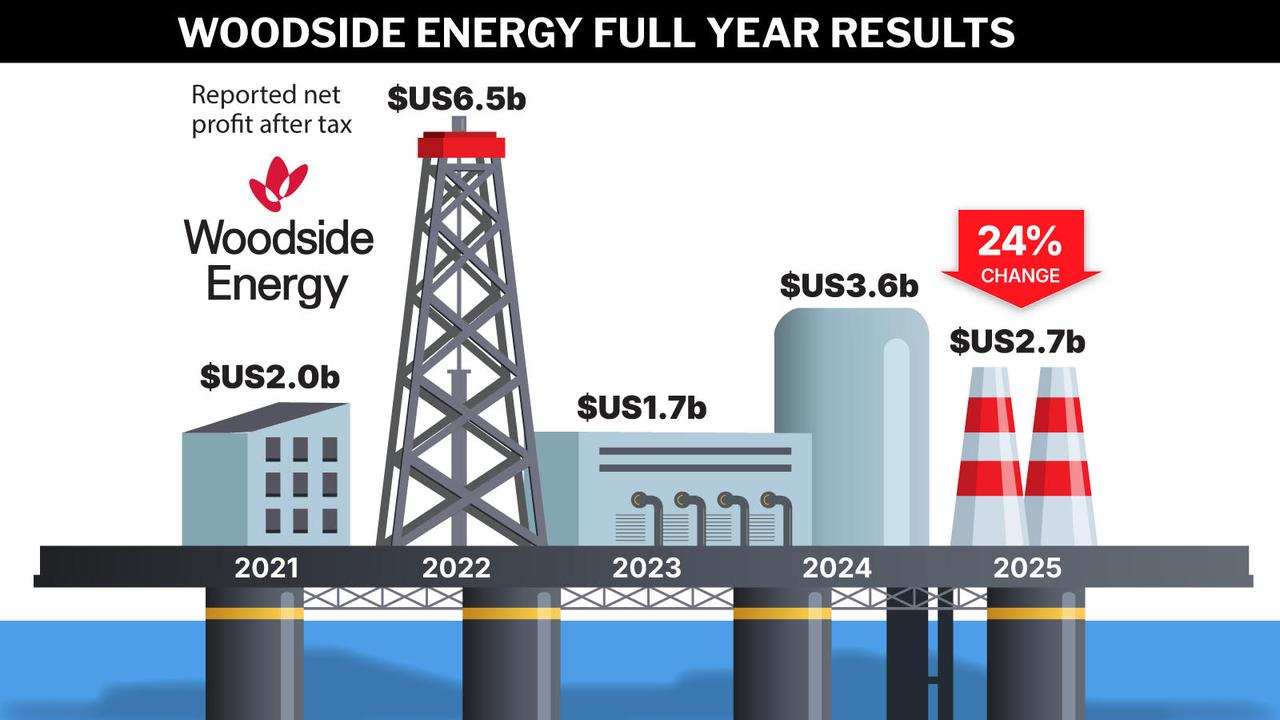
Woodside Energy posted a $US2.7 billion ($A3.8 billion) bottom line net profit for 2025, after the impact of soft commodity prices outweighed record production and reduced unit costs.
As an ongoing supply glut continues to drag on oil and gas prices, Woodside faces a dramatic headwind on the demand side: the energy transition.
Acting chief executive Liz Westcott was optimistic on Tuesday about crude demand in 2026, despite the global shift away from fossil fuels.
"The difficulty of decarbonising hard-to-abate sectors, such as heavy transport and petrochemicals, means that oil demand is forecast to remain resilient as the world's energy mix evolves," she told an earnings briefing.
But Woodside's internal modelling showed the oil and gas producer could be cashflow negative by 2036 in two of four projected energy transition scenarios, and in one case would be running an operational deficit within five years.
The data contained in its annual report sent to shareholders showed Woodside was at odds with the Paris Agreement climate goals, Market Forces head of Australian campaigns Brett Morgan said.
"Woodside's own modelling demonstrates the company could be cashflow negative as early as 2031 under an emissions reduction scenario aligned with global climate goals, raising alarm bells for investors," he said.
The environmental group called on superannuation funds and key Woodside investors, Hesta and AustralianSuper, to demand that Woodside end its oil and gas expansion.
Woodside's acting boss told investors the Western Australia-based company had hit its 2025 target of a 15 per cent reduction in net equity greenhouse gas emissions.
"We are delivering our strategy to thrive through the energy transition," she said.
"Our strategy and our approach remains unchanged."
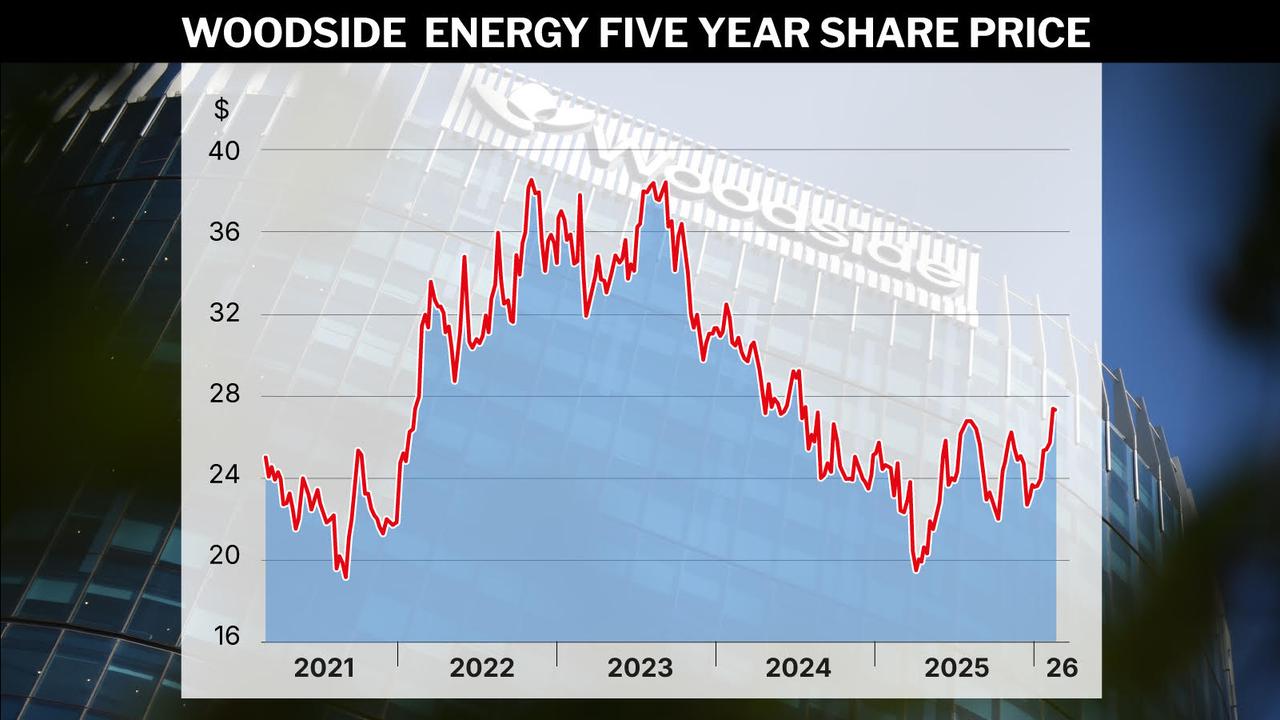
Record production of 198.8 million barrels of oil equivalent and a four per cent reduction in unit costs helped offset soft oil and gas price, which impressed investors, who sent Woodside shares 1.8 per cent higher to $27.58 in afternoon trading.
Ms Westcott is acting for outgoing boss Meg O'Neill, who will become BP's first female leader on April 1.
The search for Ms O'Neill's replacement is ongoing and the board is expected to make an announcement by the end of March.
"I know everyone's very interested in the outcome, but I want to reinforce that what I'm interested in and what I know is very important ... is that we continue to execute against our strategy," Ms Westcott said.
Underlying net profit after tax came in at $US2.6 billion ($A3.7 billion), an eight per cent slip from 2024.
Woodside declared a final dividend of 59 cents per share, compared with 53 cents the year before.
"The strength of our base business has delivered returns for shareholders, with Woodside having returned approximately $11 billion in dividends since merger completion in 2022," Ms Westcott said.
In project news, the Beaumont New Ammonia project on the US Gulf Coast achieved first production in December 2025, Trion off Mexico remains on target for first oil in 2028, and Scarborough's first LNG cargo should be loaded off the WA coast in 2026.