Frigid wintry weather continued to grip much of the eastern U.S. on Monday, forcing hundreds of delays and cancellations at major airports and resulting in power outages in Pennsylvania and Ohio.
Over 4,500 flights were delayed or canceled within, into, or out of the U.S., according to the tracker FlightAware, with the biggest impacts felt at airports in New York City.
More than three dozen flights were canceled at LaGuardia and John F. Kennedy International Airports after a ground stop was issued in the area and at Philadelphia International Airport on Sunday.
“LaGuardia seems to be playing hot potato with my flight,” one social media user wrote in a Monday post on X.
Wind could still impact flights in Boston, New York, Philadelphia, and Washington, D.C., according to the Federal Aviation Administration.

“Wind could affect flights at @BostonLogan, @JFKairport, @LGAairport, @EWRairport, @PHLAirport, @Reagan_Airport, @Dulles_Airport and @BWI_Airport,” the agency warned in a post on social media.
Let it snow
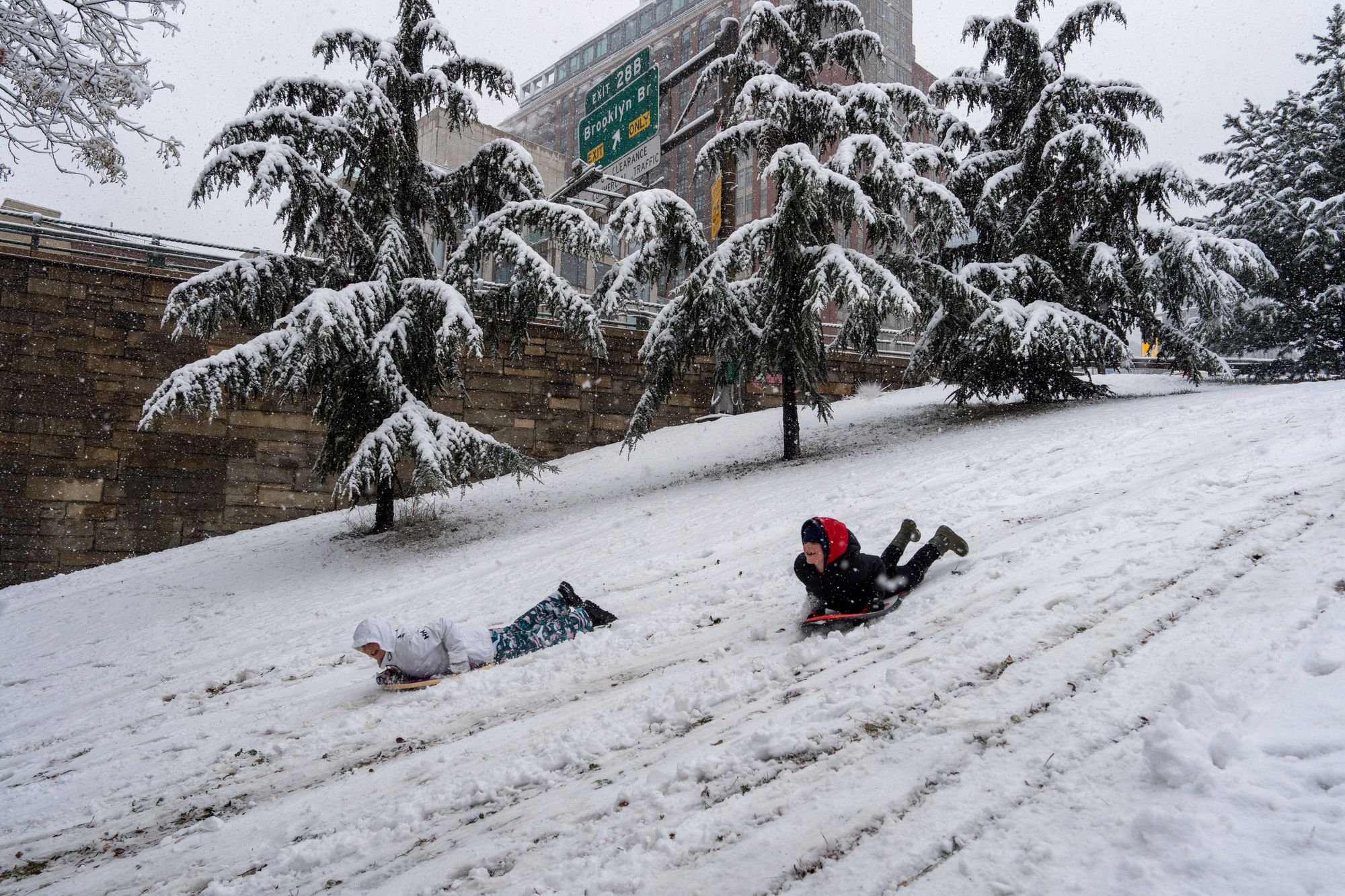
More than half a foot of snow fell across the local Tri-State area, according to New York forecasters, with a daily snowfall record of 4.6 inches set at John F. Kennedy International Airport.
Some 4.2 inches of snow also fell in Philadelphia, and nearly 1,000 customers in the city were without power, according to tracking site PowerOutage.US. Nearly 8,000 Pennsylvanians were impacted by storm-related outages.
Snow was still falling across the Great Lakes region, with up to an inch or more expected in Michigan’s northern communities.
As many as three inches of lake effect snow are still expected to fall in the Midwest and Mid-Atlantic on Monday, extending from northeastern Ohio through northwestern Pennsylvania.
Lake effect snow occurs when cold air, often moving south from Canada, passes over the warmer Great Lakes. The air picks up moisture and heat from the lakes that form snow clouds, which dump on surrounding communities.
“Lake effect snow should begin to wrap up across the Upper Great Lakes this afternoon, and then the Lower Great Lakes this evening,” the National Weather Service said.
Several school districts in central Ohio were closed or had delayed start times due to the winter weather and slick driving conditions, according to 10 WBNS.
There were also school closures and delayed starts reported for schools in Kentucky, West Virginia, Pennsylvania, New York, Virginia and New Jersey.
“It’s been disrupting school. My final exams have been canceled, so it’s been an issue for sure,” one local student told Virginia’s WDBJ 7.
When will the cold let up?
Meanwhile, bitter cold Arctic air has brought record-low high temperatures across a wide swath of the northern and eastern U.S.
More than 70 million Americans were under Cold Weather Alerts, with wind chill temperatures reaching single digits, according to Fox Weather.
"Six degrees when we got in the car," Michigander Kristina Crofut told ARC West Michigan.
In Detroit, the “feels-like” temperatures could be as lows as minute five degrees Fahrenheit, he said, “which can cause frostbite within minutes to any exposed skin."

"AccuWeather RealFeel® Temperatures will be dangerously cold across the Midwest, Great Lakes and Northeast through Monday," AccuWeather Senior Meteorologist Dan Pydynowski said in a statement.
Temperatures will rebound throughout the Plains, Great Lakes and Northeast starting on Tuesday.
"The bitterly cold blast of Arctic air will only last an additional 36 to 48 hours in many places. In Detroit, following the projected afternoon highs not far from 20 degrees Monday, highs will rise to near 40 by Wednesday and even middle and upper 40s by Thursday," said Pydynowski.
The killings of Rob and Michele Reiner shatters family's gentle legacy
Here are 10 famous stars who were killed
Purse pirates: UPS ripped off seasonal workers with unfair pay practices, lawsuit alleges
US Jewish groups urge heightened security at public events after Hanukkah attack in Australia
Three Las-Vegas style casinos are officially coming to New York City