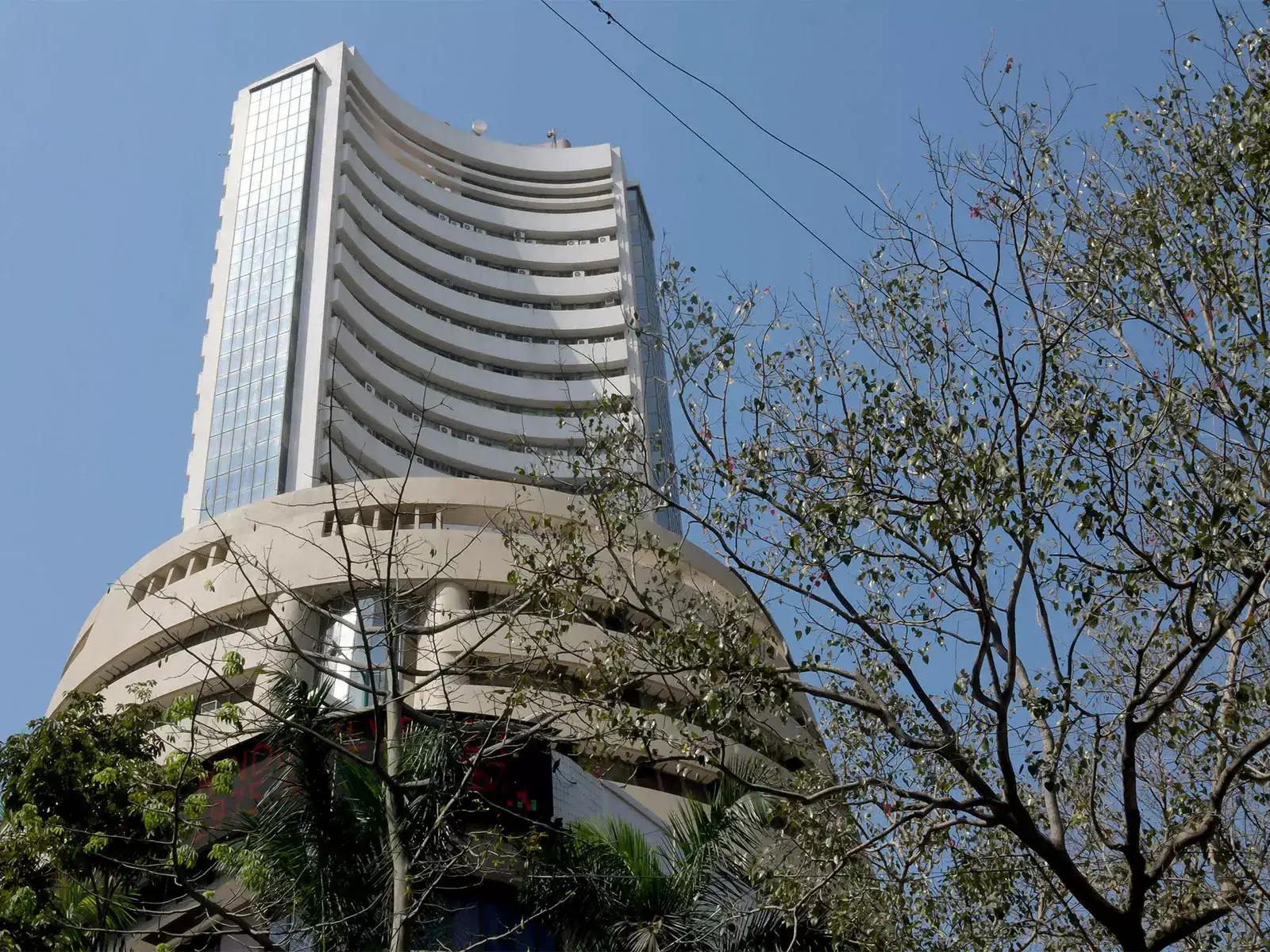
The Indian stock markets closed in the red, with the newly launched closing auction session continuing to create a divergence between the benchmark indices Sensex and Nifty.
Sensex closed nearly 456 points lower (0.58%) at 78,499, while Nifty 50 fell 65 points (0.27%) to end the session at 24,571. Broader markets were mixed, with the Nifty Smallcap 100 closing in the red, while the Nifty Midcap 100 gained 0.2%.
Here are 5 factors that will drive market mood starting Monday:
1. Crude oil prices
After a drop in the first three sessions, crude oil prices rose on Thursday and Friday amid continued uncertainty over negotiations aimed at determining control of the Strait of Hormuz and reopening the key shipping artery.
The trajectory of oil prices will largely depend on the duration of supply disruptions. JPMorgan estimates that every additional month of disruption could push Brent crude higher by about $7 to $8 a barrel. If disruptions continue for three months, the bank expects average monthly Brent prices to reach around $114 a barrel.
Goldman Sachs has also warned that Brent could climb to $120 a barrel if shipping disruptions through the Strait of Hormuz, the world's most important oil transit route, persist.
2. Q1 earnings
The results calendar is set to intensify, as many as 2,045 companies are scheduled to announce their June quarter earnings between Monday and Friday. Key stocks like Tata Motors, HAL, and Vodafone Idea will be keenly watched by investors.
Goldman Sachs sees the Nifty 50 rebounding to 26,500, a level above its record high of 26,373, as it turns more constructive on India following an improvement in the recent macro backdrop.
Looking ahead, it expects investors to increasingly favour reasonably valued segments as expectations of an economic recovery improve. Goldman Sachs also believes that as foreign outflows reverse in the second half, the biggest beneficiaries are likely to be the most-sold and attractively valued pockets of the market, particularly large-cap stocks and banks.
3. US Jobs data
The US reported an unexpected decline in nonfarm payrolls in July, reducing expectations of a rate hike at the next US Fed meeting in September. US nonfarm payrolls fell by 23,000 jobs last month after a downwardly revised increase of 20,000 in June, the Labor Department's Bureau of Labor Statistics said. Economists polled by Reuters had expected payrolls to rise by 80,000 in July.
The weaker-than-expected jobs data presents a scenario where the Fed is less likely to raise interest rates at its next meeting, experts said.
4. FII, DII activity
For the second consecutive week, Foreign Institutional Investors (FIIs) remained net buyers, making net purchases of Rs 2,911 crore in the current week, following buying worth Rs 5,949 crore in the previous week, according to provisional exchange data.
Domestic Institutional Investors (DIIs) also sustained their buying momentum, recording net purchases of Rs 7,768 crore, with inflows seen in four of the five trading sessions.
Sustained buying by both FIIs and DIIs was largely driven by the de-escalation of geopolitical tensions, which boosted investor confidence and supported market sentiment, according to market market watchers.
5. Global cues
A technology-led rally that has pushed US stocks to record highs faces a fresh test next week, with new inflation data likely to shape expectations around the Federal Reserve's interest-rate path.
The S&P 500 posted its first all-time closing high in two months this week, driven by a rebound in technology and semiconductor shares that had previously stumbled from their record peaks. Over the four-session stretch ending Tuesday, the benchmark index surged 5.75%, marking its biggest four-day gain since April.
The easing of Middle East tensions also supported equities, while a pullback in oil prices helped ease some concerns over inflation ahead of the closely watched US Consumer Pipe Index report due Wednesday. Stocks extended gains on Friday after a weak US jobs report reduced concerns that the Fed would need to raise interest rates soon.
The latest rally has lifted the S&P 500's year-to-date gain to more than 13%. Corporate earnings have also exceeded expectations for a second consecutive quarter, supporting investor optimism around the outlook for equities.
In Asia, the KOSPI was the worst performer in July, with chipmakers Samsung Electronics and SK Hynix accounting for 76% of the index's 2,257.8 trillion won ($1.59 trillion) loss in market value.
Concerns over the durability of AI spending and intensifying competition from Chinese rivals weighed on the sector. Volatility was further amplified by heavily traded leveraged exchange-traded funds (ETFs) linked to the chipmakers.
Technical outlook
Sudeep Shah of SBI Securities says the Nifty zone of 24,700-24,750 is likely to act as an immediate hurdle for the index. A decisive move above 24,750 could trigger a fresh rally towards the psychological level of 25,000, followed by 25,200 in the short term.
On the downside, the 200-day EMA zone of 24,400-24,350 is expected to provide strong support. The index is now approaching a crucial technical inflection point, and whichever side breaks first is likely to dictate the market's next major trend.
(Disclaimer: Recommendations, suggestions, views and opinions given by the experts are their own. These do not represent the views of The Economic Times)