
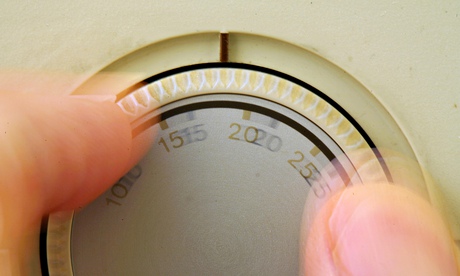
For consumers there is a more important competition investigation going on than the banking probe, whose results were unveiled this week. The final report into the big six energy providers, due out in December, has already been delayed to June next year. The potential outcome – price caps on standard tariffs and a possible break-up of the big six – will be worth the delay, if that is the remedy planned. Or will the Competition and Markets Authority lose its nerve amid intense industry lobbying and, as with banking, disappoint us with another underwhelming report?
To be fair to the CMA, evidence of deep and widespread consumer detriment in the retail banking industry, outside overdraft charges, is hard to find. But in the energy industry the evidence must be apparent to all but the most unctuous defenders of the power companies.
How can it be that each of the big six providers have standard tariffs that are currently all within 3% of each other? How can the smaller outfits offer tariffs 37% below the big six? Why have there been deep falls in wholesale prices, but consumers have this year only benefited from two 5% cuts by British Gas (which was in any case one of the priciest providers) and just 3.5% from E.ON?
The CMA said this week that consumers could save “up to £70” by switching accounts, but this is just a fraction of the £300 many households could save by switching energy providers.
Ann Robinson from uSwitch.com says: “It’s simply astounding that three months since British Gas cut its prices for the second time this year the other major suppliers are still dragging their heels. Although British Gas’s second price cut was welcome, the fact remains that its average customer’s bill has reduced by less than 3%.”
The CMA is not blind to what’s going on. Its early findings, published in July, suggested that households were overcharged by the power giants to the tune of £8.5bn between 2009 and 2013. Tantalisingly, it raised the prospect of temporary price caps on the standard tariffs charged by the big six. It is a frank admission that competition has failed, and simply hectoring people to switch doesn’t work. Why should older customers in particular be penalised for “apathy” because they aren’t going online all the time to find a better tariff? Do they really deserve to be punished by the big utilities?
But the industry fightback has been intense, with even former regulators launching withering attacks on the CMA. Tellingly, when the delay in the report was announced, power company shares all went up. Sadly, the market must be sniffing victory for corporate lobbying. Don’t bank on lower bills yet.












