LEXINGTON, Ky. — One of many questions about the tragic destruction of the Mayfield candle factory in the Dec. 10 tornado is why seven Graves County jail inmates were working alongside more than 100 other employees.
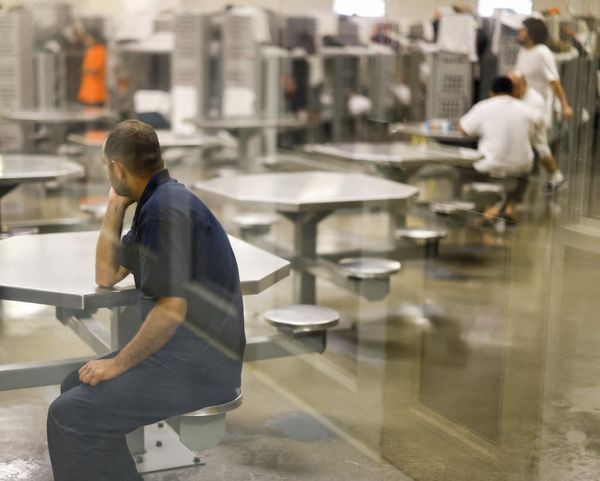
The inmates survived the factory’s collapse and have been credited with helping save lives that night by digging out people trapped under the rubble. However, Graves County Deputy Jailer Robert Daniel, 47, assigned to guard them, was killed along with seven others inside the building.
Graves County wasn’t the only place providing prisoners to make candles, accessories and fragrances at Mayfield Consumer Products. The Calloway County jail regularly drove eight to 10 of its inmates a half-hour west to work at the factory. But Calloway County’s inmates were on day shifts, so they were not in the building when the late-night tornado hit.
“I know they had a good deal of turnover in that place, and that’s why they were open to the idea of using inmate labor,” said Calloway County Jailer Kenneth Claud.
MCP recruited the prisoners under an inmate work-release program the Kentucky General Assembly approved in 2017 as part of Senate Bill 120, a criminal justice reform measure that then-Gov. Matt Bevin signed into law.
Under the law, private employers can use inmate labor either inside a state prison or — for certain lower-level state inmates serving their felony time in local jails — at a workplace in the community.
There is a long list of rules and restrictions for the work-release program. Among them: The inmates must volunteer; they must have good institutional behavior records; they must submit to searches and drug and alcohol tests; and they can’t work at certain employers, such as a child care center, a gun store or anyplace outside of Kentucky.
Inmates must be paid “a lawful wage,” out of which the jail gets to collect fees of $55 a week or 20% of their net pay, whichever is less. Jails are supposed to give preference to inmates who owe child support or court-ordered restitution, which also is deducted from their pay.
For Fiscal Year 2019, the most recent year for which data is publicly available, the Kentucky Department of Corrections says that 4,396 state inmates worked in communities throughout the state, providing more than 6 million hours of labor.
Ashley Spalding has studied Senate Bill 120 for the Berea-based Kentucky Center for Economic Policy, where she is research director. Although Spalding favors the idea of vocational opportunities for inmates, she said she has some concerns about introducing a profit motive when the laborers are locked behind bars.
“Especially when we as a state aren’t reducing mass incarceration, these programs run the risk of worsening the incentive to lock people up,” Spalding said this week.
“Local jails are making money by getting part of workers’ wages, while private sector employers could become reliant on a captive low-wage workforce without basic rights and benefits. That could depress wages for other workers as well,” she said.
Claud said he was initially skeptical about letting the Calloway County jail participate in the program.
“To be honest with you, I waited for other jails to go first to see if there would be problems,” Claud said.
Apart from the Mayfield candle factory, which paid prisoners about $10 an hour, Claud said, the jail also has provided labor to various public parks, the Murray State University Expo Center, a mechanic, a construction contractor and a Murray factory that makes wooden paint paddles.
So far, only one inmate has disappeared off the job, last May, and he was caught the next day and charged with escape, Claud said. That’s a Class D felony that can add five years to a sentence.
Most inmates appreciate the opportunity to stay busy, learn skills and earn money, which is kept in an account for them until their release, he said.
“We’ve had several inmates who have accumulated quite a lot of funds so that when they’re released, they have some savings ready,” Claud said. “One individual had $13,000 or more built up. That gives them a nest egg they can use to purchase a vehicle or rent an apartment and do what they need to reenter society.”
Mayfield Consumer Products turned to inmate labor to meet its production needs, company spokesman Bob Ferguson said this week. The company employed 550 people as of last week, Ferguson said.
“It’s an incredibly tight job market right now,” Ferguson said.
Not every jail has been willing to let inmates work for private employers.
The Fayette County Detention Center in Lexington has suspended work-release programs indefinitely as a COVID-19 precaution, to stop inmates from circulating back and forth into the community each day, said Maj. Matt LeMonds.
Before COVID-19, the Fayette County jail allowed inmates to serve court-ordered work-release sentences, but those were public-service projects, such as sorting materials at the city’s recycling center or cleaning up graffiti under the supervision of the sheriff’s department, LeMonds said.
Also, LeMonds said, the Fayette County jail did not send officers to worksites to supervise inmate labor, as the Graves County jail did. If a public agency wanted to use inmate labor, it had to send supervisors to the jail for the necessary security training, and they would be responsible for providing on-the-job oversight, he said.
The inmates “got dressed, we let them out the back door, and then they came back at the end of their shifts,” LeMonds said.