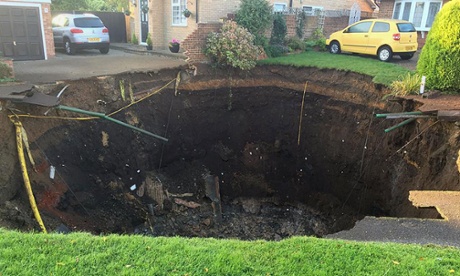
Pictures of the giant sinkhole that opened up in St Albans last week may have made your stomach lurch, but this isn’t an instinctive response, it is a learned survival technique. The fear of the ground falling away beneath us develops early: young babies will crawl on to a glass floor above a drop seemingly without fear, although their heart rate does increase. As they become better at crawling, they learn to connect what they see and what they do, and so hold back at the edge of the drop.
We are programmed to react when something we are used to being there - such as the pavement - suddenly disappears. Filtering out unchanging stimuli and focussing on difference helps us spot potential predators or prey. This is why our ears prick up when a clock stops ticking, even if we weren’t aware of the sound before, or why we might notice the sudden absence of a street seller who had seemed to blend into the city around them.
The connection between perception and action can have strange physical effects: notice what happens when you step on a stationary escalator and feel yourself jolting forwards. As for the sinkhole, the council are looking into it.
Dr Daniel Glaser is director of Science Gallery at King’s College London