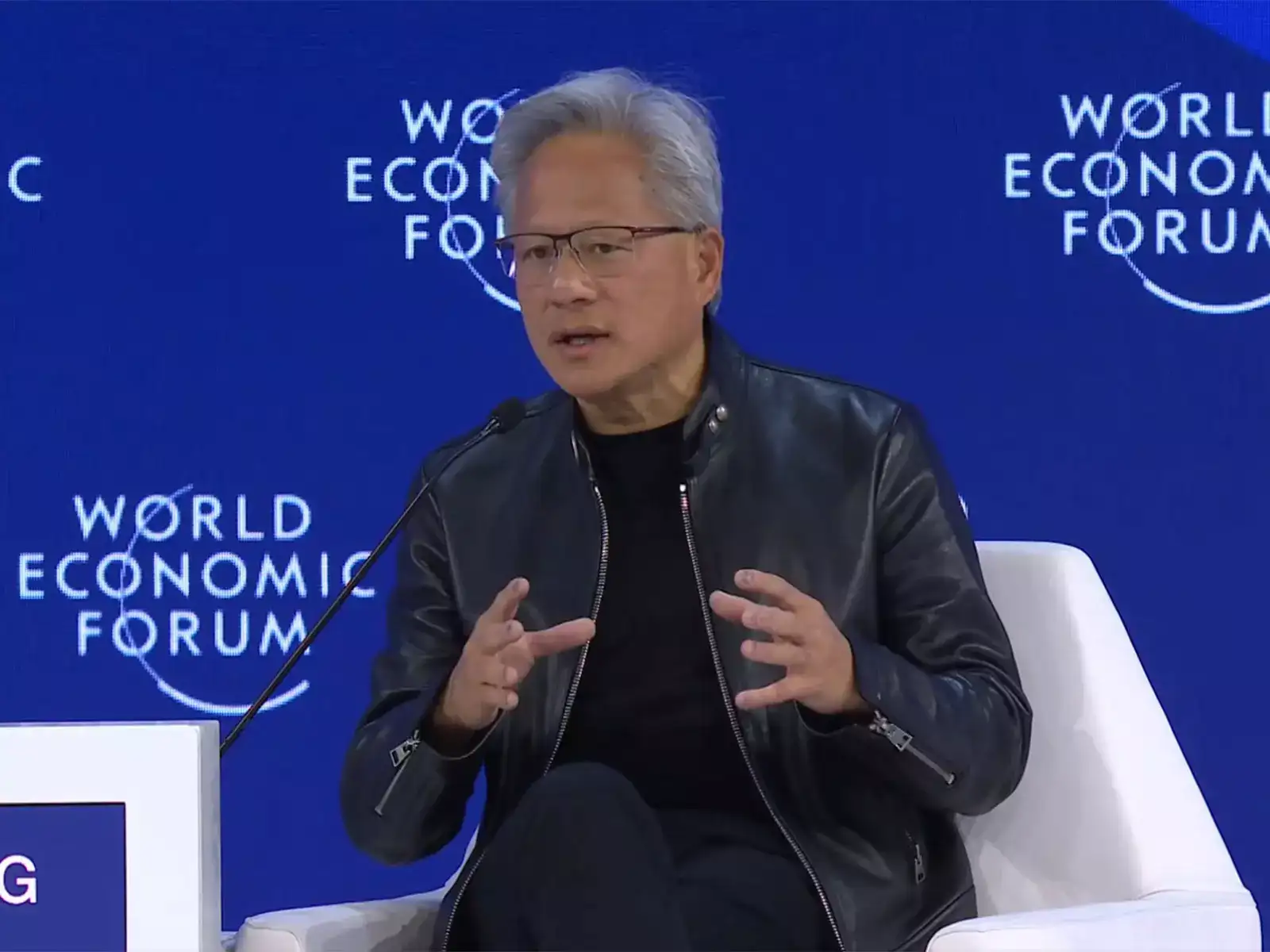
Nvidia CEO Jensen Huang has pushed back against growing calls in the US to fully block the export of advanced AI chips to China, calling the idea “completely ridiculous.” He warned that a total ban would likely have unintended consequences, including accelerating China’s push to build its own independent tech ecosystem. According to Huang, such restrictions could ultimately weaken US influence in the global AI race rather than strengthen it.
The Nvidia chief also criticized the broader mindset behind the proposal, arguing that American companies should not retreat from international markets simply due to competitive pressure.
ALSO READ: Salesforce planning a future without new engineers?
“The idea that I regard as completely ridiculous is: why should American companies go compete in foreign countries if you are going to lose it anyway?” Huang said. He said if the same philosophy is followed in real life, why do we need to wake up when we have to eventually die. “If you guys all apply that same philosophy, why wake up in the morning? If you want me to lose, you are going to have to deal it to me.”
Nvidia CEO on Dwarkesh Podcast
Nvidia CEO Jensen Huang reacted strongly when asked whether selling advanced AI chips to China could create national security risks for the United States. During the exchange, the interviewer cited Anthropic’s Claude Mythos model as a reference point, suggesting that access to Nvidia’s high-performance chips could potentially strengthen China’s position in the global AI race and intensify competition with the US.
ALSO READ: Imran Khan-linked ‘Cyphergate’ Row hits Pakistan
“The premise that — even if we competed in China, that we’re going to lose that market anyways — you’re not talking to somebody who woke up a loser,” Huang said indignantly. “And that loser attitude, that loser premise makes no sense to me.”
He was asked if giving China powerful AI chips could harm US companies and national security. Nvidia CEO Jensen Huang said China does not need access to the most advanced AI chips to remain competitive in the global tech race.
He noted that models like Anthropic’s Claude Mythos were trained using relatively “mundane” computing capacity, suggesting that cutting-edge hardware is not always essential for major AI breakthroughs. Huang also pointed out that China already has substantial computing resources, even if they are not at the same level as Nvidia’s latest chips.
He added that Chinese firms could still scale AI systems by using a “brute force” approach—linking large numbers of older or less advanced chips to achieve similar outcomes. He cited Huawei’s CloudMatrix system as an example of this strategy.
Warning against strict export bans, Huang argued that isolating China from US technology would likely accelerate the creation of an independent tech ecosystem outside American influence. He said a fragmented world split between competing technology stacks would be a “horrible outcome” for long-term US leadership.
Instead, Huang emphasized that the US should stay globally competitive by continuing international trade in AI hardware and keeping other countries aligned with Western technological standards.