“न रूपं न च आकारं न चायुधधरं हरिम्।
अपश्यं जगदीशानं दारुरूपेण संस्थितम्॥”
He has no fixed form, no weapons in hand.
Yet the Lord of the universe appears, residing in wood.
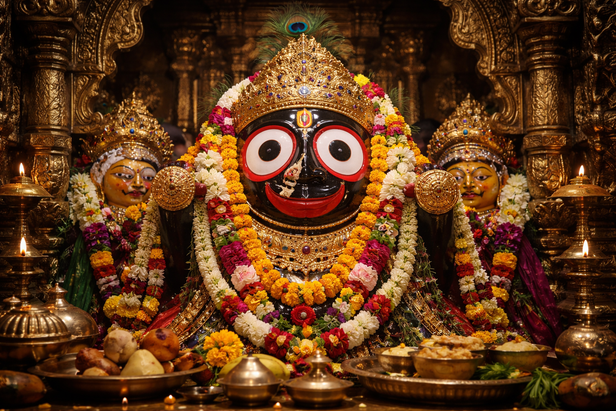
At the sacred abode of Lord Jagannath in Puri, devotion follows a path unlike anywhere else. Here, God is worshipped not in stone or metal, but in wood. And unlike most temples where the idol is preserved for eternity, Jagannath’s physical form is allowed to age, decay, and finally be replaced.
This deliberate renewal raises a question that feels both unsettling and deeply philosophical. If the Lord is eternal, why is His body temporary? Why does the Jagannath idol undergo death and rebirth through a sacred ritual, while the deity Himself is believed to remain unchanged?
The answer lies in a tradition that does not deny impermanence, but sanctifies it. At Puri, the changing body of Jagannath becomes a powerful reminder of life itself. To understand why the idol is replaced every few years, one must look beyond form and into a belief system where renewal is not loss, but continuity.
1. The Ritual Is Called Nabakalebara, Meaning New Body
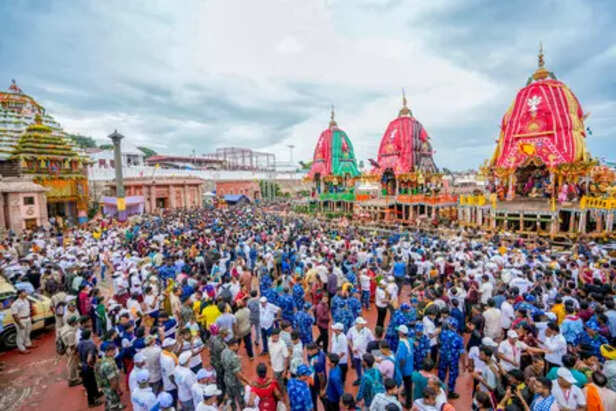
The ceremonial replacement of the Jagannath idol is known as Nabakalebara, a word that literally translates to new body.
This ritual does not occur at fixed intervals like annual festivals. It happens only when a specific astronomical condition is met. When the lunar month of Ashadha occurs twice in the same year, an event called Adhika Ashadha, Nabakalebara is performed. This can happen roughly every 12 to 19 years.
The rarity of the event reinforces its importance. Nabakalebara is treated not as idol replacement, but as a sacred transition comparable to rebirth.
2. Jagannath Is Worshipped as a Living Being, Not an Object
In Jagannath tradition, the deity is not seen as stone or wood. He is treated as a living presence who eats, rests, falls ill, and recovers.
The wooden idol is understood as a temporary body. Just as the human body ages and weakens, the idol too is believed to undergo natural decay. Replacing it acknowledges this reality instead of denying it. The divine is not diminished by change. It is honoured through it.
This belief aligns closely with Hindu philosophy, where permanence belongs to the soul, not the body.
3. The Soul of Jagannath Is Never Replaced
The most sacred aspect of Nabakalebara is the transfer of the Brahma Padartha, often described as the soul of Lord Jagannath.
This element is never publicly described, documented, or photographed. The priests who perform the ritual follow strict vows of silence and tradition. What is believed is that the essence of Jagannath is carefully transferred from the old idol to the new one during a secret night ceremony.
This act mirrors the concept of atma moving from one body to another at death and rebirth. The form changes. The essence remains untouched.
4. Why Neem Wood Is Used for the Idols
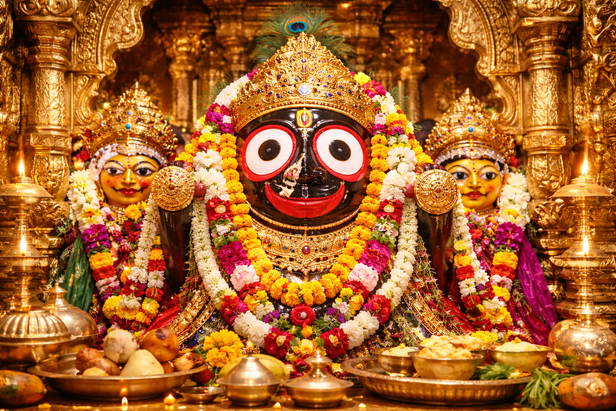
The idols of Jagannath, Balabhadra, Subhadra, and Sudarshan are carved from neem wood, known locally as daru.
Neem is chosen not for convenience, but symbolism. It is associated with healing, resilience, and longevity. However, even neem wood is not eternal. It decays slowly, reminding devotees that no material form lasts forever.
The selection of the sacred neem trees follows elaborate signs described in scriptures. Each tree must meet specific conditions and is worshipped before being cut. The process reinforces reverence for nature as part of divine order.
5. Death Is Not Hidden, It Is Ritualised
Unlike many traditions that avoid or fear death, the Jagannath temple ritual confronts it directly.
When the old idols are replaced, they are not destroyed or discarded casually. They are given a ceremonial burial within the temple premises. This burial is treated with the same sanctity as the cremation of a revered being.
By ritualising the end of a form, the tradition teaches devotees that death is not failure or loss. It is transition. It is necessary for renewal.
6. The Timing Reinforces Cosmic Order
Nabakalebara’s dependence on rare astronomical alignment reinforces the idea that divine processes operate on cosmic time, not human schedules.
The ritual cannot be rushed or delayed for convenience. Entire temple operations adjust to this celestial event. Millions of devotees visit Puri during Nabakalebara, despite the logistical challenges, because the moment is believed to carry extraordinary spiritual weight.
This reminds devotees that faith is not controlled by human urgency, but by alignment with larger rhythms of existence.
7. The Philosophy Behind the Practice Is Deeply Human
At its core, the replacement of the Jagannath idol teaches a lesson that goes far beyond religion.
Everything that is visible changes. Bodies age. Roles shift. Circumstances evolve. What remains is essence, values, and continuity of purpose.
By allowing the physical form of God to change, the tradition quietly asks devotees to reflect on their own attachment to form. It teaches acceptance without loss of faith.
8. Why This Tradition Has Survived for Centuries
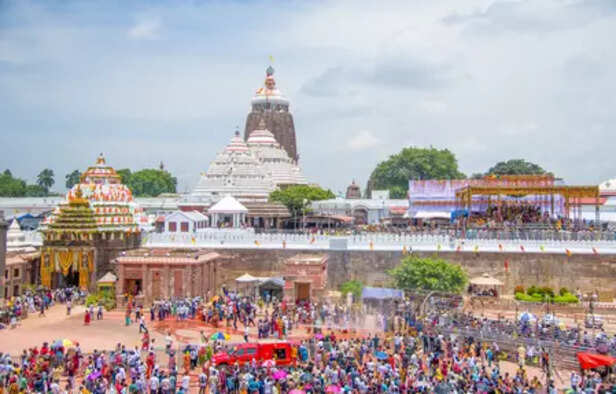
Nabakalebara has survived invasions, political upheavals, and cultural shifts. It endures because it is not rigid. It embraces impermanence as sacred.
The Jagannath tradition does not promise immortality of form. It promises continuity of meaning. That flexibility has allowed it to remain relevant across generations.
It speaks to the deepest human truth that holding on too tightly to form creates suffering, while understanding change creates peace.