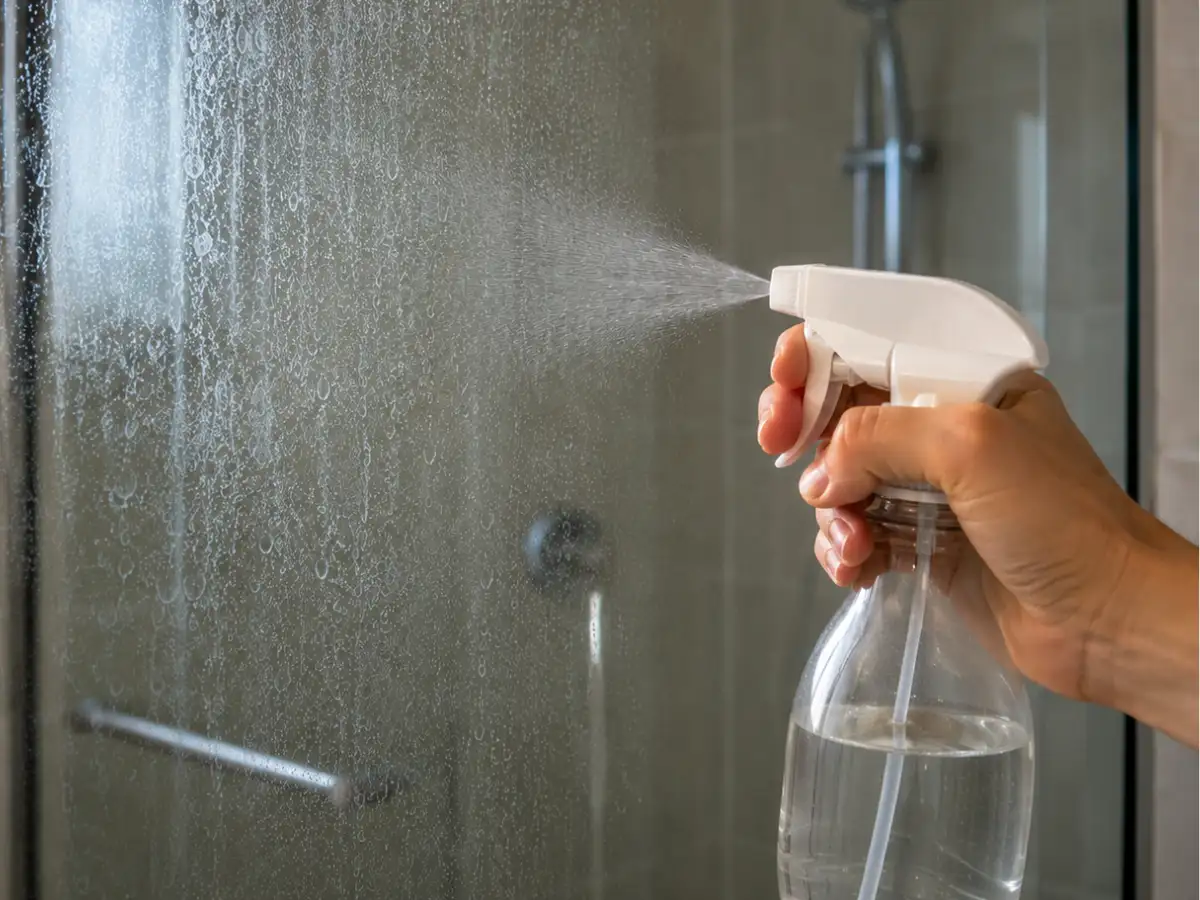
If your glass shower door looks foggy no matter how hard you scrub, the problem probably isn't your cleaning skills. It's your water. The U.S. Geological Survey’s Water Science School notes that water hardness, or the amount of dissolved calcium and magnesium it contains, varies across the country, and one of the most common signs of it is cloudy glass and dishware. When that water dries on a shower door, it leaves a chalky film behind. That’s why a simple bottle of white vinegar has quietly become one of the most talked-about cleaning hacks among American renters.
What's actually causing that cloudy glass
That white, crusty film on your shower door is scale caused by lime. It is formed when hard water evaporates, leaving behind solid mineral deposits, mainly calcium carbonate. The longer you let that shower door air dry instead of wiping it down, the thicker that film gets. Light haze can turn into a stubborn, gritty layer that regular soap and water can’t touch.
This isn't a hygiene issue. It's simple chemistry. Calcium carbonate isn't very soluble in plain water, so when it deposits on glass, it likes to stay there.
Why vinegar, of all things, works
Vinegar is mostly water and acetic acid, a weak acid that can dissolve mineral deposits like calcium carbonate. That’s why people run vinegar through a coffee maker to clean out the mineral buildup, according to the same USGS Water Science School page. The acidity helps dissolve mineral particles by charging them so they wash away more easily. That’s the same reaction that removes limescale from a shower screen.
That’s also why the trick is popular with renters. It is cheap, it is already in most kitchens, and it avoids the cleaner with the warning label of chemicals no one knows what they are.