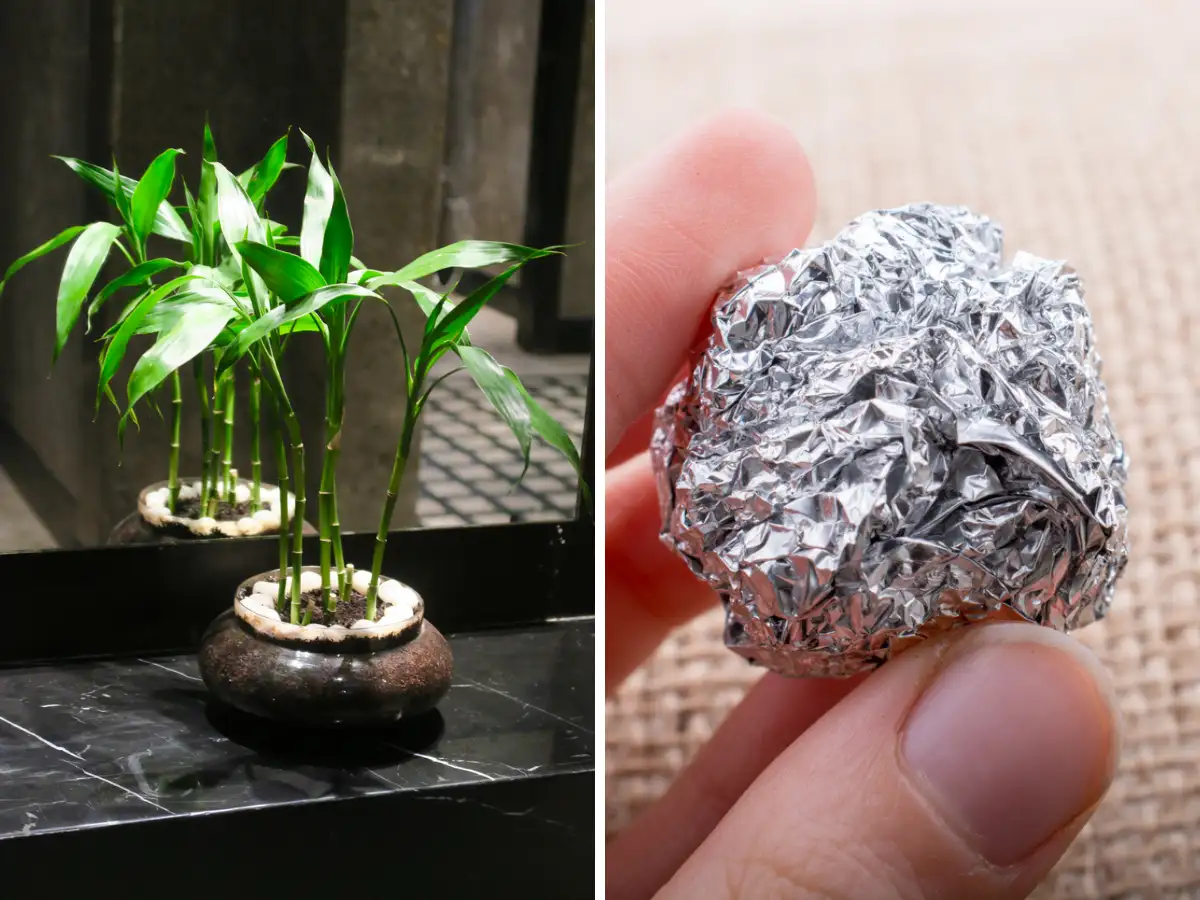
Aluminium foil is more commonly seen in kitchens, but it has gradually become a handy tool in home gardening. Many gardeners like to try out simple household materials before investing in specialised products. Foil stands out because it reflects light, holds up reasonably well outdoors, and can be easily shaped for different uses. While it is not a substitute for proper gardening methods or a foolproof pest solution, it can still be useful in small, practical ways across garden beds, pots, and vegetable patches.
Reflecting Light for Better Growth
Placing aluminium foil around the base of plants can help reflect sunlight back onto lower leaves that often remain in shade. This added light can brighten dense foliage areas and may also make the environment less inviting for certain insects.
Wrap The Pot Exterior With Foil
Cover the outer surface of your plant pot with foil, keeping the shiny side facing outward. This reflective layer at ground level can confuse both crawling and flying pests approaching from the sides. Make sure the foil is not wrapped too tightly so that air can circulate and moisture does not get trapped against the pot.
Line Your Plant Tray With Foil
Add a sheet of foil to the drainage tray beneath your pot, with the shiny side facing up. This helps reflect light back towards the plant’s lower leaves and can discourage pests such as fungus gnats that thrive in damp soil. For best results, replace the foil every couple of weeks to keep it clean.
Create A Foil Collar Around The Stem
Wrap a small, loose strip of foil around the base of the plant stem, just above the soil. This acts as both a physical and reflective barrier, helping to prevent pests from climbing up from the soil.
Covering Bare Soil to Retain Moisture
Using foil over exposed soil surfaces can reduce direct sunlight exposure, helping to slow down moisture loss during hot weather. This can support more stable soil conditions around plant roots, especially in gardens that experience extended dry periods.
FAQs
1. Is aluminium foil safe to use around plants?Yes, aluminium foil is generally safe when used properly. It does not harm plants if placed around pots, trays, or soil surfaces, as long as it does not restrict airflow or trap excess moisture.
2. Can aluminium foil really help keep pests away?
Foil can help deter some pests because its reflective surface confuses insects and makes the area less attractive. However, it is not a complete solution and works best alongside other pest-control methods.
3. How often should I replace aluminium foil in the garden?
It’s a good idea to replace foil every 1–2 weeks, especially in trays or exposed areas, to maintain cleanliness and effectiveness. Dirty or torn foil may not work as well.
4. Will aluminium foil help plants grow faster?
Foil can improve light distribution by reflecting sunlight onto lower leaves, which may support healthier growth. However, it does not directly speed up growth and should be used along with proper care like watering and fertilising.
5. Can aluminium foil help retain soil moisture?
Yes, when used to cover bare soil, foil can reduce direct sunlight exposure and slow down evaporation. This can help maintain moisture levels, especially during hot or dry conditions.