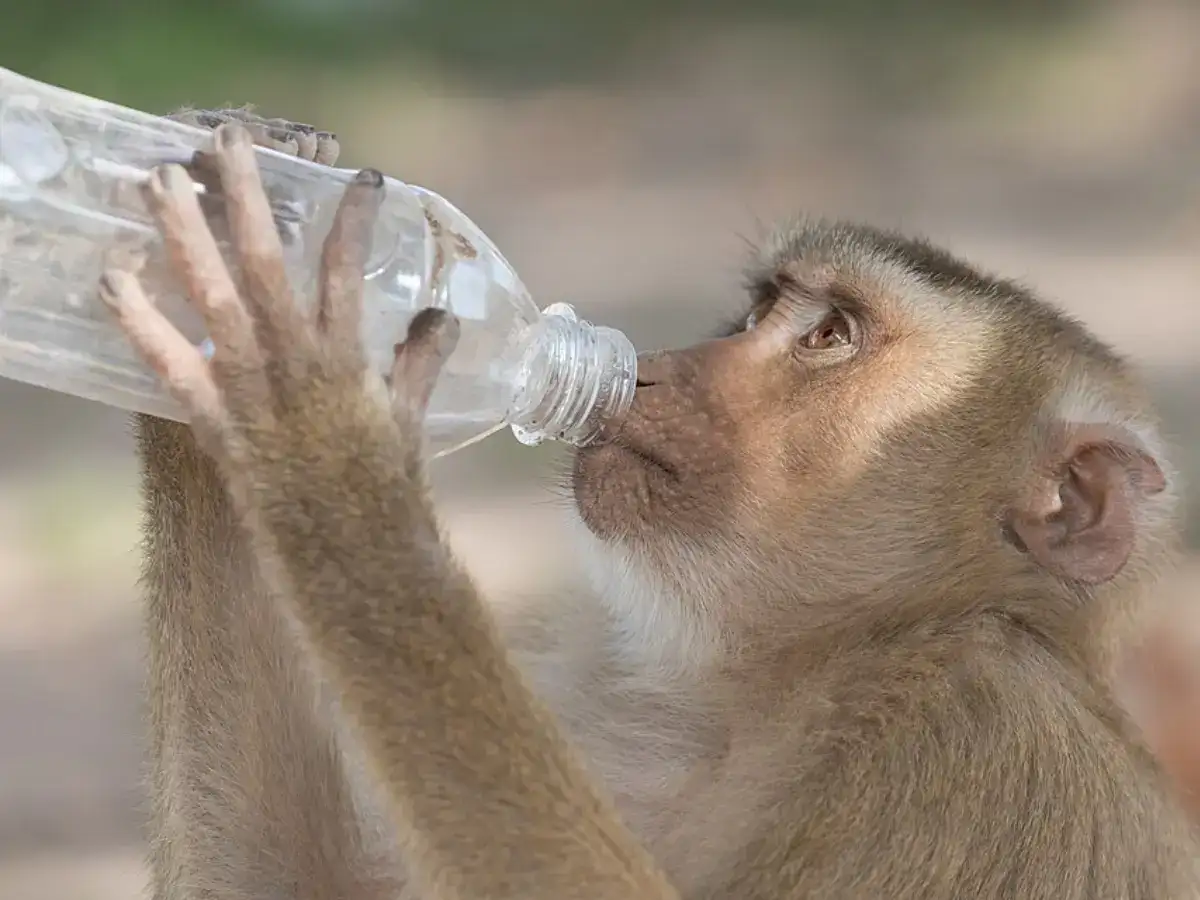
For centuries now, humans have been living side-by-side with macaques, a genus of gregarious Old World monkeys, in various regions on the Earth. From urban streets to forests, parks, and even food sources, they interact. However, according to new scientific studies, human-macaque interactions are becoming far more complex than mere cohabitation. Recent research findings revealed that human and macaque behaviors often shape one another in common surroundings.
The scientific community defines this phenomenon as "co-constructed behaviors," referring to mutual behavioral adaptations, communication and socialization. According to the International Journal of Primatology, macaques might not simply adapt to the presence of humans, but humans themselves could develop certain behavioral patterns when interacting with the monkeys.
Environment influences behavior
Scientists stated that the presence of a common living space creates conditions for continuous mutual observations. In semi-urbanized areas, macaques often watch the behavior of humans concerning feeding, locomotion, and communication. Such continuous observations may result in the gradual development of new behavioral patterns.
The study revealed examples of behavioral change by macaques caused by observing human behaviors, such as altering their feeding practices, gestures, and locomotor movements. Humans themselves change their approaches, ways to approach and communicate with macaques, to feed them, etc.
They observed the fact that such interaction patterns generate unique "cultures" specific to particular communities. "Coexistence is not passive," according to the scientists. This is a process involving active changes in behavior and learning.
Macaques employ a complicated set of gestures and expressions
Another explanation for why such interaction patterns work so effectively lies in the sophisticated communication systems used by macaques. Many studies prove that macaques employ a variety of gestures, facial expressions, and bodily movements to express their feelings and intentions. These elements contribute to the regulation of cooperation, conflict, grooming, play, and social bonds within groups.
In one research published by John Benjamins Publishing Company, macaque gestures were considered especially flexible and socially sophisticated compared to those of other non-primate animals. The use of these gestures may even affect humans' reactions. Humans familiar with macaques learn to recognize various gestures of warning, playfulness, or food without being trained. Researchers consider this type of nonverbal communication essential for decreasing conflict and improving coexistence.
Macaques and humans’ vocalization patterns display amazing similarities
Furthermore, scientists have discovered some amazing similarities between vocalizations of macaques and human communication. In fact, studies such as those carried out on macaques and published in Behavioural Processes, suggest that the primates use vocal cues to exchange information related to food and the state of the environment.
Some sounds can be associated with communication strategies as found in the human linguistic system. According to researchers, vocalizations are used by the primates for coordinated activities which enhance survival chances.
In case the animals live in close proximity to humans, then vocal communication may determine their reactions. Interspecies communication continues to change research approaches for studying animal intelligence and social behavior.
Macaques can synchronize behaviors
It has been discovered that Japanese macaques can voluntarily synchronize arm movements when facing each other during tests conducted in 2013. According to the findings published in Scientific Reports, the synchronism was voluntary since there was no instruction or coercion to coordinate behaviors.
Researchers believe that this phenomenon is a reflection of social facilitation, a process in which humans also display similar behavior. Social facilitation happens when an individual involuntarily copies someone else's behavior.
Experts believe such an ability could allow macaques to establish more stable relationships and facilitate cooperation among group members. This capability can be beneficial for better interaction between macaques and humans as well.
Why this research is important
The expansion of urbanization and the development of infrastructure lead to an increase in interaction between people and wildlife across the globe. Scientists claim that the investigation of these overlapping behaviors can be helpful for improving conservation, urban planning, and resolving conflicts. In particular, scientists advise not to view macaques as invasive or troublesome creatures but try to examine them as socially intelligent beings able to learn and evolve.
This review contradicts the outdated notion that human and animal societies are totally different in their structure. It becomes increasingly obvious that interaction, learning processes, and adaptation can take place even between species that live in common habitats.
With the constant growth of human impact on nature, researchers think it will be even more necessary to understand these processes. The emerging relationship between macaques and humans provides a unique opportunity to observe a new phenomenon of mutual influence, evolution, and emergence of a brand-new kind of society.