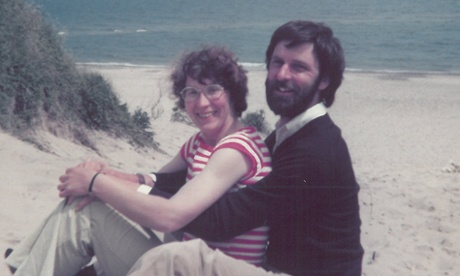
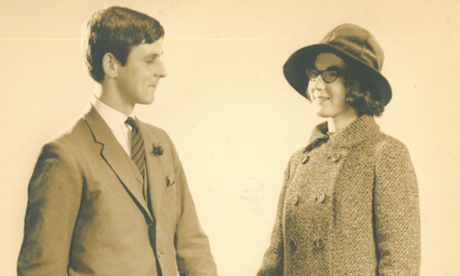
I want to begin with Graham, a friend of mine, and his wife Maureen. Married for just over 50 years, Maureen was diagnosed with Parkinson’s disease and attendant dementia in 2010. Graham is blind, and Maureen was admitted to a care home in 2013 because they could no longer manage together at home.
Graham says it’s a welcoming environment and the care workers are lovely people, but if Graham isn’t there (he visits her every day) she will spend all her time in bed. There isn’t an appropriate room for her to sit in and if she sits in a chair in her own room, there has to be a member of staff to supervise her – and there is never one to spare. Maureen can no longer express her own feelings, but Graham says she seems to enjoy sitting down. Staying in bed raises respiratory issues which seem to distress her. She simply weeps, he says.
In 2015 we can get a spaceship onto a rock in space, but we can’t provide the basics to ensure a decent quality of life for an older person, despite the commitment of staff and the fact that (unlike many residents) Maureen has family to visit and help out. Why is this?
Ever since the Sutherland Commission on long term care reported in 1999, and its initial recommendation for free social care was rejected, the response of the three main traditional political parties has consistently been that we could not afford to put social care on the same footing as the NHS and make it a universal service free at the point of delivery funded by general taxation. This, the argument goes, would just be too expensive.
The question is this: why do we think of looking after people as a financial burden? What underpins this way of thinking, that it is a matter of money out rather than money in? Why is it thought that helping to support children facing difficulties, disabled people and older members of our community is a negative rather than a positive?
The NHS was established grounded in the belief that taking care of the nation’s health was an investment in the future. Forgetting for the moment that we might also think there could be a moral duty to take care of each other, surely the longstanding lesson has been that a healthy nation is a productive and competitive nation? Isn’t this the overarching meaning of “investing in people”?
We also know that a penny-pinching approach to social care funding has disastrously perverse results: it undermines policies for prevention, leaving people’s health and wellbeing to deteriorate at even greater cost to the exchequer (even if we discount the costs to human happiness). We are seeing its wasteful effects on the NHS, on accident and emergency departments and in so-called bed blocking.
It’s time we started to see social care as a social and economic generator. An independent analysis of the economic value of the adult social care sector in England showed its direct economic value in 2011-12 was more than £20bn, its indirect effects added a further £16bn of GVA (gross value added) to the English economy and support a further one million full time jobs.
The sector employs 1.5 million workers and produces around £13,250 in GVA per worker. It contributes 1.8% of all GVA in England and provides jobs for 6.4% of the country’s workforce.
Investment in social care puts a stop to both human and financial waste. Instead of treating the social care workforce as a marginal pool of low grade, low skilled and low paid workers, we can begin to grow it as jewel in the service industry crown. Care and support work could take its place as a source of valued jobs, skills and opportunities as well as creating and competing effectively to gain international markets and investment. Such employment would create wealth directly as well as indirectly, by providing support to enable people to maximize the quality of their lives and contribution to the community.
Reconceiving social care in this way - with the primary concern being people’s wellbeing - also offers the prospect of an economy that does not have to be based on growth, with all the environmental and social problems it brings in its wake. It would take account of changing demographics and our increasing requirements for support during life’s course. Instead of seeing social care as all about deficit and consumption, we can see it as positive and creative.
Supporting, maintaining and improving people’s wellbeing would become a central aim of economic activity. Such a needs-based and person-centred approach would value us equally and be concerned with our needs whatever our role – worker, service user or citizen.
This blog is an edited extract of a speech delivered by Peter Beresford at Brunel University on Monday 16 February 2014.