“पूर्णमदः पूर्णमिदं।”
What looks incomplete can still be whole.
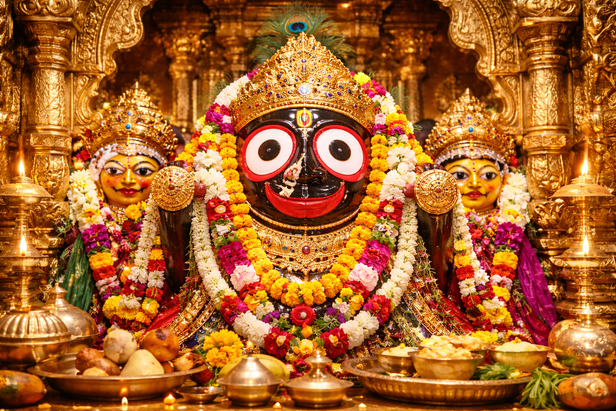
When people see Lord Jagannath for the first time, one question comes naturally. Why does this God have no hands or feet? Almost every other Hindu deity is shown in a complete human form, with hands holding weapons or blessings and feet placed firmly on the ground. Jagannath looks different. His body feels unfinished, yet devotees call him Purna Brahma, the complete form of God.
This is not an accident, a mistake, or poor idol making. Jagannath’s form carries a deep meaning that speaks to ordinary people, not scholars alone. It talks about life, faith, responsibility, and how we understand God.
1. God Is Not Meant to Look Like Us
Most idols look human because it helps people connect easily. Jagannath breaks that comfort on purpose. His form reminds devotees that God is not limited to human shape, size, or rules. If God looked exactly like humans, people would reduce divinity to the body.
By having no hands or feet, Jagannath quietly tells devotees that God is beyond the human body. He is presence, not appearance. You do not need God to look like you to feel close to him.
2. The Idol Was Left Incomplete by Divine Will
According to temple tradition, Jagannath’s idol was never fully finished during its making. The work stopped suddenly, and the form remained incomplete. What matters is that this incompleteness was accepted as God’s own wish. No one tried to correct it later.
This belief carries a powerful message. Not everything unfinished is wrong. Some things are meant to stay the way they are. Jagannath’s form teaches that perfection does not always come from completion. Sometimes truth exists exactly where things stop.
3. Hands and Feet Are Not Needed for Divine Power
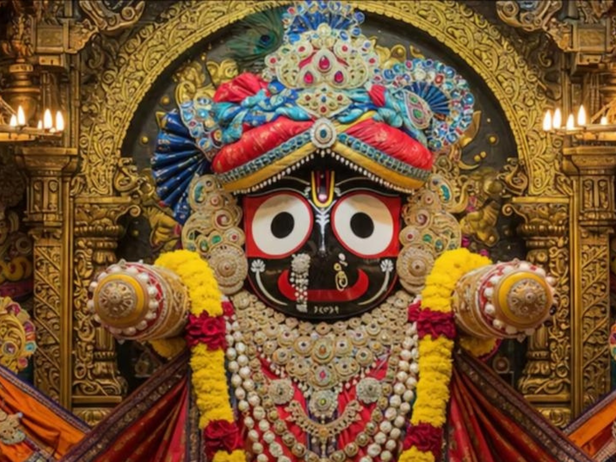
Hands usually mean action. Feet usually mean movement. Jagannath has neither, yet devotees believe he runs the universe. This idea feels strange but meaningful. God does not need hands to bless or feet to reach people. His power does not depend on physical effort.
This belief comforts many devotees. It says that God is always present, not because he moves fast, but because he is already everywhere. Distance does not matter when presence is complete.
4. Jagannath Is About Awareness, Not the Body
Jagannath’s eyes are large, open, and unblinking. They dominate his face. This is intentional. The focus is on seeing, watching, and awareness. The body is kept simple so attention stays on consciousness.
In simple words, Jagannath is not shown as someone who acts physically all the time. He is shown as someone who sees everything. For devotees, this creates a feeling that nothing is hidden, nothing is ignored, and nothing goes unnoticed.
5. Wooden Form Shows That Bodies Are Temporary
Jagannath is made of wood, not stone or metal. His body is replaced from time to time through sacred rituals. The lack of hands and feet fits into this idea of change and renewal.
The message is clear and relatable. Bodies change, break, and disappear. What matters is not the outer form but the inner truth. Jagannath’s form reminds people not to attach too much importance to physical appearance, whether divine or human.
6. Jagannath Belongs to Everyone
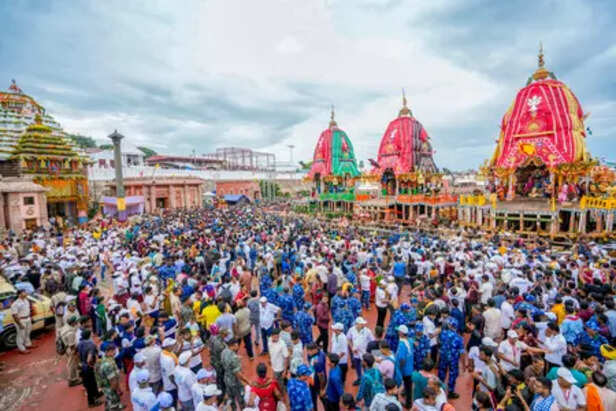
Jagannath does not look like a king, a warrior, or a saint. He does not carry symbols of power or status. This makes him easy to accept for everyone, rich or poor, learned or uneducated.
His incomplete form removes hierarchy. No one feels smaller or lesser before him. This is one reason Jagannath worship has always felt inclusive. His form does not intimidate. It invites.
7. Completeness Is Not About Outer Shape
In Jagannath’s philosophy, completeness does not come from having all body parts. It comes from being whole within. He lacks hands and feet but lacks nothing essential. Devotees believe he listens, accepts prayers, and responds in his own way.
This idea connects deeply with human life. People often feel incomplete because of what they lack. Jagannath’s form gently says that missing something does not make you broken. You can still be whole.