You get what you pay for, and you get what you vote for. And that means the first Conservative-only budget in almost 20 years. At 12.30pm on Wednesday, George Osborne will take to the despatch box to announce his plans for the finances of the country. Here’s everything you need to know.
1. What even is the budget?
Put simply, it’s the announcement the chancellor of the exchequer makes to MPs in the House of Commons, outlining the public spending of the government over the course of parliament.
2. Why do I care?
Because often there’s something in there about the changing cost of alcohol.
3. Ah, I see. Could you please tell me more about how the budget works?
Sure. The chancellor will talk about the current state of the economy, and forthcoming increases and decreases in taxes. The actual legislation comes after, and is known as the finance bill.
After the budget, typically four days of debating takes place in the House of Commons. Then the finance bill has to go through the usual stages of a bill being passed into law. It’s all very exciting.
But before the debates (I know, I’m sorry), the leader of the opposition (rather than, as you might expect, the shadow chancellor) responds immediately to the chancellor’s speech.
4. Who will respond tomorrow?
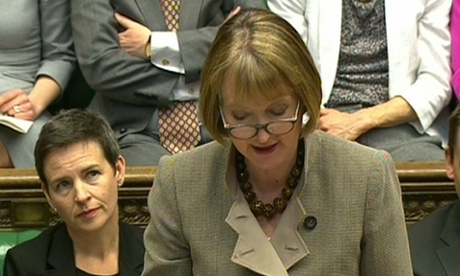
Well, given that Labour is currently undergoing an identity crisis, the response will come from Harriet Harman (below), the party’s interim leader. Prepare for the Daily Mail to scrutinise exactly what she’s wearing, because that’s the most important thing.
5. Where is the government getting its dosh from?
Taxes. Think income taxes (on what people earn); VAT (value added tax) on things we purchase, currently set at 20%; and taxes known as duties (on items such as cigarettes, alcohol and petrol). Other taxes too.
6. Anything else I should know?
Oh, just that the whole thing is presided over by someone with the awesome title of “chairman of ways and means”. Currently a position held by Lindsay Hoyle, a Labour MP. He gets to nip in and speak before the leader of the opposition responds.
7. So what can we actually expect in the budget tomorrow?
The top line of the budget speech will be, as a rather brilliant BBC headline puts it: “George Osborne: £12bn of welfare savings have been found” – as if he’d lost them down the back of the sofa.
This is the news that after announcing significant – but unbudgeted – cuts in the Tory general election manifesto, Osborne has worked out a plan. And it isn’t pretty.
It’s expected that he will decrease the annual benefits cap from £26,000 to £23,000 for those living in London, and to £20,000 for those outside. This, it is hoped, will save £135m. He’s also pledged to remove housing benefit for those aged 18 to 21 on jobseekers allowance, which will apparently make £120m in savings.
8. Anything else?
Osborne has also set out plans to raise the inheritance tax threshold for couples to £1m by 2017.
9. What does that even mean?
It means that inheritance tax will now only have to be paid on assets over £500,000 for single people, and £1m for couples.
In addition to the £325,000 in personal assets already permitted to be passed on tax-free, Osborne is creating an additional £175,000 tax-free allowance per person for property. So if you die, you are allowed to pass on assets worth £500,000, including a house, to your children, without paying inheritance tax. So that’s a weight off the mind.
10. What’s the news on housing association tenants? I love all that.
Local authority and housing association tenants who earn more than £40,000 in London (or £30,000 elsewhere), will have to pay market rents, or almost market rents, from 2017 or 2018.
11. And what’s all this about the BBC?
Osborne is gunning for the BBC. Everybody is always gunning for the BBC. Leftwing bias, rightwing bias, let’s call the whole thing off. Which is what Osborne is hoping to do, given the changes he is making.
Osborne will shift the £650m cost of free television licences for the over 75s from the Treasury to the Beeb itself.
12. Um, doesn’t that mean the BBC is being forced to help with Osborne’s austerity plans?
Yes. Osborne maintains that channels will not have to be axed or major changes made, but given that the BBC recently moved BBC3 online and only saved around £50m, that’s, to coin a phrase, rich. Meanwhile, £650m represents one fifth of the BBC’s entire budget.
Osborne has also said he will close the loophole that allows viewers who only watch catch-up television on BBC iPlayer – not live transmissions – to avoid paying the licence fee.
Last week it was announced that the BBC was to cut 1,000 jobs to save £150m. Earlier this year, journalist Nick Robinson relayed a conversation in which David Cameron threatened to close the BBC down. So far so good.
13. Didn’t we already have a budget this year?
Yes.
14. Could you please explain?
Certainly. The previous budget, also presented by Osborne, as he was also chancellor then, was a pre-election budget that took place in March. Now we’ve had a change of government, which requires a new budget. And this time, the Conservatives don’t have to worry about their former coalition partners, the Liberal Democrats.
15. Is it always so boring?
It shouldn’t be, given that budget day is the only day when alcohol is allowed to be consumed in the House of Commons chamber – but only by the chancellor. Plus, if Greece has taught us anything (and the Greeks have taught us rather a lot), it’s that the economy can be anything but dull.
Unfortunately, Osborne sticks to a glass of water. The longest ever budget speech on record was made by William Gladstone in 1853, who clocked in at a withering four hours and 45 minutes, aided by a concoction of sherry and beaten egg. The merciful Benjamin Disraeli took just three quarters of an hour to deliver his 1867 speech. Um, but he also took five hours on one occasion in 1852 (but with a break).
16. Why is George Osborne carrying a red lunch box?
How rude. That’s not a lunch box. It’s a briefcase, containing the budget speech, Dairylea lunchables and a carton of Um Bongo.
The original lunch box, sorry, briefcase was used by William Gladstone, circa 1860. The formal title of the briefcase is actually the budget box, and it is just one of many ministerial boxes.
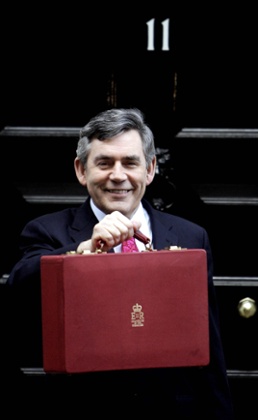
None of the other ministerial boxes have their own photoshoot outside No 11 Downing Street, however, while gripped with the force and positioning of a man holding a handrail seven people removed on the Tube.
More than one budget box exists. Gladstone’s original wooden one, lined with black satin and covered in scarlet leather, was redesigned in 1965 for James Callaghan, and again in 1997 for Gordon Brown, who made a big deal of his new box being handcrafted by trainees from his Dunfermline East constituency.
Alistair Darling from 2007, and Osborne in 2010, reading that “vintage is in”, used Gladstone’s original.
In 2011, however, a brand new budget box was produced by the National Archives. It cost £4,300 to make. Gladstone’s original is now housed at the Imperial War Museum.
Fact fans might be pleased to note that Norman Lamont didn’t use the budget box. Instead, his then secretary William Hague carried his speech in a plastic bag – because the box itself contained a bottle of whisky. I haven’t made that up. And pity poor George Ward Hunt, who in 1868, forgot to bring the budget box, or the speech inside it, depending on who you believe.
Finally, let us also take a moment to remember Liberal Democrat Danny Alexander’s alternative yellow budget box, a 2015 election gimmick only narrowly pipped at the post by the dreaded EdStone.
17. Is the budget always on a Wednesday?
It doesn’t have to be on a Wednesday, but it usually is. This is because the budget speech takes place after PMQs (prime minister’s questions), and Tony Blair shifted PMQs from 15-minute sessions on Tuesdays and Thursdays to once a week for half an hour, on Wednesdays, when he took office in 1997.
18. What is the autumn statement?
This takes place, as its name suggests, in November or December. Although personally I would argue that December is clearly in winter. The last autumn statement was delivered by – you guessed it – Osborne, on 3 December 2014.
It’s basically just a review of the government’s spending and a look at future spending based on report from the OBR (office for budget responsibility). The OBR produces two forecasts annually: one at the budget, and one at the autumn statement.
19. I don’t get why he is called the chancellor of the exchequer
In other countries, the chancellor of the exchequer would just be known as the finance minister. The name derives from a checked board, on which counters would be used to mark revenues.
20. This all sounds so fun! Can I watch it unfold live?
You sure can, my little masochistic friend. Osborne’s speech will be broadcast on BBC2, BBC News and BBC Parliament (possibly with erroneous, rude subtitles) and you will also be able to watch on Sky News and ITV. The Beeb, keen to ensure it really knows its enemy, will also have live coverage on Radio 4.
The best place to follow Gorgeous George, however, will of course be right here at the Guardian. You can find everything at theguardian.com/uk/budget. Drinking games permissible.