“We all know with [Manchester] City, as always: different ideas for different games and you always have to get used to it during the game,” Jürgen Klopp, a manager who has suffered at the hands of Pep Guardiola’s ever-evolving Sky Blues more than most, once said.
“You never know exactly what will happen.”
Guardiola’s best characteristic, the quality which sets him above all his managerial peers, is an insatiable appetite for change. Every team under the Catalan’s watch has been subject to constant alternations and evolutions, even—if not especially—when they’re winning.
If it ain’t broke, Guardiola will still try to fix it.
So, when something in the circuit breaker is actually going haywire, there’s little chance of the City boss leaving it to fester.
Mikel Arteta had already made Guardiola sweat when Arsenal hosted City in the Premier League back in September, having much the better of a 1–1 draw. Six months later, Guardiola mastered his former apprentice with a complete reversal of roles in a triumphant Carabao Cup final.
Mikel Arteta’s Warning Shot
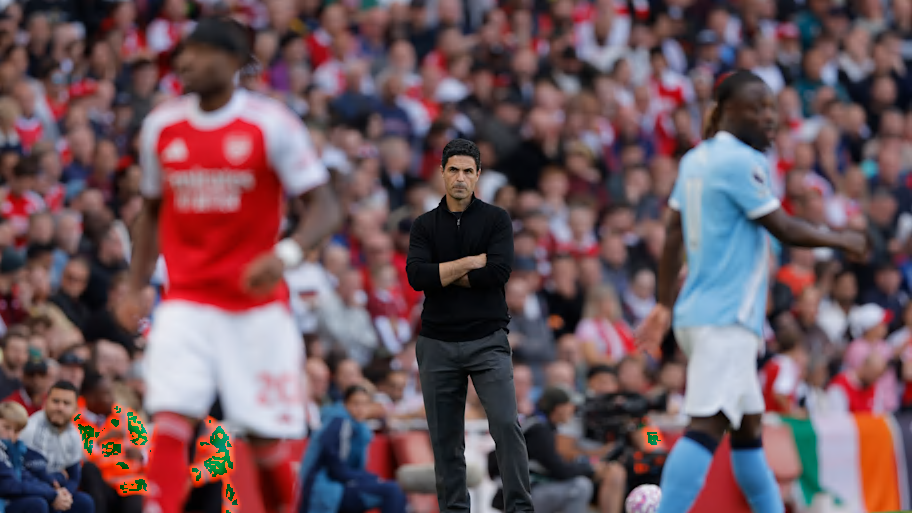
When Arteta welcomed his mentor to the Emirates Stadium in the fifth week of the season, Arsenal snatched a point with an uncharacteristically deft stoppage-time lob from Gabriel Martinelli. Yet, the Gunners had effectively battered City.
Guardiola’s dethroned champions arrived in north London with the intention of pressing Arsenal. It soon became apparent that wasn’t going to work, as the Gunners repeatedly picked their way through the befuddled sky blue shirts. City retreated into a mid-block with even less success before ending the game pushed back into a 7-3-0. According to Opta, City spent 22.2% of the contest hunkered in a low block, a notable leap on their average of 14%.
“It’s so difficult when you’re not effective in high pressing, you’re not effective in the buildup,” a breathless Guardiola told Sky Sports after that draw. “Always is so tough and so difficult.”
“In general, Arsenal was better,” the City boss admitted, with some justification.
It was the lowest possession figure City had ever recorded under Guardiola. Just 33%. Fast forward six months and it was Arsenal who were reduced to their lowest possession figure of the season. Just 38%.
Guardiola’s Solution
Throughout a slightly wild-eyed postmatch press conference, Guardiola was at pains to get across how staggered he was by his side’s collective performance, “especially without the ball,” as he repeated on several occasions.
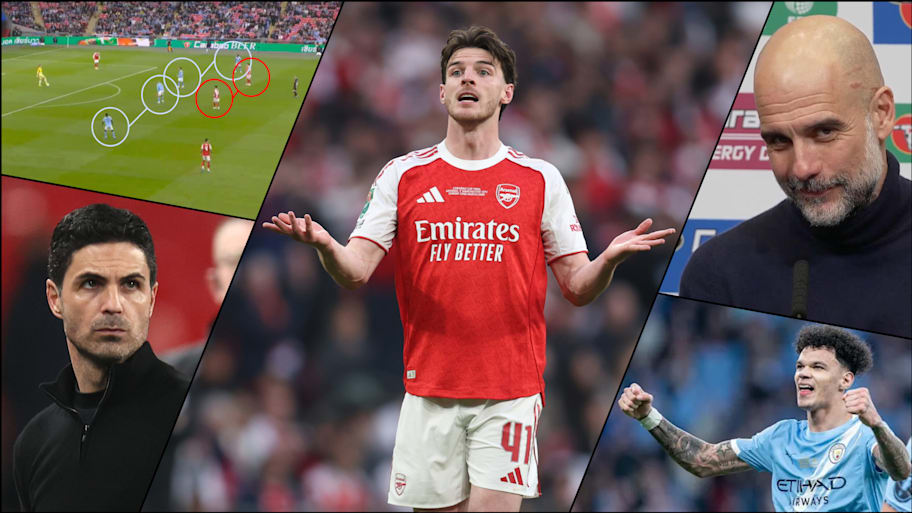
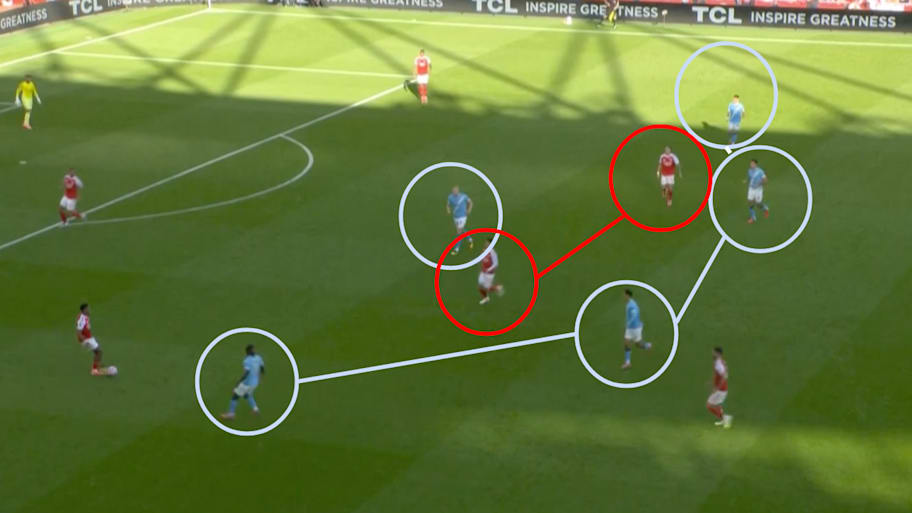
Just as in the autumn meeting, City set out to press Arsenal high at Wembley. However, while the 4-1-4-1 shape they used at the Emirates (see below) was comfortably bypassed—the lonely figure of Haaland easily flanked by Martín Zubimendi and Declan Rice—Guardiola went with a bold, narrow front four on Sunday.
This quartet (see below) let Kepa Arrizabalaga have as much possession as he wanted. But as soon as he passed the ball they set off to close down the center back while making sure to arc their run in such a way as to block off any passing angle to the red shirt in their shadow.
Nico O’Reilly and Matheus Nunes also jumped right up the pitch to close down Arsenal’s fullbacks, forcing a series of increasingly hurried and wayward punts downfield.
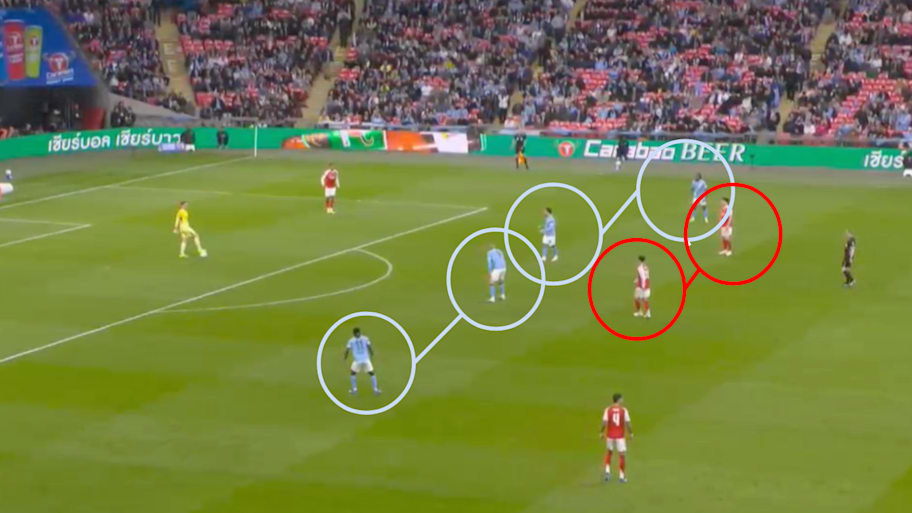
City used this shape right from the first whistle but Arsenal still managed to start the game with a purpose.
Kai Havertz was willing to drop deep to lubricate the buildup while Ben White tried that rarest of things for this particularly ponderous iteration of the Gunners: a quick throw-in. Four City players were wiped out of the game as Arsenal went around the press via White’s hands, ultimately leading to the one moment they offered any threat.
James Trafford, however, stood up to three Arsenal shots in the same seventh minute of the game, first denying Havertz before rebuffing two efforts on the rebound from Bukayo Saka. “We should have been 1–0 up,” Arteta would lament after the final whistle. “That would have changed the course of the game.”
Perhaps Arsenal would have had more opportunity to test Trafford again—which they largely failed to do. Those three shots in four seconds accounted for more than half of Arsenal’s total xG for the entire 90 minutes.
“In the second half—especially the first 20 minutes—we had some issues to get out from that block,” Arteta admitted. That was an understatement.
The master still reigns. pic.twitter.com/Zb33uHYgMp
— Sports Illustrated FC (@SI_FootballClub) March 22, 2026
With the game still goalless and the nerves jangling that little more readily, whatever risk Arsenal had taken in possession in the first half was soon gone. Everything was slower and safer, or so they thought. Aimlessly lumping the ball forward may avoid a turnover right on the edge of the box, but City were still able to gobble up possession inside Arsenal’s half and pin the red shirts back.
It wasn’t so much that Arsenal’s midfield pairing couldn’t pick their way through City’s press, they simply weren’t allowed. Zubimendi and Rice attempted a combined five passes between across those blurry first 20 minutes of the second half. Considering they typically average one pass every 90 seconds, that stymying is staggering.
The move for O’Reilly’s opener began with Piero Hincapié lofting the ball into the darkening London sky. Still unsettled by a lopsided opening quarter-hour to the second half, Arsenal’s normally reliably Ecuadorian didn’t get tight enough to Bernardo Silva as he slipped Rayan Cherki to the byline for a cross which Arrizabalaga spilled.
Zubimendi, Arsenal’s most active midfield metronome, didn’t touch the ball during the four minutes until O’Reilly’s second of the evening.
Arsenal’s Six-Month Slide
| Arsenal Statistic | vs. Man City Sept. 21 | vs. Man City March 22 |
|---|---|---|
| Possession | 67% | 38% |
| Accurate Passes | 517 | 258 |
| Pass Accuracy | 89% | 78% |
| Touches in Opp. Box | 39 | 18 |
| Shots | 12 | 10 |
| Expected Goals (xG) | 0.89 | 0.63 |
| Goals | 1 | 0 |
Stats via FotMob.
Arsenal’s Lack of Response Doesn’t Bode Well for Title Showdown
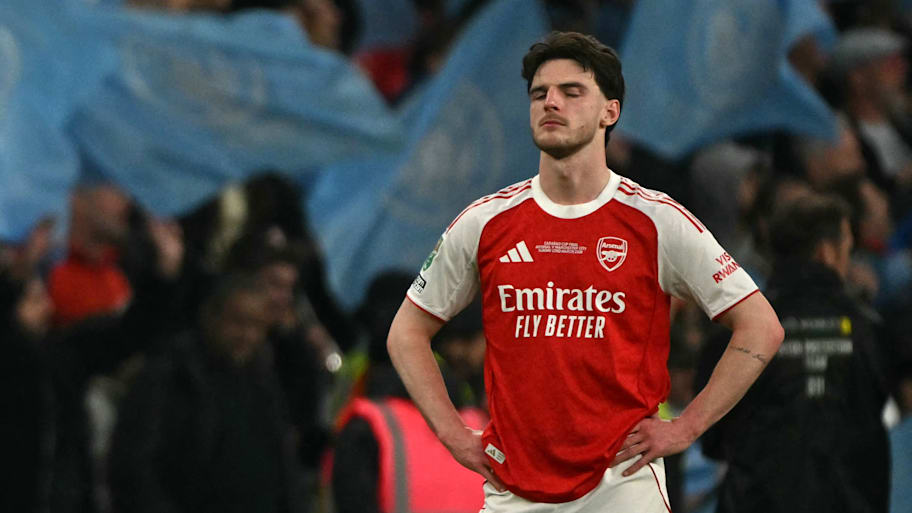
Guardiola shut down Arsenal’s two most common avenues to success; Zubimendi and Rice. Yet, there were nine other players on the pitch who were supposedly allowed to help out.
Some of those players were even the perfect profile to receive the ball on the other side of City’s press—the few measured passes fired towards Viktor Gyökeres were held up very well by the buccaneering Swede, who also had Havertz in support. However, this is another area where the selection of Arrizabalaga backfired. Putting aside his slippery gloves, the former Chelsea man lacks the distribution skills of David Raya, a player Klopp once claimed “could wear the No. 10 shirt.”
Havertz, Arsenal’s nominal attacking midfielder on the day, completed one pass during his 20 minutes on the pitch in the second half.
For all the German’s qualities, he isn’t a natural operator in his own team’s defensive third. In truth, this isn’t an obvious strength of the man he replaced, the injured Eberechi Eze. Instead, this was another fixture where Martin Ødegaard’s unrivaled intelligence in and out of possession was desperately missed.
Arsenal’s Premier League Showdown With Man City
- Date: Sunday, April 19
- Kickoff Time: 4:30 p.m. BST / 11:30 a.m. ET / 8:30 a.m PT
- Venue: Etihad Stadium
- Location: Manchester, England
- Premier League Gameweek: 33
Arteta certainly didn’t have an answer on the sideline. Neither did any of his players on the pitch. By the time these two sides go head-to-head once again at the Etihad Stadium in a direct bout for the Premier League title, there’s every chance that Arsenal’s manager will have plotted a solution for this scenario—perhaps he could drop his fullbacks deeper or have Leandro Trossard and Saka come infield or, goodness forbid, start his first-choice goalkeeper.
Yet, by then Guardiola will have already devised an entirely new scheme for Arteta to solve.
Arsenal could have done better but this was hardly a case of the Gunners haplessly fumbling a gimme fixture. Arteta, himself, was quick to note, “Sometimes you have to give credit to the opposition.”
As the French philosopher Jean-Paul Sartre put it: “In football, everything is complicated by the presence of the opposite team.” It’s an even bigger problem when that opposite team is managed by Pep Guardiola.
READ THE LATEST SOCCER NEWS, ANALYSIS AND INSIGHT FROM SI FC
- USMNT’s Three Best Players of the Week: Is Pulisic Back on Track?
- Barcelona vs. Real Madrid: La Liga Confirm Date, Kickoff Time of Title-Deciding Clasico
- Man Utd Forwards Pull Out of National Team Squads Ahead of Big Season Finale
- USWNT Stock Up, Stock Down: Emma Sears Makes Her Case in NWSL Action
- Man Utd’s Bruno Guimaraes ‘Meeting’ Reveals New Asking Price
This article was originally published on www.si.com as Why Arsenal’s 2026 Carabao Cup Final Defeat Had Been Coming for Six Months.