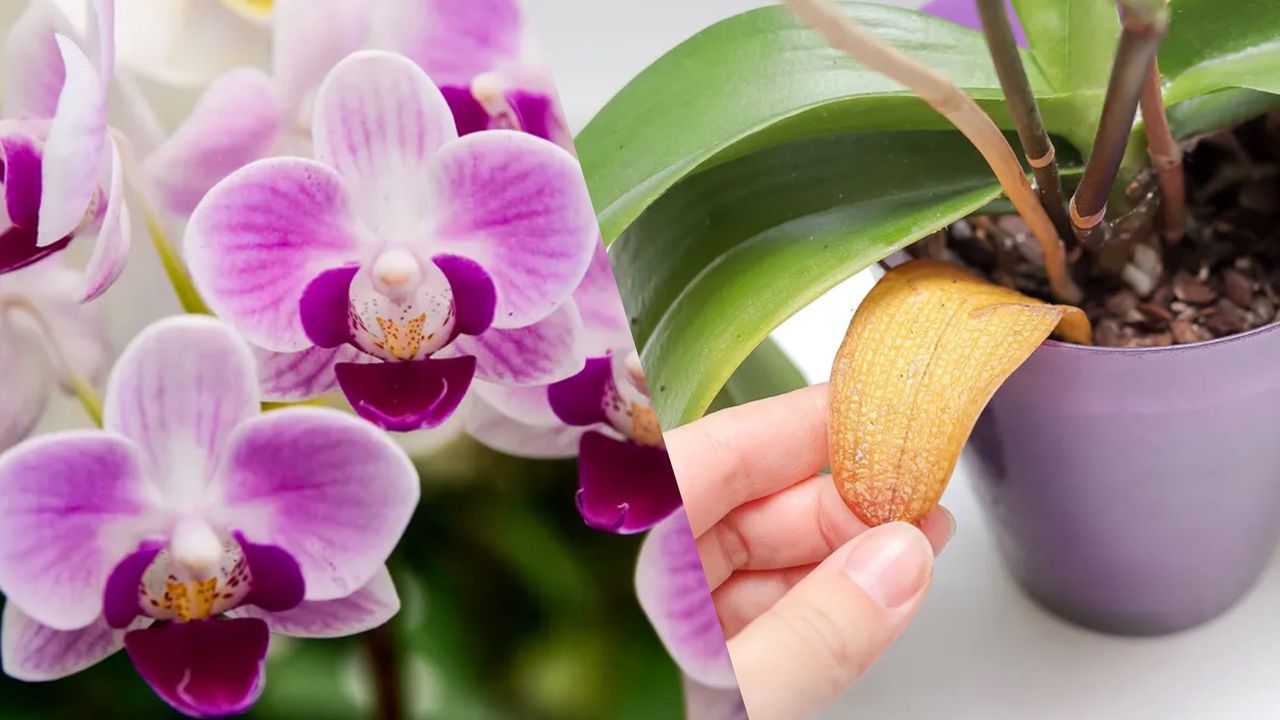
Orchids make stunning houseplants, and although you could give a peace lily or an aloe vera plant as a gift, nothing quite feels the same as receiving an orchid.
They are a romantic houseplant with beautiful, long-lasting blooms that come in an array of colors, making them the perfect plant to gift or to say thank you, and they’ll last much longer than a bouquet.
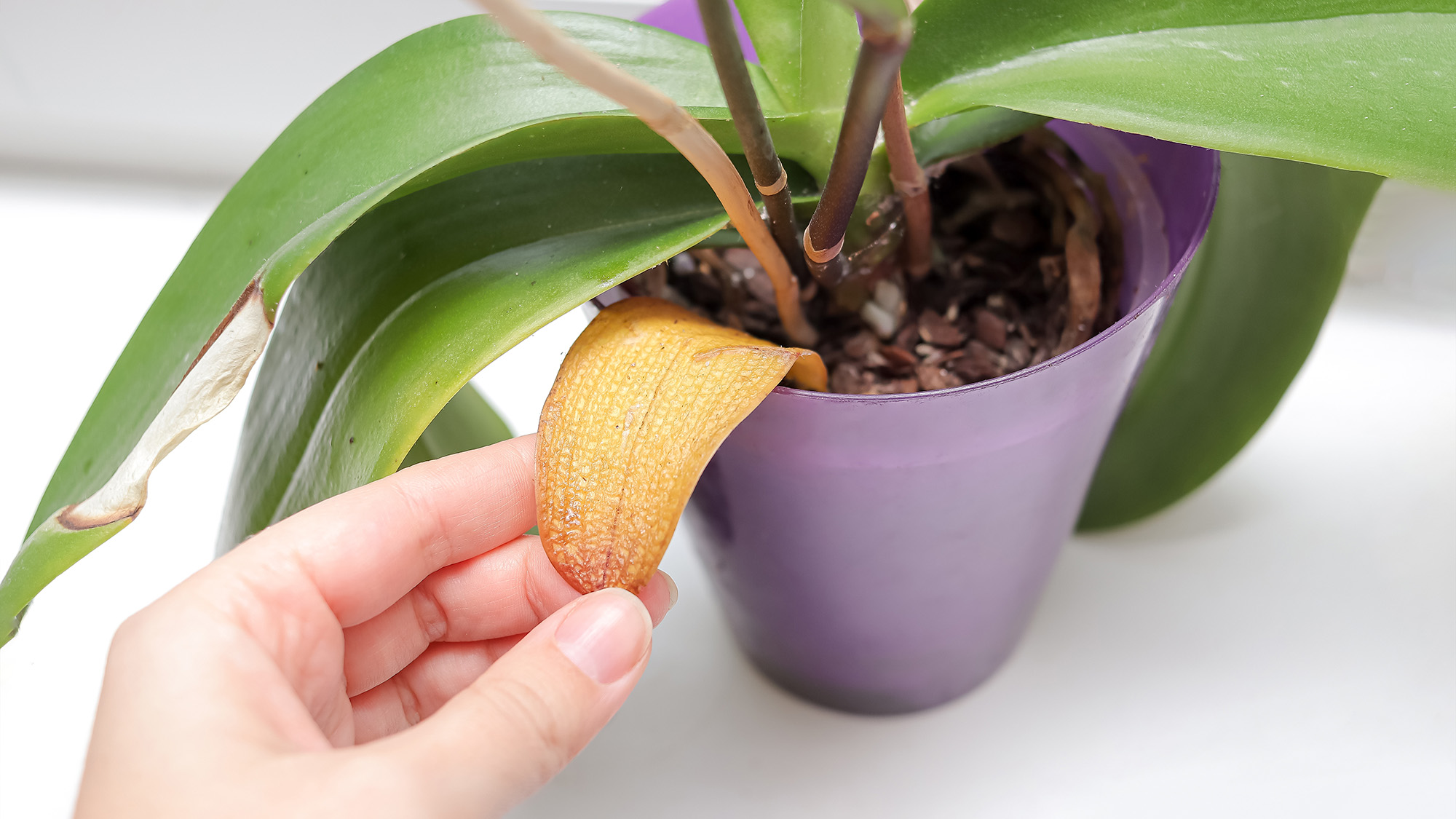
But, while you’re admiring the blooms, you might notice that the leaves are turning yellow, and think that the plant is on its last legs. Here are the five most common reasons orchid leaves turn yellow, along with how to fix each one.
1. Overwatering
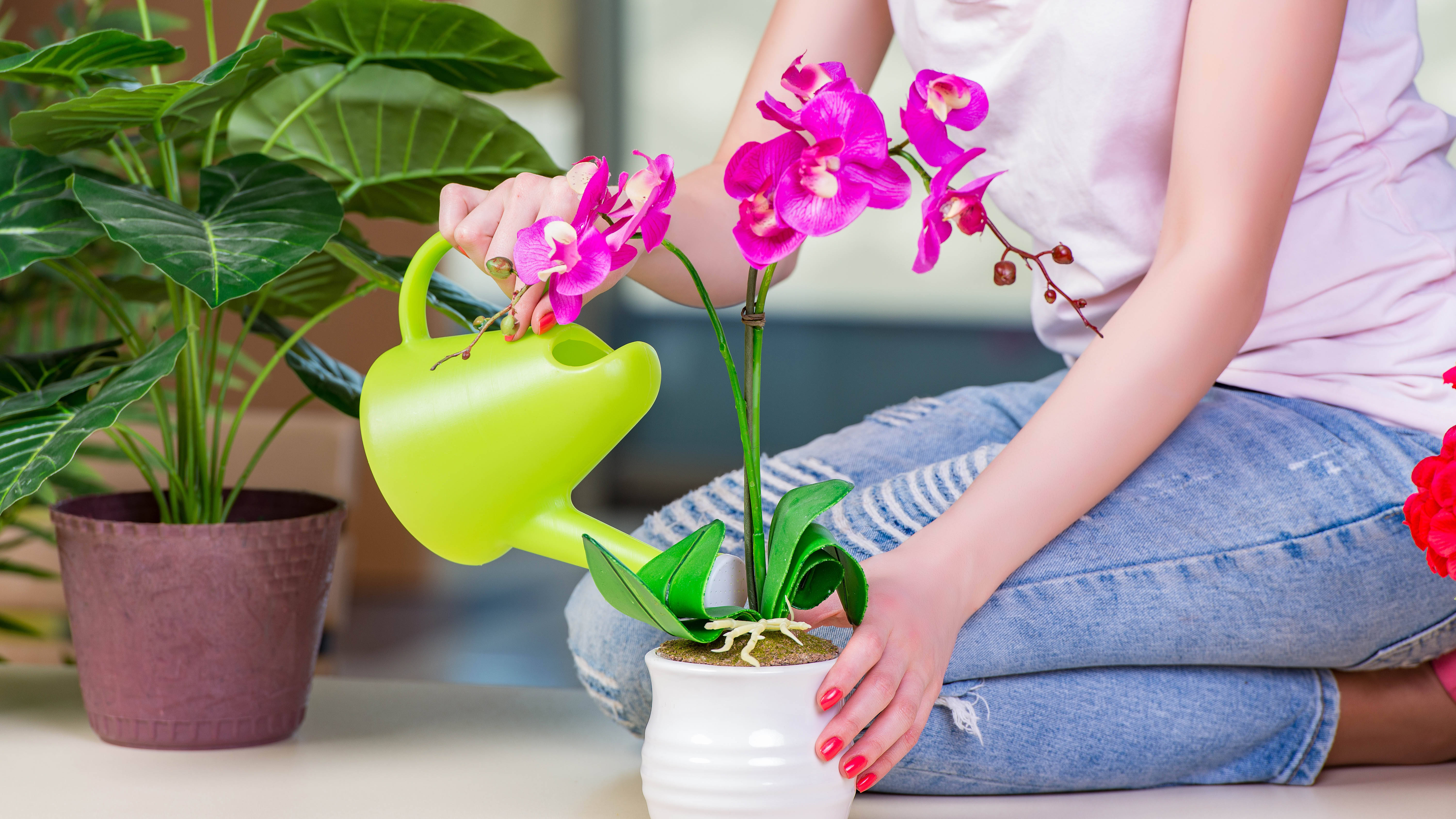
We’re all prone to overwatering our houseplants, but too much water can result in root rot or fungal infections, which turn the orchid’s leaves yellow. So, before watering your orchid, check that the potting medium is dry. And, if you discover that the roots are brown and soft, remove the affected parts and repot the plant in a suitable potting medium for your plant.
The ideal potting medium for an orchid should be fast-draining and well-aerated, such as an orchid bark mix or Sphagnum moss.
2. Underwatering
Too little water can also make the leaves turn yellow, so in this instance, give your orchid a drink. You should be able to feel how dry the potting medium is by placing your finger into the potting medium.
3. Too much light
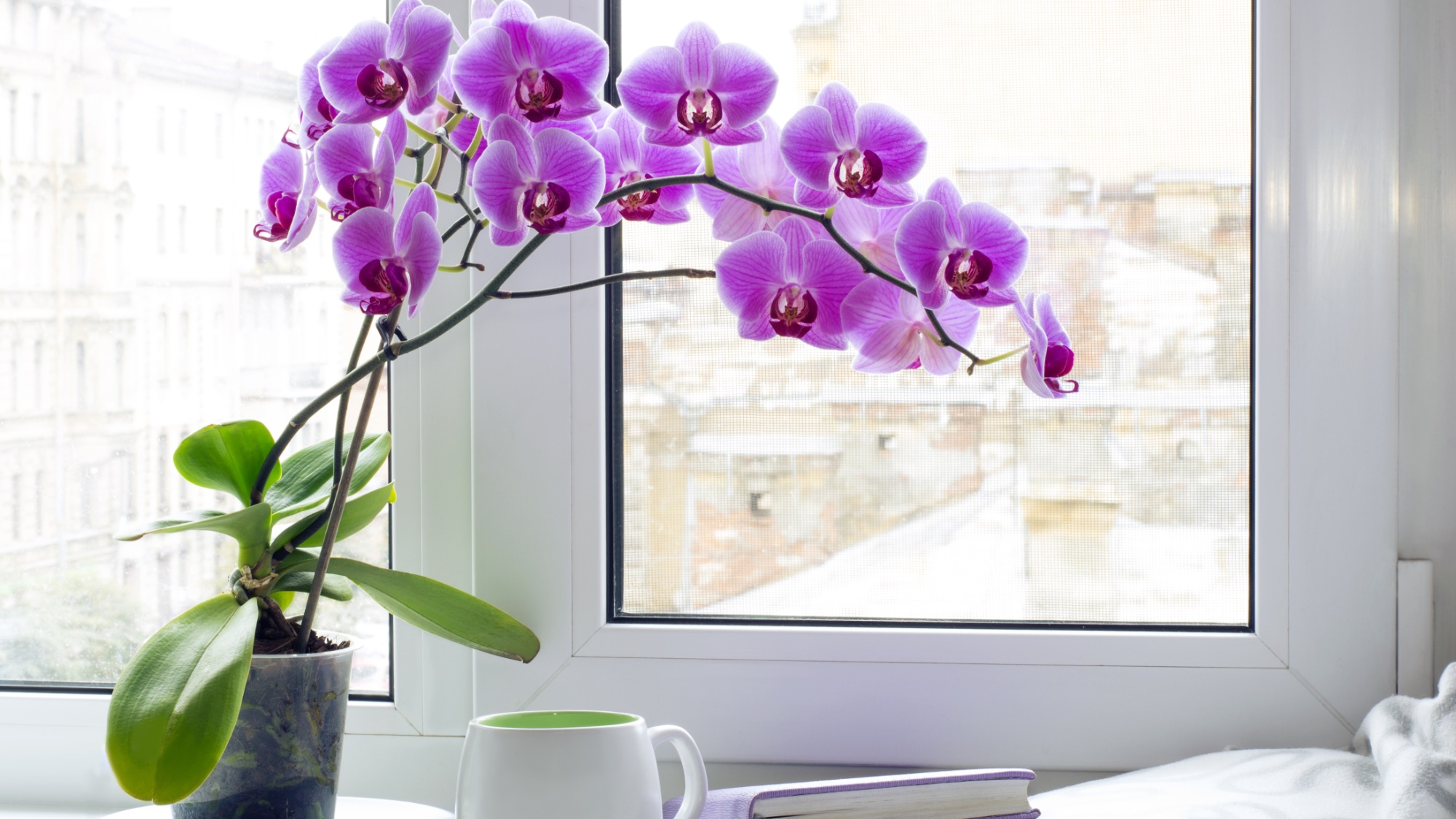
My instinct is to place an orchid on a sunny windowsill, but direct sunlight can scorch the leaves and turn them yellow. However, the reverse can also damage the plant. The best position for an orchid is indirect light. For me, this is on a tabletop or surface close to a window, where it’s still in a sunny spot, but the light isn’t as intense.
4. Lacking nutrients
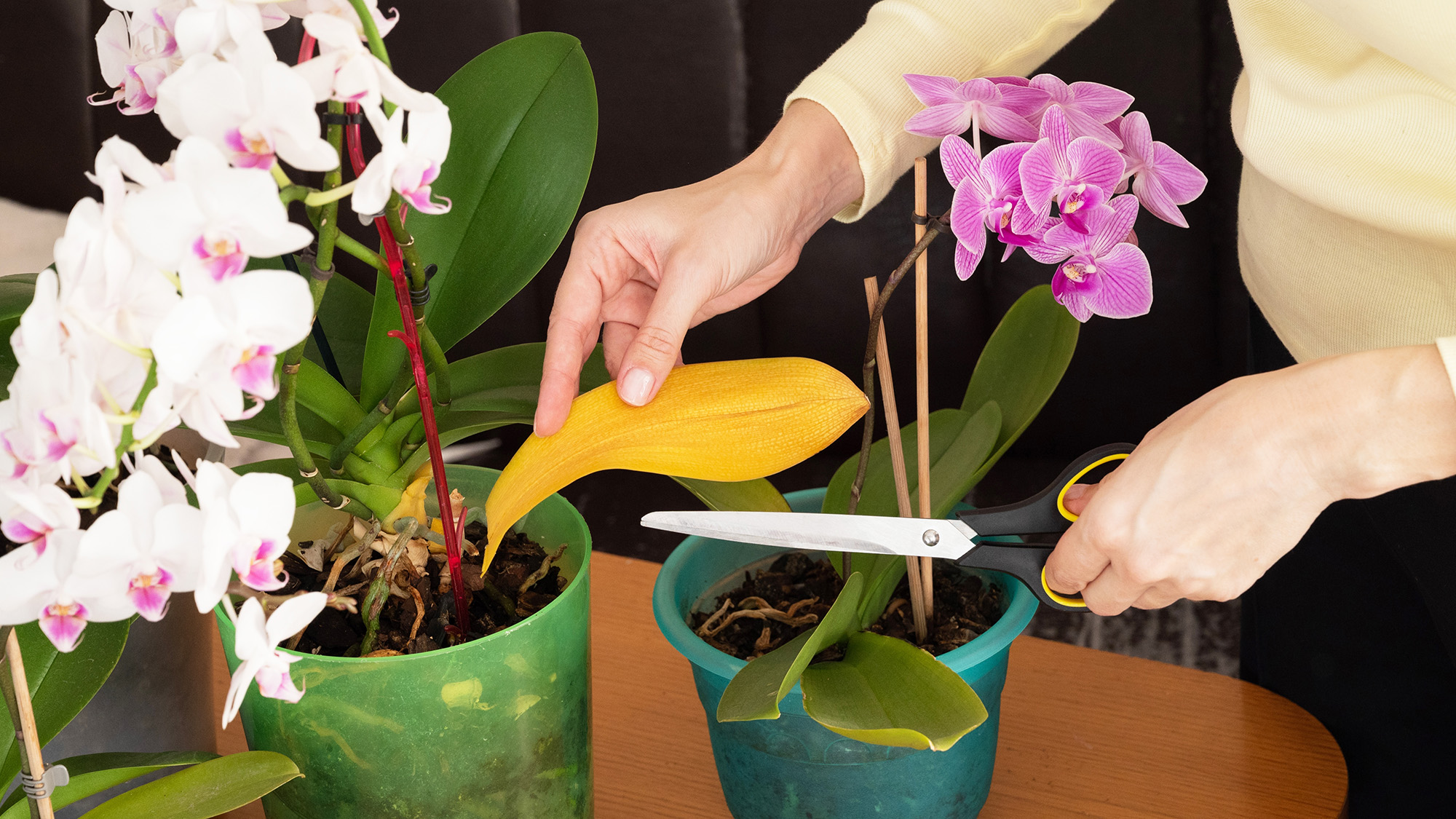
If your orchid’s oldest leaves are turning yellow, but the root system appears healthy, it could be a sign that your plant lacks nitrogen. But if you spot yellowing occurring between the veins of the leaves you plant could be short on magnesium. To correct the nutrient deficiency, give it a feed with a water-soluble orchid fertilizer, and repeat weekly.
5. Natural aging
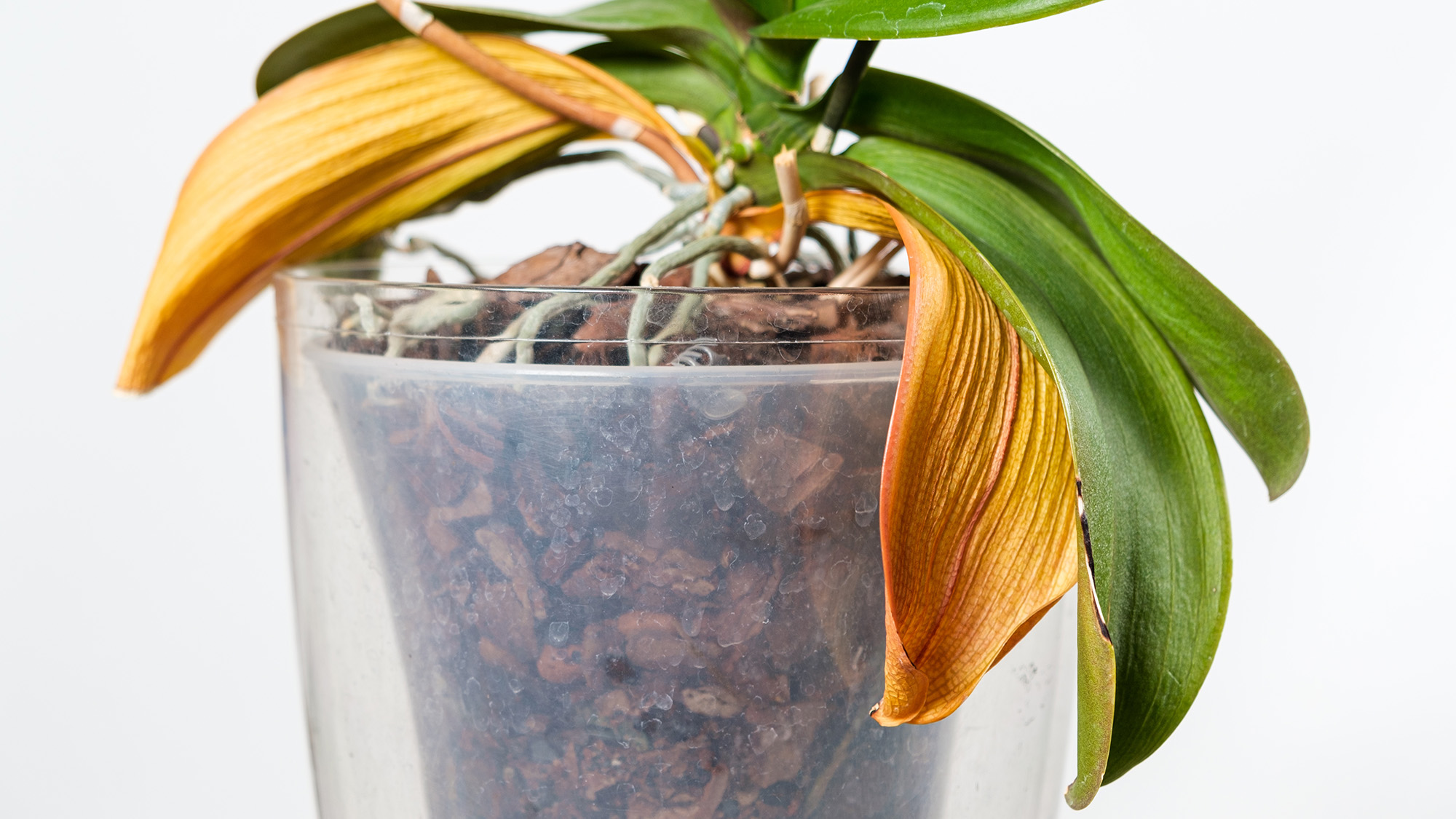
The leaves on an orchid will start to turn yellow as it nears the end of its lifecycle. In this instance, all you can do is to remove the leaves, which are likely to be the lower ones on the plant. This will help to improve the overall look of your orchid.
More from Tom's Guide
- How to get an orchid to rebloom in 6 easy steps
- 7 mistakes to avoid when growing orchids
- How to care for an orchid and make it thrive all year long
More from Tom's Guide
- Article
- Article
- Article
More from Tom's Guide
- Article
- Article
- Article