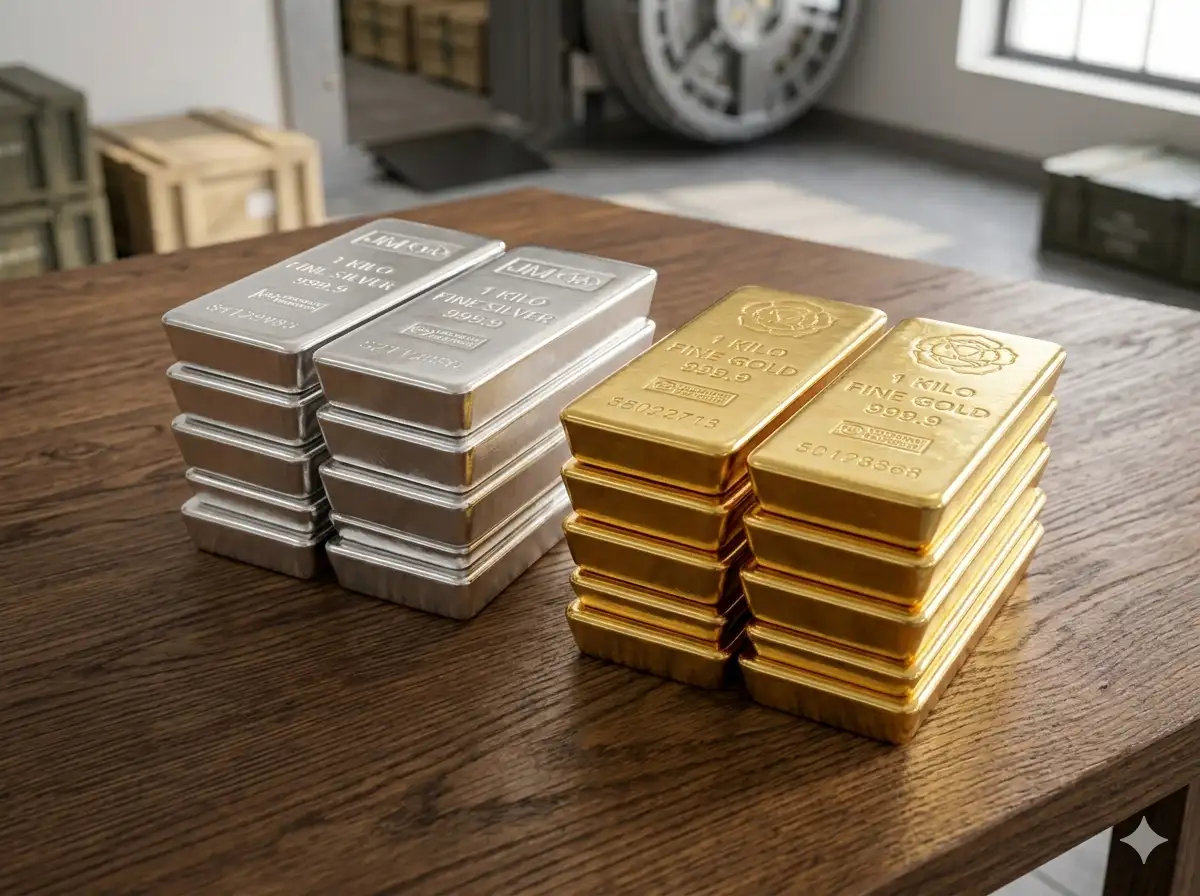
Why are gold and silver prices down today, and will precious metals continue to drop or rise again? This question is being asked by many investors after gold prices recorded another day of losses. The decline comes as Treasury yields moved higher and traders adjusted their expectations for future U.S. interest rates. Silver also moved lower, while platinum and palladium showed mixed performance. Gold has often been viewed as a store of value during uncertain periods. However, changes in bond yields and interest rate expectations can influence investor demand for precious metals. Recent market movements have once again highlighted this relationship.
Why are gold and silver prices down today, and will precious metals continue to drop or rise again?
Gold prices fell for a third consecutive session on Tuesday. Spot gold was down 0.2% at $4,319.98 per ounce by 0100 GMT. The metal had already reached its lowest level in more than two months during the previous trading session. U.S. gold futures for August delivery also moved lower. Futures were down 0.4% at $4,344.30 per ounce.
One of the main reasons behind the decline was the rise in U.S. Treasury yields. The benchmark 10-year Treasury note yield reached its highest level in two weeks. When Treasury yields increase, holding gold becomes less attractive because gold does not provide interest income. Investors may prefer assets that generate returns, creating pressure on gold prices.
Why are gold and silver prices down today?
The current decline is linked to several factors working together. The first factor is the increase in Treasury yields. Higher yields raise the opportunity cost of owning gold. Investors can earn returns from government bonds, making non-yielding assets such as gold less appealing. The second factor involves expectations regarding U.S. monetary policy. Goldman Sachs stated that it expects the U.S. Federal Reserve to keep interest rates unchanged through 2026. The firm also believes rate cuts may not arrive until 2027 because of stronger economic activity and continued jobs growth.
Market expectations have also shifted. According to the CME FedWatch Tool, traders are now pricing in more than a 70% probability of a Federal Reserve rate hike by December. Higher interest rates generally create headwinds for gold and silver prices because borrowing costs increase and investors often move toward interest-bearing assets. Another factor comes from investment demand. The SPDR Gold Trust, the world's largest gold-backed exchange-traded fund, reported that its holdings fell 0.5% to 929.62 metric tons on Friday. Lower ETF holdings can indicate weaker investor interest in gold.
Geopolitical developments remain in focus
Despite the decline in prices, geopolitical developments continue to attract attention. Iran and Israel stated on Monday that they had halted attacks on each other following an appeal from U.S. President Donald Trump. However, Tehran also warned that hostilities could resume if Israel continued strikes against Hezbollah in Lebanon.
Geopolitical tensions often support demand for gold because investors seek assets viewed as safer during periods of uncertainty. However, the easing of immediate tensions reduced some of the urgency for safe-haven buying. At the same time, concerns regarding inflation and future interest rate decisions remain present. Investors continue to monitor global developments for signs that could affect economic growth and financial markets.
Will precious metals continue to drop or rise again?
The future direction of precious metals remains uncertain. Some analysts believe higher interest rates could continue to pressure gold prices. Citi recently reduced its near-term gold price target from $4,300 per ounce to $4,000 per ounce. The bank cited expectations for higher U.S. interest rates and noted that gold's recent gains may be difficult to maintain without strong physical demand.
This outlook suggests that additional weakness is possible if interest rates remain elevated and investor demand softens further. However, several factors could support prices in the future. Any increase in geopolitical risks, unexpected economic weakness, or changes in central bank policy could renew demand for precious metals. Gold often benefits when investors become concerned about economic uncertainty or financial market volatility. Silver may also respond to industrial demand trends, making its price movement dependent on both economic growth and investment sentiment.
Analysts insights and market outlook
Analysts are closely watching economic data and central bank signals. The expectation that the Federal Reserve could maintain higher rates for longer has become a key market theme. Strong economic activity and labor market conditions have reduced expectations for immediate rate cuts. At the same time, lower ETF holdings and reduced safe-haven demand have contributed to recent weakness in gold prices.
Investors are also monitoring upcoming economic releases, including Germany's industrial output data, Germany's industrial production figures, U.S. industrial trade data, and U.S. existing home sales numbers. These reports may provide additional clues about economic conditions and future policy decisions. In the broader precious metals market, spot silver fell 0.6% to $67.84 per ounce. Platinum declined 0.2% to $1,750.33 per ounce, while palladium gained 0.6% to $1,211.34 per ounce.
What should investors do now?
Investors should continue monitoring interest rate expectations, Treasury yields, economic data, and geopolitical developments. Gold and silver prices often react quickly to changes in monetary policy expectations. If rates remain higher for longer, precious metals could face continued pressure. If economic conditions weaken or geopolitical risks increase, demand for safe-haven assets could return.
Many market participants are focusing on Federal Reserve signals and upcoming economic reports to determine the next direction for gold and silver prices. The balance between higher interest rates and potential safe-haven demand will likely remain an important factor for the precious metals market in the coming months.
FAQs
Q1. Why are gold and silver prices down today despite global tensions?
Gold and silver prices declined because rising Treasury yields and expectations of higher U.S. interest rates reduced demand for non-yielding assets, outweighing support from geopolitical concerns and uncertainty.
Q2. Will precious metals continue to drop or rise again in 2026?
Future movements depend on interest rates, economic data, inflation trends, investment demand, and geopolitical developments. Higher rates may pressure prices, while uncertainty could increase demand for precious metals.