Gaming collaborations have become popular because they benefit players, developers, and brands alike. These crossovers introduce new characters, cosmetics, game modes, and events that keep games fresh and exciting. With live-service games like Fortnite, Call of Duty, PUBG, and League of Legends dominating the gaming space, video game collaborations have become an effective way to maintain player interest and create shared experiences while generating profit for brands that venture into gaming.
Why are gaming collaborations so popular?
Gaming collaborations are popular because they benefit all stakeholders. They help publishers attract new audiences, keep existing players, and persuade returning veterans while generating money through content and events.
Collaborations can introduce the developers’ games to fans who may not have played them before. For example, Epic Games’ Fortnite has brought together fans of Marvel, Star Wars, DC Comics, and many other franchises after making crossover events.
Video game collaborations also improve player retention and create activity spikes. Exclusive skins, themed maps and modes, rewards, and massive in-game events encourage existing and returning players to engage in activities. This is what happened with Fortnite in 2020 when the developers held the celebrity collaboration event “Astronomical” with Travis Scott, a virtual concert that drew over 12 million players live.
From a business standpoint, gaming collaborations can generate revenue through cosmetic sales and event-related purchases. Fortnite and Overwatch’s crossover skins, Call of Duty’s operator bundles, League‘s tie-up with Netflix for Arcane and PUBG’s partnerships with entertainment brands, among others, have shown how collabs can drive player spending.
When did gaming collaborations become mainstream?
Gaming collaborations became mainstream in the late 2010s as live-service games began introducing crossover events.
Timeline of gaming collaborations

- 1980s-early 2010s – Most collabs were limited to guest characters, such as those found in fighting games like X-Men vs. Street Fighter , Marvel vs. Capcom , Super Smash Bros .
- 2016 – Dead by Daylight helped popularize licensed collaborations as a core part of a live-service game through the addition of horror icons from Halloween , Resident Evil , and Silent Hill .
- 2018 – Fortnite introduced its Marvel -themed Infinity Gauntlet event featuring Thanos, marking a turning point in the gaming industry. The event proved that collaborations could drive player growth and revenue on a massive scale.
- 2019-2021 – Other publishers quickly adopted the Fortnite model. PUBG partnered with franchises such as Godzilla and Jujutsu Kaisen, while League of Legends expanded into entertainment partnerships like Arcane on Netflix.
- 2020-present – Collaborations have become a standard. Call of Duty introduced licensed operators (such as the notorious Nicki Minaj and The Boys), while Fortnite evolved into a platform featuring dozens of crossovers. Overwatch , PUBG , Mobile Legends: Bang Bang , Fallout , and more titles also featured collabs with various brands, TV shows, anime, and other IPs.
Why players love collaborations
Players love gaming collaborations because they bring favorite franchises into games they already play. Gamers are drawn to characters and worlds they already know. A Marvel fan may be more likely to play Fortnite when Spider-Man is available, while anime fans often return for crossover events featuring popular series. I myself was convinced to play MLBB again when the Hunter x Hunter collab came out so I can obtain skins inspired by Killua (Harith) and Hisoka (Cecilion).
Video game collaborations also help players express their identity. Skins and cosmetics allow them to showcase their interests. Using a Darth Vader skin in Fortnite or a K/DA Ahri skin in League shows what you enjoy.

Exclusivity is also another reason. Many collaboration items are only available for a limited time, and obtaining them makes them more valuable than standard items. This directly relates with the hobby of collecting. Some enjoy building collections of skins, weapons, characters, and even physical items.
FOMO (fear of missing out) further drives activity. Players log in regularly to complete event challenges and secure rewards before they disappear. Collaborations also create shared community experiences across social media, livestreams, gaming forums, and even live events.
Why developers keep making collaborations
Developers keep making gaming collaborations because they consistently deliver business results. Obviously, revenue is one of the biggest reasons. Crossover skins and bundles often become some of the best-selling cosmetics in a game. One solid example is the Apex Legends x Final Fantasy 7 Rebirth, which propelled Apex to No. 1 on Steam’s global best-seller chart after its release in January 2024.
Gaming collaborations are also effective for player retention. Limited-time events encourage existing players to remain active so they can unlock rewards. MLBB frequently uses anime collabs such as Jujutsu Kaisen, Attack on Titan, and Naruto to bring new and former players back and increase engagement during events.

Developers also use video game collaborations to refresh seasonal content. Rather than launching a standard holiday event, a crossover can make an update feel new. Dead by Daylight, for example, regularly introduces licensed horror characters like Jason Voorhes from the Friday the 13th franchise and Vecna from Stranger Things to keep each patch fresh.
Collaborations also produce massive social media buzz and free publicity. New skins, trailers, leaks, and announcements are widely shared and discussed across X (formerly Twitter), Facebook, TikTok, YouTube, Reddit, Twitch, and other livestreams.
Why brands want to appear in games
Brands increasingly want to appear in video games because they offer access to large audiences in ways that traditional advertising cannot. Instead of showing players a short ad, games let brands become part of player experience. Popular live-service games like Fortnite, CoD, League, and MLBB attract millions of players worldwide, many of whom are young consumers who spend more time gaming than watching TV.
Games also offer much longer engagement times than most forms of advertising. Players may spend dozens or even hundreds of hours using branded skins, vehicles, or items, giving brands repeated exposure.

Interactive advertising is another advantage. Players don’t just see a brand, they actively use it. Driving a Lamborghini in PUBG or Fortnite, wearing a Porsche-inspired D.Va or Pharah skin in Overwatch, or equipping Monster Energy operators in CoD creates a connection than passive advertising.
Many brands now see gaming as a long-term marketing channel. Nike and Louis Vuitton have partnered with League to create apparel and digital cosmetics, while Marvel continues to collaborate with Fortnite and Marvel Rivals to promote its characters and movies. Formula 1 works with racing sims to reach motorsport fans, and PUMA has partnered with GOALS and PlayStation to strengthen its presence in the gaming space. These gaming collaborations help brands stay relevant while reaching millions of potential customers.
The biggest gaming collaborations ever
Below are among the biggest gaming collaborations in history because they changed how players viewed crossover events and influenced how other developers approached video game collaborations.
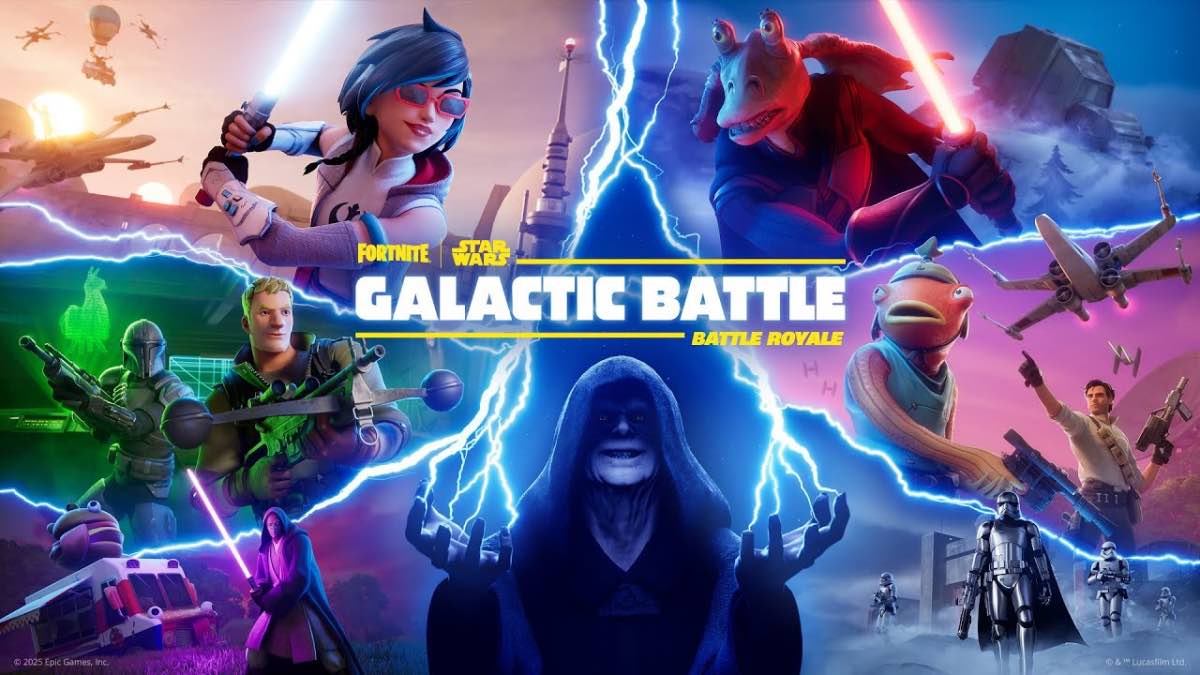
- Fortnite x Marvel – Widely considered as the collaboration that made gaming crossovers mainstream. Starting with the Infinity Gauntlet event in 2018 and later expanding into an entire Marvel -themed season, it featured playable superheroes, themed locations, boss fights, and live events.
- Fortnite x Star Wars – This partnership further proved the viability of collaborations between gaming and entertainment. Players watched exclusive Star Wars previews in-game, wielded lightsabers, piloted X-Wings, and completed themed quests, turning Fortnite into a platform for major entertainment launches.
- League of Legends x Arcane – Rather than a traditional crossover, Riot used the release of Netflix’s Arcane to connect its games and TV series through in-game events, rewards, skins, and character updates. It became a model for cross-media storytelling replicated by Cyberpunk 2077 (Cyberpunk: Edgerunners), Devil May Cry , Fallout , and more.
- Dead by Daylight x Resident Evil – One of the most successful horror collaborations ever, introducing Leon S. Kennedy, Jill Valentine, Nemesis, and later Albert Wesker. It attracted fans of both franchises and expanded Dead by Daylight ‘s licensed horror universe.
- Call of Duty x The Boys – This crossover showed that gaming collaborations had expanded beyond movies and comics. Operator skins based on Homelander, Starlight, Black Noir, A-Train, and Firecracker introduced fans of the TV series to Call of Duty and vice versa.
- Super Smash Bros. Ultimate – Perhaps the biggest gaming crossover, featuring characters from Nintendo, Sega, Square Enix, Capcom, Konami, Bandai Namco, and more. Bringing together gaming’s iconic characters in a single fighting game remains an unmatched achievement.
Can collaborations hurt a game?
Yes. While collaborations can boost a game’s popularity, they can also backfire if they’re overused or poorly implemented. One of the biggest risks is brand overload. When crossover content dominates a game, its original identity begins to fade.
Talk about Call of Duty. Starting with Modern Warfare 2 in 2022, Activision has received backlash for introducing celebrity and comedic skins like Nicki Minaj, Beavis and Butt-Head, and American Dad, which many players feel clash with the series’ military setting. Some fans have even compared Warzone to Fortnite, saying that the franchise has drifted too far from its military roots.

Collaborations can also break immersion. Seeing characters from different universes can be fun, but not every crossover fits a game’s tone or lore. Horror fans have argued that some of Dead by Daylight‘s more lighthearted skins, like Mr. Puddles and Chicken Suit for The Clown, weaken its tense atmosphere.
Another concern is player fatigue. If every major update revolves around a licensed franchise, collaborations lose their novelty, and players may become less excited than they would for original content.
Licensing restrictions can limit a collaboration’s lifespan. Once an agreement expires, skins and other cosmetics may never return, leaving new players unable to obtain them and preventing developers from reusing or expanding crossover content in the future. For example, several licensed cars and music tracks in Rocket League and Forza Horizon have become unavailable after licensing deals ended.
What’s next for gaming collaborations?
A huge trend gaming collaborations is the expansion of movies and TV partnerships. Instead of just releasing skins, developers are creating full in-game experiences tied to major releases. Fortnite has already hosted movie trailers and Star Wars events, while the upcoming Disney partnership aims to build a persistent entertainment universe where players can interact with Disney, Pixar, Marvel, and Star Wars franchises in one connected experience. Conversely, games are getting movie and TV series adaptations, such as the upcoming Call of Duty movie, Persona series, and The Legend of Zelda film.
Music collaborations are also expected to expand. Developers are increasingly working with artists to create original songs, themed modes, and marketing campaigns that become part of a game’s identity. Imagine Dragons’ Enemy, created for Arcane, became a global hit while helping introduce new audiences to League. Fortnite Festival has transformed music into a core gameplay experience through artist-themed seasons and playable tracks. Blizzard has also tapped into music partnerships for Diablo IV, collaborating with artists such as Halsey, SUGA of BTS, and the heavy metal band Korn.
Sports partnerships will continue growing beyond athlete skins. Formula 1 has become closely tied to sim racing games, while brands such as Nike, Adidas, and PUMA increasingly use games to reach younger audiences through esports apparel and collectibles.
Another emerging area is AI-powered creators and user-generated content (UGC). Instead of waiting for official collaborations, developers allow players and creators to build licensed experiences using approved tools, just like Fortnite Creative, Minecraft, and Hytale.
The future of gaming collaborations looks less about selling crossover skins and more about building connected ecosystems where games, movies, music, sports, creators, and global brands coexist.
FAQs
Why are gaming collaborations so common?Video game collaborations help developers attract new players, retain existing ones, and generate engagement and revenue through skins, cosmetics, and events. They also allow brands to reach younger, highly engaged audiences.
Which game has the most collaborations?Fortnite is regarded as the game with the most collaborations. It has partnered with numerous franchises across movies, TV, anime, comics, sports, music, and gaming, including Marvel, Star Wars, Ferrari, celebrities, gaming icons, and many more.
Why does Fortnite have so many crossovers?It’s because Epic Games has turned Fortnite into an entertainment platform rather than just a battle royale game.
Are collaborations profitable?Yes. Collaborations can generate millions of dollars through cosmetic sales while increasing player engagement and attracting new audiences. They also benefit partner brands by giving them exposure to millions of players worldwide.
How do gaming collaborations work?Most collaborations are licensing agreements between a game developer and a brand or intellectual property owner. The agreement allows developers to use characters, vehicles, music, or other assets in exchange for licensing fees or revenue-sharing.