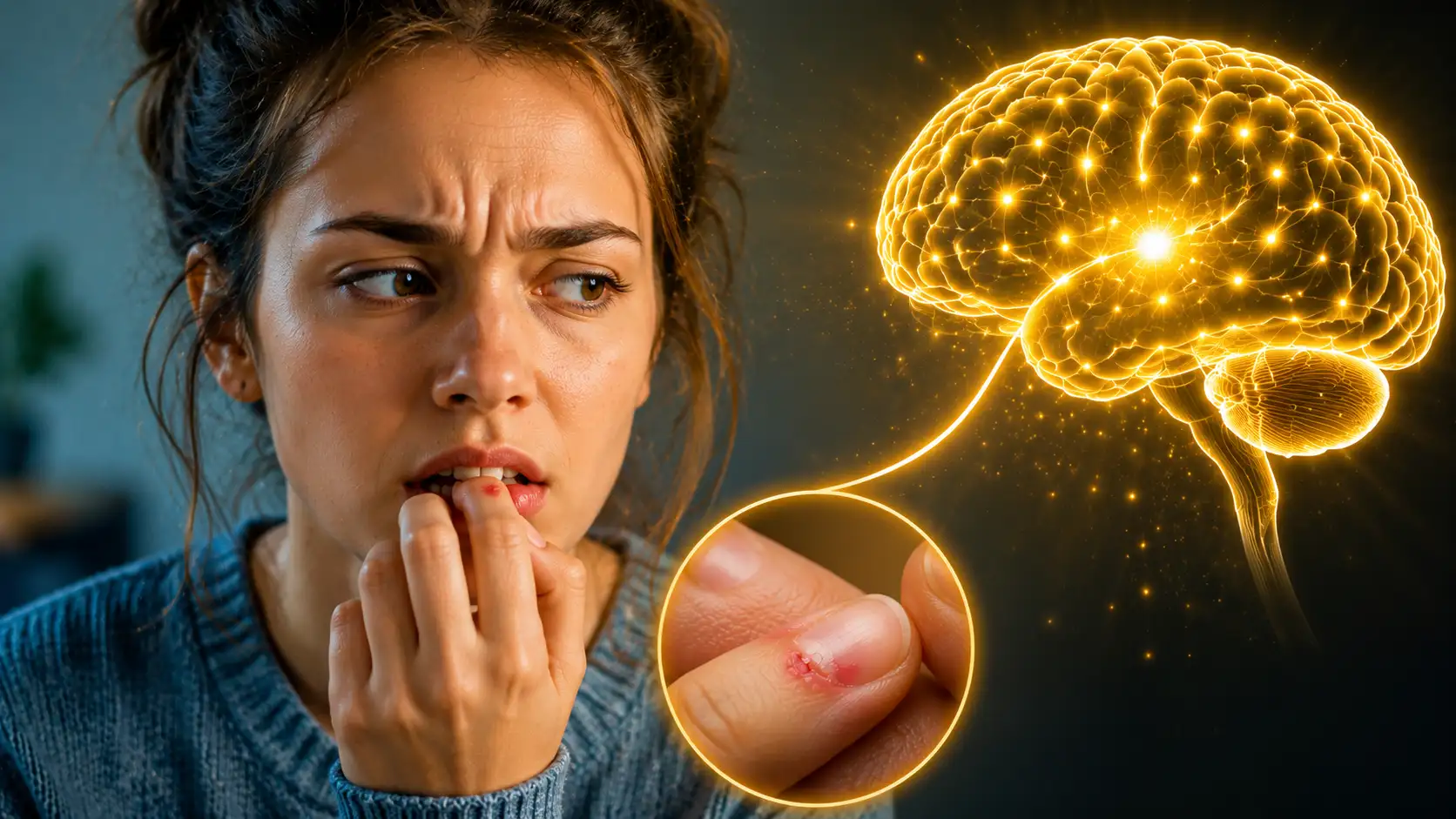
Many people have caught themselves doing it without even thinking. While reading emails, watching television, studying, or waiting in line, they begin biting or picking at the skin around their fingers. The behavior is so common that many people don't notice it until someone points it out. Psychology suggests this habit often has less to do with poor self-control than people assume. Instead, it can develop through a combination of stress, repetition, emotional regulation, and the brain's tendency to repeat behaviors that provide temporary relief.
That doesn't mean everyone who bites the skin around their fingers has a psychological disorder. Many people do it occasionally without experiencing significant problems. However, when the behavior becomes frequent, difficult to stop, or causes injury, researchers say several well-established psychological concepts help explain why.
The behavior may provide temporary emotional relief
One of the strongest explanations comes from research on Emotion Regulation. Emotion regulation refers to the ways people manage uncomfortable emotions such as stress, boredom, frustration, or anxiety. For some people, biting the skin around their fingers becomes a coping strategy during emotionally challenging moments. Imagine someone waiting for an important phone call. Without realizing it, they begin biting the skin around a fingernail. The behavior doesn't solve the problem, but it may briefly reduce emotional tension.
Habits become automatic through repetition
Another explanation comes from Habit Formation Theory. Psychologists have found that repeated behaviors gradually become automatic when they occur in similar situations. The cue might be sitting at a desk. The routine becomes biting the skin. The reward is temporary relief or satisfaction. After months or years of repetition, the behavior may occur with little conscious awareness. Many people only realize they're doing it after noticing sore fingers.
Negative reinforcement strengthens the habit
Psychologists also describe Negative Reinforcement, which occurs when a behavior removes an unpleasant feeling. Stress, restlessness, or tension may temporarily decrease after biting the skin.
Because the uncomfortable feeling is reduced, the brain learns to repeat the behavior the next time similar emotions appear. Although the relief is usually short-lived, it can be enough to strengthen the habit over time.
Body-focused repetitive behaviors explain persistent habits
Researchers use the term Body-Focused Repetitive Behaviors (BFRBs) to describe behaviors such as chronic skin picking, hair pulling, and repeated biting around the nails or fingers when they become persistent and difficult to control.
It's important to note that occasional finger-skin biting is not automatically considered a BFRB. Mental health professionals typically use that term only when the behavior causes significant distress, repeated injury, or interferes with daily life. The distinction matters because many everyday habits exist on a spectrum.
Stress and boredom can both trigger the behavior
Interestingly, people don't only bite the skin around their fingers when they're stressed. Some do it while watching television, reading, or sitting through long meetings. Psychologists have found that repetitive behaviors often increase during periods of low stimulation as well as emotional tension.
For example, a student revising for an exam may begin biting the skin absentmindedly while concentrating on difficult material. The brain may use the repetitive movement to maintain attention or manage internal tension.
Selective attention keeps the behavior going
Another useful concept is Selective Attention. Once someone notices a rough patch of skin, a hangnail, or a small imperfection, the brain may repeatedly focus on it. The urge to "fix" the area can become difficult to ignore.
For example, someone may notice a tiny piece of dry skin and intend to smooth it out. Instead, they continue biting long after the original imperfection has disappeared. The more attention the brain gives the area, the stronger the urge may become.
Finger-skin biting doesn't automatically indicate anxiety
A common misconception is that everyone who bites the skin around their fingers has an anxiety disorder. Psychology doesn't support that conclusion. Some people do it because of stress. Others because of boredom, concentration, habit, or temporary emotional tension. The behavior should always be understood in context rather than used to draw conclusions about someone's mental health.
Psychology suggests that people who bite the skin around their fingers may be influenced by emotion regulation, habit formation, negative reinforcement, selective attention, and research on body-focused repetitive behaviors.
Rather than reflecting weak self-control, the habit often develops because the brain learns that repetitive actions can provide brief emotional relief or satisfaction. Understanding these psychological processes can help explain why the behavior is so common, and why it can be surprisingly difficult to break.
FAQs
Why do people bite the skin around their fingers?
Psychologists say the behavior may help temporarily relieve stress, boredom, or emotional tension and can gradually become an automatic habit.
Is biting the skin around your fingers always caused by anxiety?
No. While stress may contribute, many people also do it out of habit, boredom, concentration, or temporary emotional discomfort.