
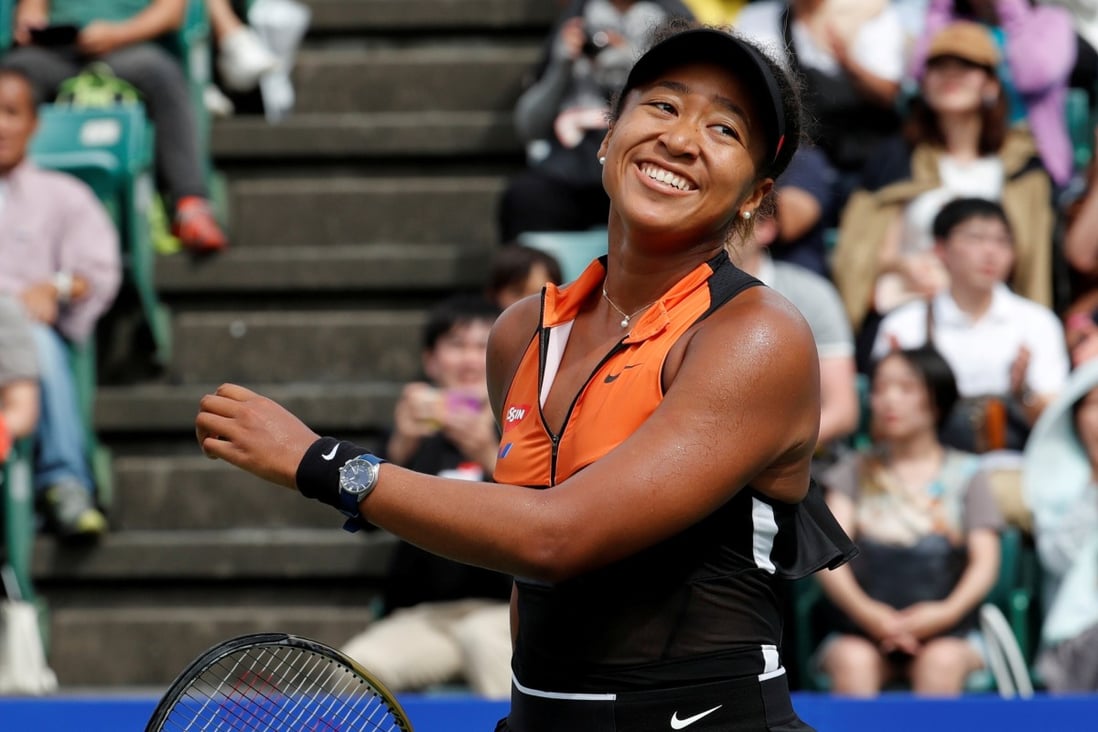
The first and only Asian tennis player to reach world No 1, Japanese-Haitian sensation Naomi Osaka has already surpassed milestones that most professionals could only dream of.
At just 23, she is the reigning US and Australian grand slam champion and appears to be increasing in power and confidence with every match.
From her curious mixed-race upbringing, to skipping the junior circuit, to controversially beating Serena Williams as a teen and then taking a public stand for gender and race rights, here’s what you need to know about the woman destined to take the reins from her childhood idol Williams.
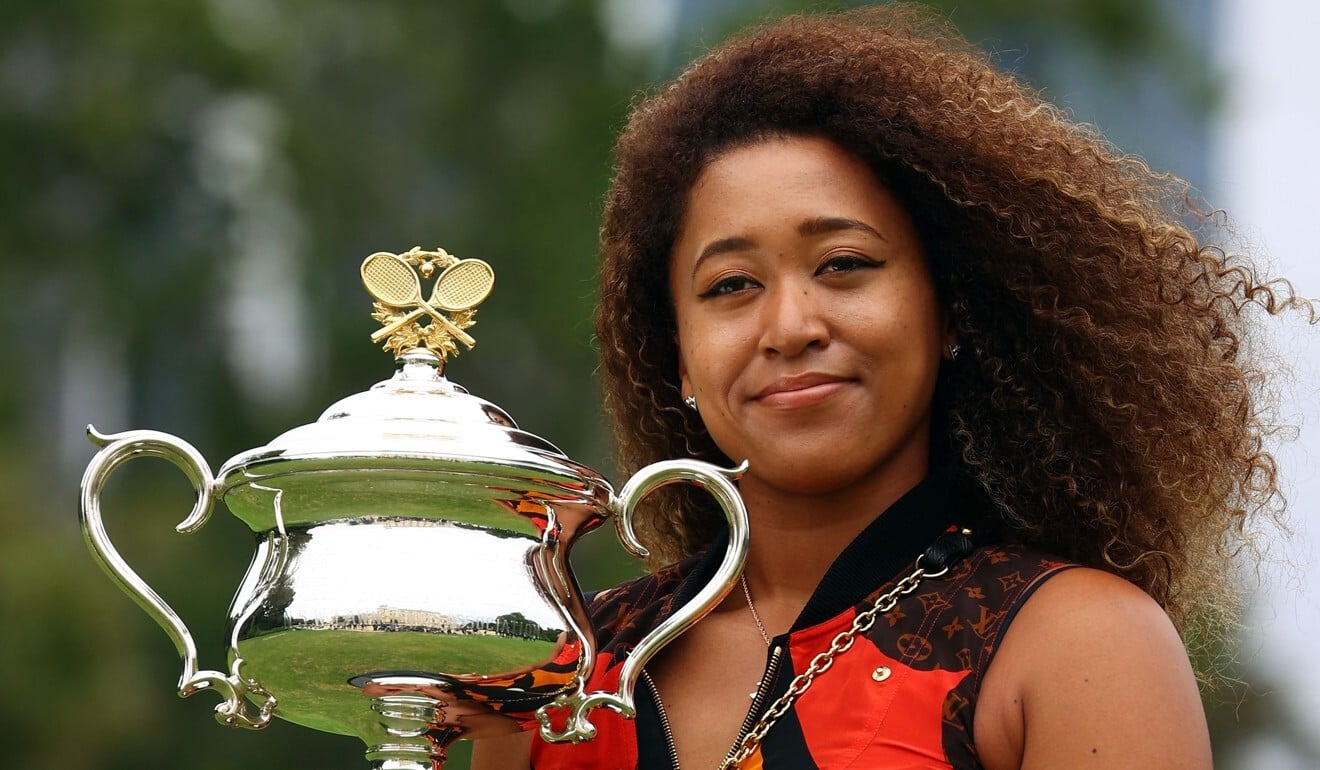
Biography
Naomi Osaka was born on October 16, 1997 in Osaka, Japan to a tennis-adoring Haitian father and cultural stigma-stopping Japanese mother. She started playing tennis aged three after her family relocated to the US, where she has remained ever since.
After learning the ropes at junior level with her father – rather unconventionally opting not to play on the ITF Junior Circuit – Osaka turned pro in 2013 aged 16 having established herself as a towering teen with a menacing serve and forehand. She had played her first ITF match two years prior.
By 2016, Osaka was eligible for Wimbledon and US Open qualification. Though she did not reach the main draw, it was an encouraging sign that kick-started her ascent to the top 100. She made her first grand slam appearance at the Australian Open after impressing throughout the WTA season. By year end, Osaka was ranked in the top 50.
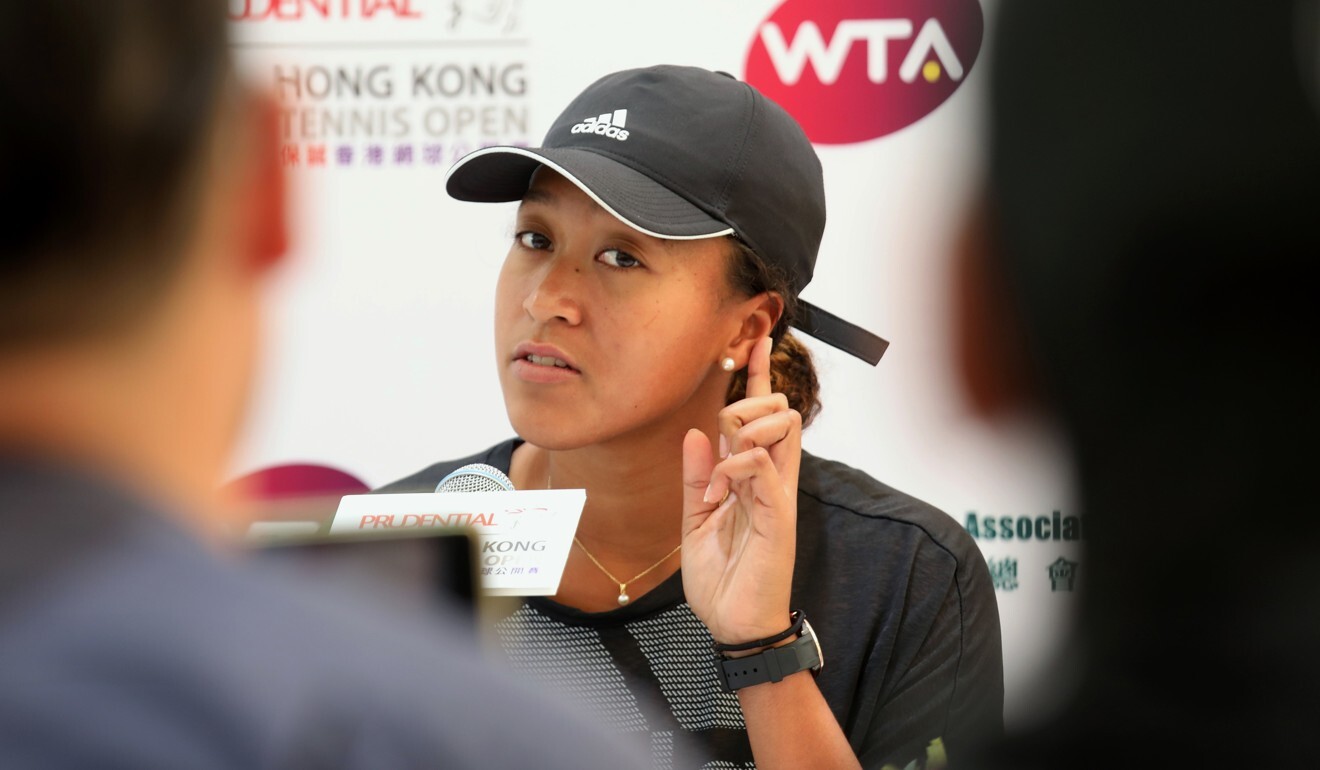
Though her following year was largely uneventful, she made a statement by beating then-world No 5 Venus Williams in the Hong Kong Open and then-No 6 Angelique Kerber at the US Open.
2018 was the year Osaka’s tennis career skyrocketed. She gained substantial attention after winning her first title – the Indian Wells Open after defeating incumbent world No 1 Simona Halep in the semis – and cracked the top 25.
It was not until she won against childhood heroine Williams at the US Open that the world truly realised that they were witnessing a potential generation talent. For the casual observers, it was her “burst on the scene moment”, but for grand slam queen Williams – who had lost to Osaka earlier in the year – she was already a front-runner to pass the baton to. Osaka went down in history as the first Japanese grand slam singles champion and swiftly made the world’s top five.
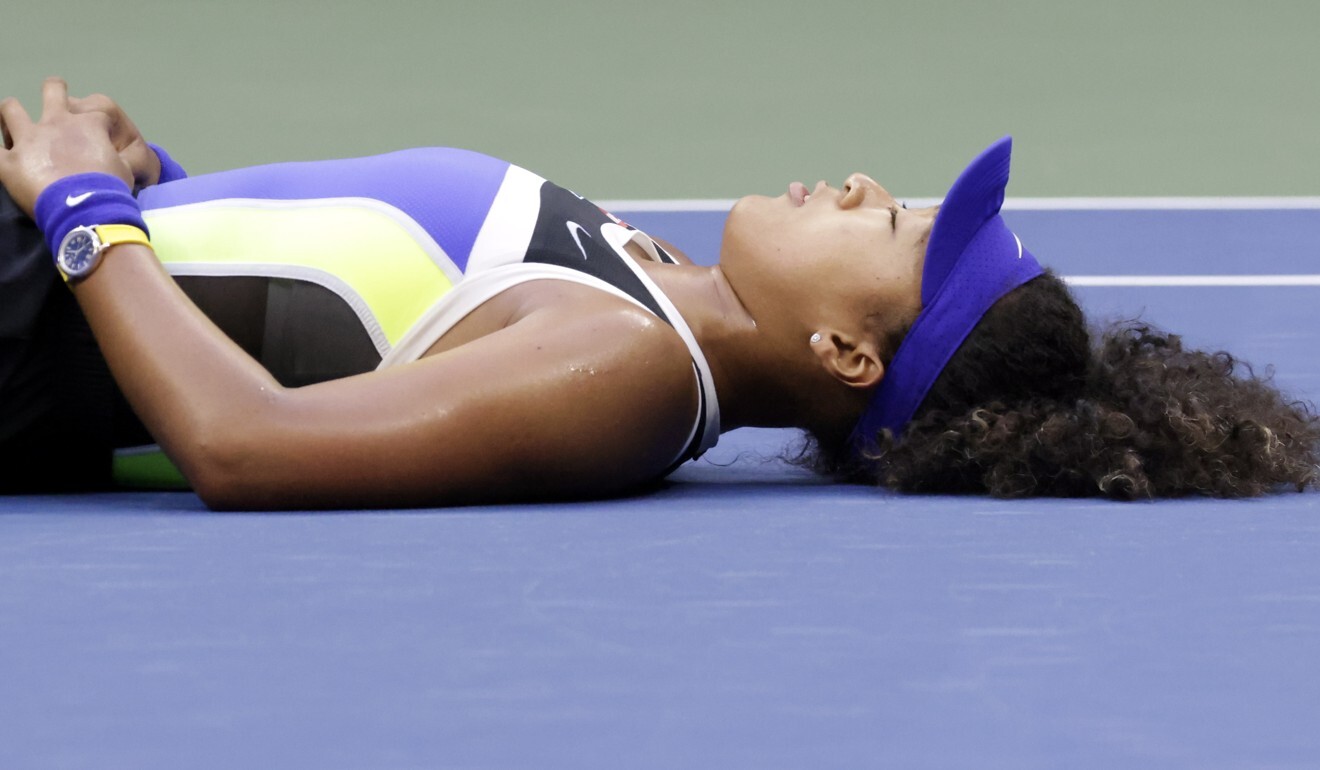
Osaka scored her second grand slam title at the Australian Open in 2019 and became the first Asian across genders to briefly hold the No 1 spot. By then, Osaka had swapped former coach Sascha Bajin for the creature comforts of her father. She won two Opens thereafter, including a victory over current No 1 Ashleigh Barty in China.
Despite a Covid-19-addled two years, Osaka and new coach Wim Fissette managed to clinch her second US Open title at the expense of Victoria Azarenka in 2020 before going all the way for her second Australian Open in February. Osaka also joined legends Roger Federer and Monica Seles in becoming the only Open Era players to win their first four grand slam finals.
In between, Osaka has represented Japan in singles and doubles a handful of times but will be laser-focused on her Tokyo 2020 Olympic Games homecoming, according to her fitness coach Yutaka Nakamura. As of March, she is the world No 2.
Family and culture
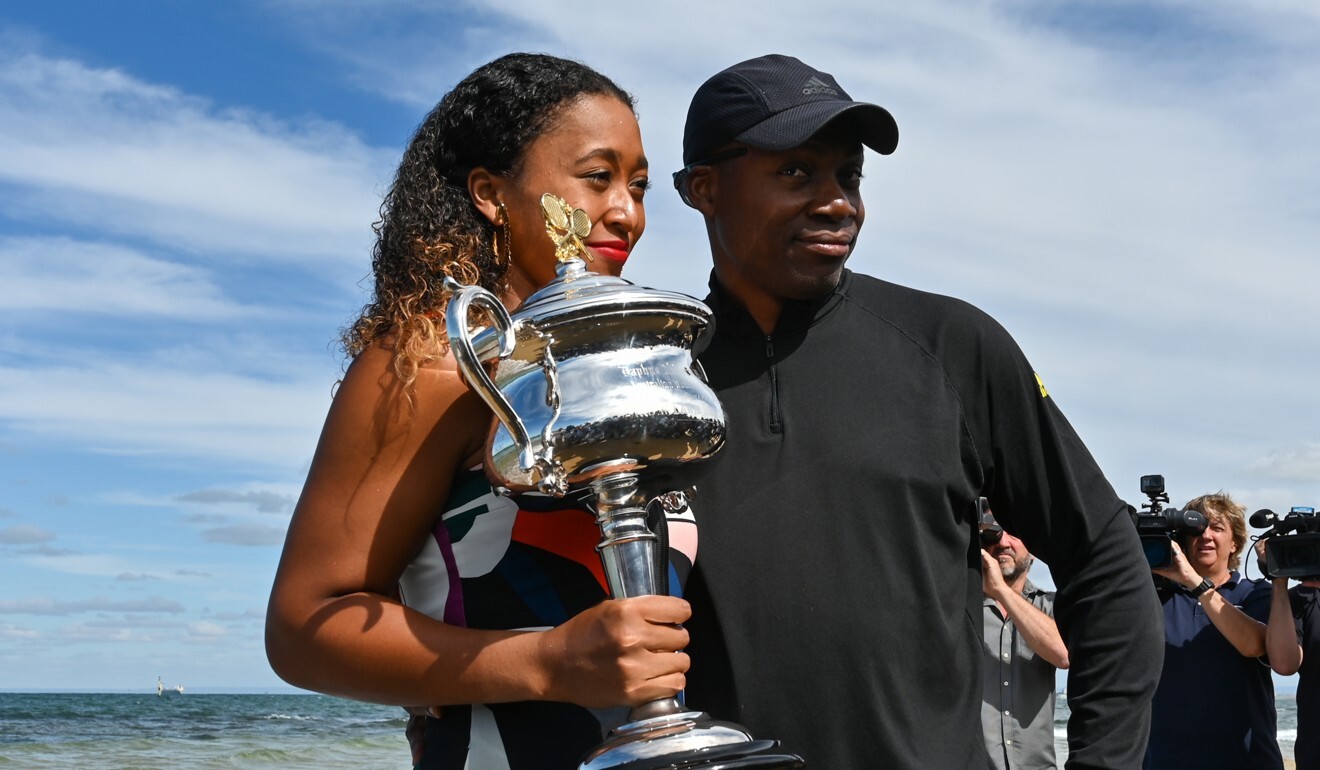
Osaka’s parents, Leonard Francois and Tamaki Osaka, have long been her biggest influences on and off the court. Her older sister, Mari, was likewise an Osaka-born pro tennis player before retiring aged 24 in March having fallen out of love with the sport.
Despite being born in Japan, the family imprinted both Haitian and Japanese cultures during the daughters’ upbringing. Naomi said she can understand the language proficiently but “is not very confident in speaking” – the same could be said about her Haitian Creole abilities. She is most comfortable speaking in English, though comes off as very shy in front of cameras.
Francois’ vision to create a pair of world-class tennis players from scratch is well-documented. He cited the then-teenage Williams sisters’ doubles display at the 1999 French Open as his source of inspiration to “follow the blueprint” of Williams’ father. Tennis classes immediately followed after the family’s move to the US while the Osaka sisters were just toddlers.
Tamaki may play less of a role in Osaka’s physical prowess but has led the way for her proudly liberal mentality. Where Japanese society is now arguably more accepting of the idea of a foreigner marrying one of their own, the pressure came from all directions back in the day.
The defiant mother recalled her own parents not accepting her relationship – nor their subsequent tennis-oriented choices – and had no contact with them for more than a decade. It was not until Osaka started gaining domestic notoriety that tensions eased.
In 2019, the family confirmed the daughters would represent Japan despite their predominantly US-based upbringing. It was reportedly decided very early on in their careers but was reiterated ahead of Tokyo 2020 – a meteoric coup for Japanese women’s tennis fans who had clung onto Kimiko Date and Ai Sugiyama for the last two decades. Osaka headlines Japanese tennis with men’s former world No 4 Kei Nishikori.
Serena Williams 2.0
Osaka has been dubbed “the next Serena Williams” for the better part of her pro career. The 23-time grand slam champion Williams has long sung her likely successor’s praises – but statistics and silverware prove there is still a way to go.
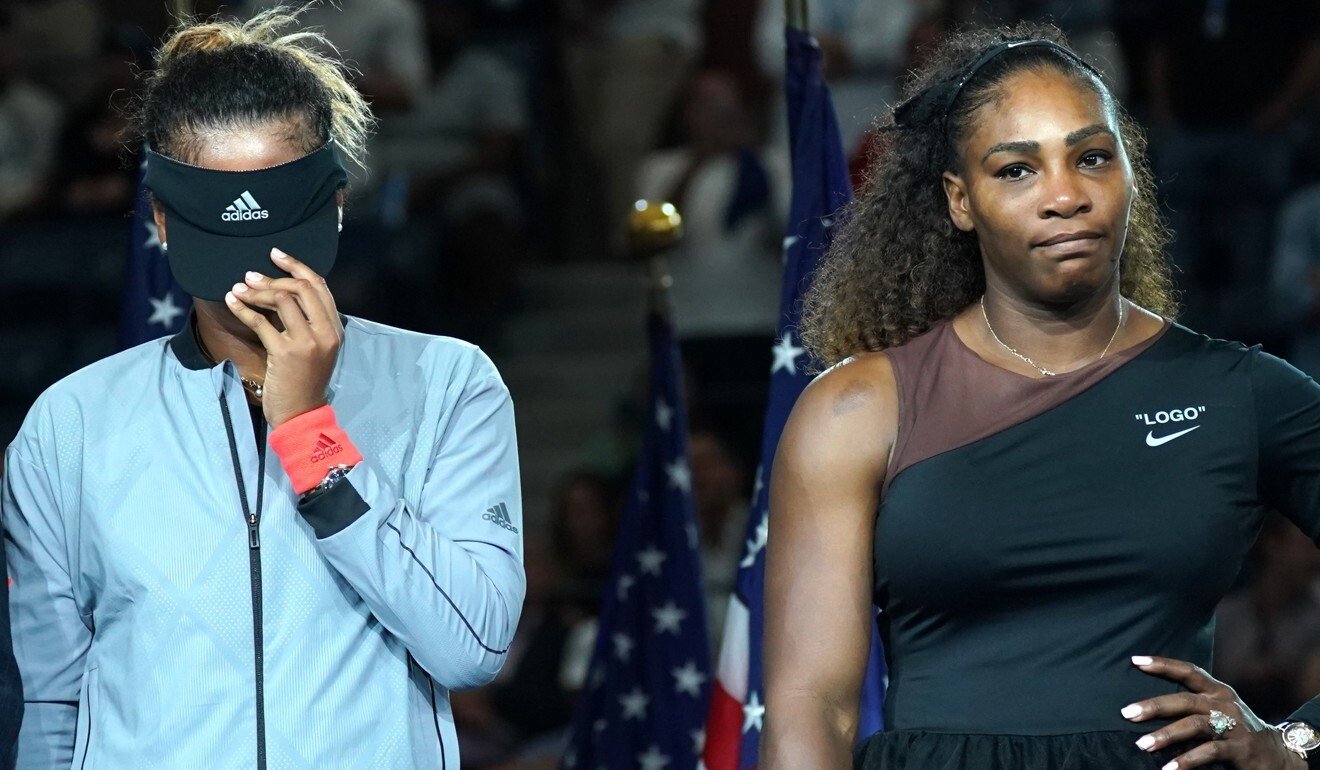
The pair had one of their more awkward encounters at the 2018 US Open. Osaka, 20 at the time, only had her idol to beat to secure her first-ever slam. She won the first set comfortably – much to the surprise of those in the USTA Billie Jean King National Tennis Center – before the umpire called three code violations on Williams for in-match coaching, racket abuse and accusing the umpire of being a “thief”.
Williams lost the point, game and eventual match, leaving Osaka in a bittersweet trophy-lifting and speech ceremony against the crowd’s boos. A tearful Osaka apologised to those in attendance, and though Williams is still adamant that the umpire’s decision was “sexist”, she has since apologised to Osaka for dampening her monumental achievement.
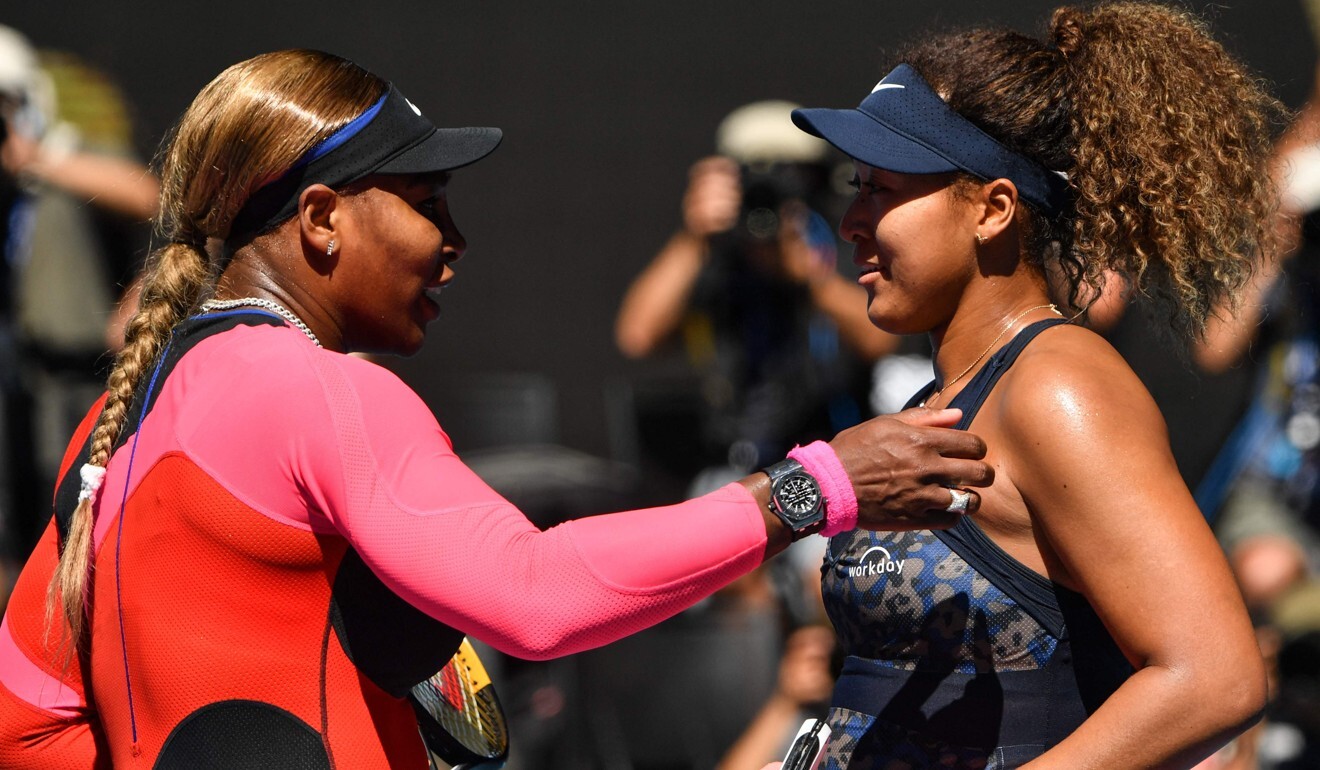
Almost three years on in Melbourne, Australia, they met for the fourth (and possibly last) time. If she had not already done it before, Osaka convinced tennis fans that she was the one to take the 39-year-old Williams’ throne. She won in straight sets, neutralising any legendary Williams power with her own.
The stars have only ever had good things to say about each other, and there was an air of respectful inevitability when they embraced at the net. Williams shed a tear when asked if it was goodbye at the post-match press conference – “I don’t know. If I ever say farewell, I wouldn’t tell anyone”.
Tennis romantics would say there was no better time or person to hand her greatness off to.
Advocacy
“I’m a daughter, a sister, a friend and a girlfriend. I’m Asian, I’m black, and I’m female. I’m as normal a 22-year-old as anyone. Except I happen to be good at tennis,” Osaka wrote in an Esquire column last year. The eloquent yet clear message amid the Covid-19 pandemic gave the briefest of personal accounts into her complex cultural past.
She spent her early years with a mixed-race family in secluded Japan. She then migrated to the US, where she would have to re-explain her Asian and Caribbean heritage. She then joined a sport that – as her idols Williams and King would put it – is still overwhelmingly male-dominated. It is no wonder she has, in recent years, been inclined to stand up for her various demographics.
Last August, Osaka followed fellow athletes from the WNBA and NBA in withdrawing ahead of competition – in her case, the Cincinnati Masters’ semis – as a means to shine light on the police shooting of black man Jacob Blake. The WTA and ATP postponed all matches for a day in support of her decision.
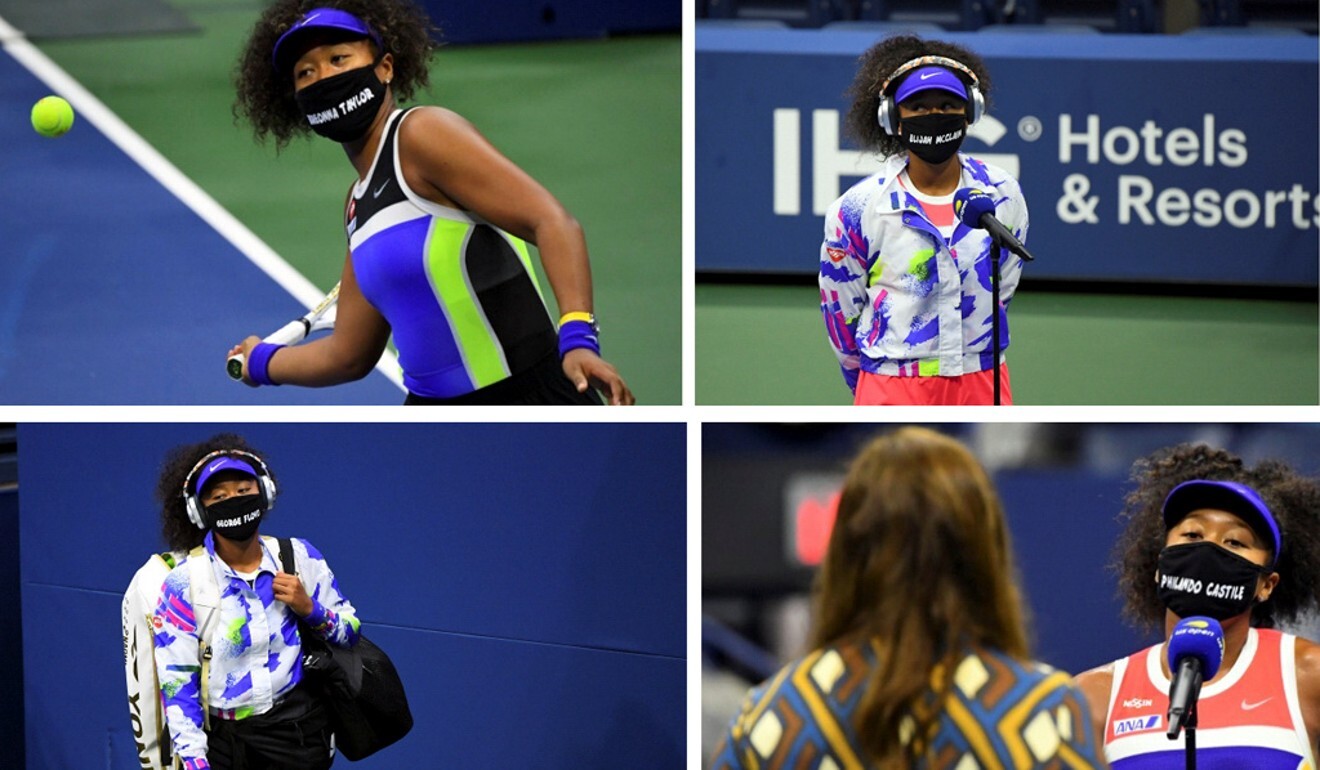
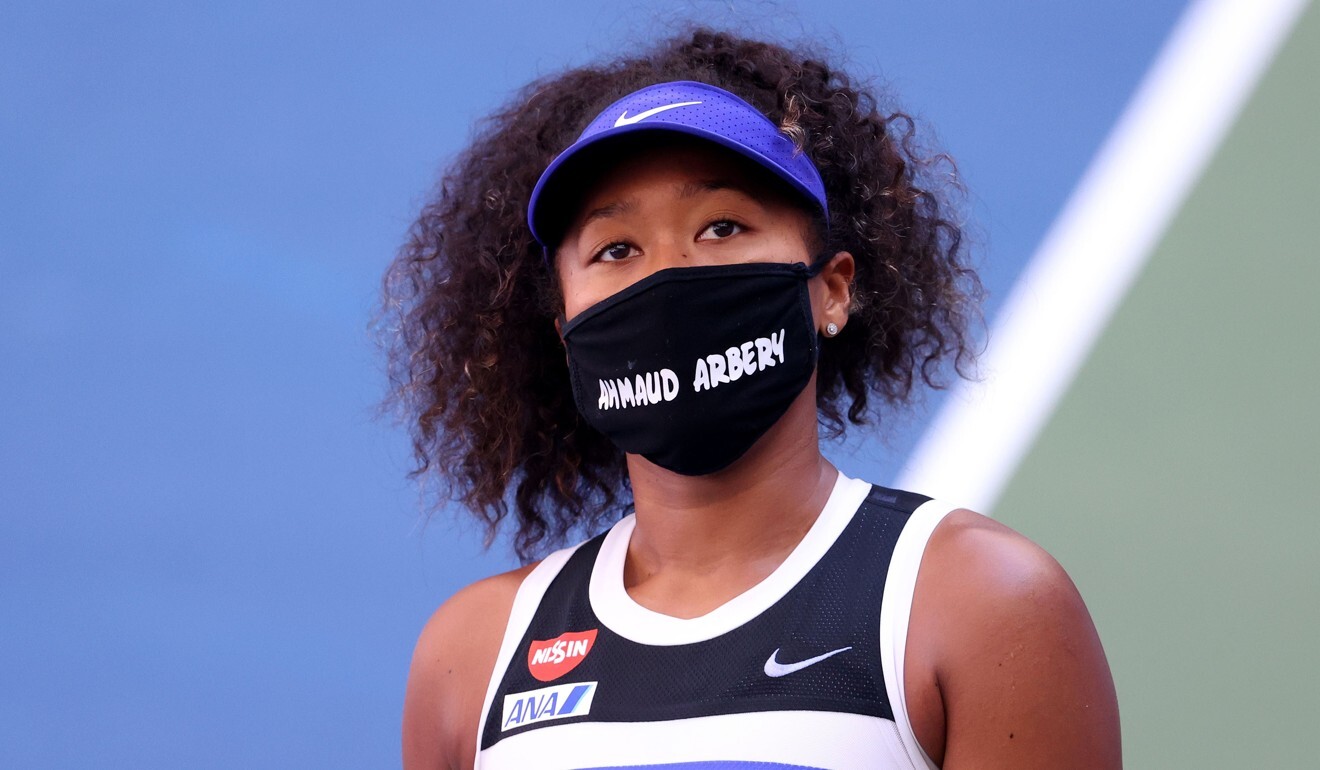
Then at the proceeding US Open, Osaka wore face masks with the names of different African-American victims killed by US police or civilians to each of her seven matches: Breonna Taylor, Elijah McClain, Ahmaud Arbery, Trayvon Martin, George Floyd, Philando Castile and Tamir Rice.
After being crowned champion, she said the masks made her “stronger” walking out and she wanted to “show more names and I want people to talk about it more. I wanted more people to say more names.”
She later took to social media to write: “I would like to thank my ancestors because every time I remember their blood runs through my veins, I am reminded that I cannot lose”, before batting aside any “stick to sports” arguments thrown her way.
More recently, Osaka openly called out increased instances of “hate, racism and blame” towards the Asian community as the world continues to deal with the fallout from Covid-19. She called for “disgusting” acts to stop.
She was also one of the first to take a stand against former Tokyo 2020 organising committee president Yoshiro Mori, who resigned in February over sexist comments. Osaka, one of the faces of the Games, called Mori’s comments “ignorant” and “uninformed”. Her willingness to speak out against a high-level industry official in a predominantly patriarchal society was invaluable for not just the equality of the Games, but the country itself.
Osaka was named as one of Time’s 100 most influential people in the world in 2020.
The amount of hate, racism, and blame for COVID towards the Asian community is disgusting. The fact that this topic is not very widely covered makes me concerned. I only found videos and information because I was scrolling through my IG feed and by some algorithm it appeared.
— NaomiOsaka大坂なおみ (@naomiosaka) February 7, 2021
Net worth
Following her breakout in 2018, Osaka shot to the top of Forbes’ highest-paid female athletes of all time list, reportedly earning US$37.4 million (HK$290 million) and slightly less in other endorsements the following year. She out-earned the likes of Williams and Maria Sharapova, ranking 29th overall.
She boasts lucrative deals with Nike, Yonex, Nissan, All Nippon Airways, Tag Heuer, Louis Vuitton and Shiseido among others, with Nike even allowing her to don three sponsors on her shirt – an unprecedented move from the sports giant.
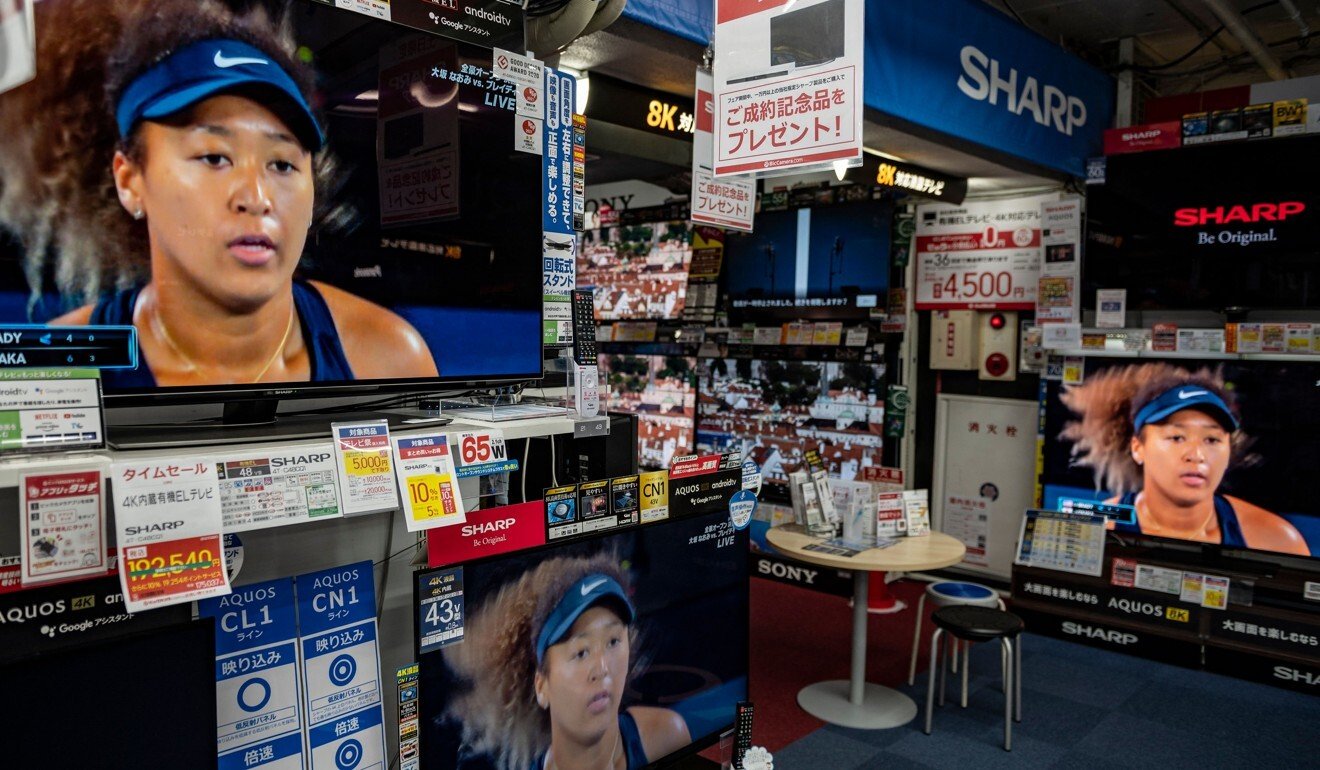
Her competing under the Japanese flag is also a major source of long-term commercial income as she remains the undisputed tennis draw in the country. Osaka’s face has been plastered across prefectures ahead of the Games, following in the footsteps of men’s icon Nishikori, who likewise rakes in tens of millions of dollars in sponsorship.
This year, Osaka also announced she was co-owner of US National Women’s Soccer League team North Carolina Courage. She said the move was “far beyond just being a team owner”, but “an investment in amazing women who are role models and dealers in their fields and inspirations to all young female athletes.” She wore a Courage baseball cap at her post-US Open final press conference, the brand impact of which is unknown but likely enormous.