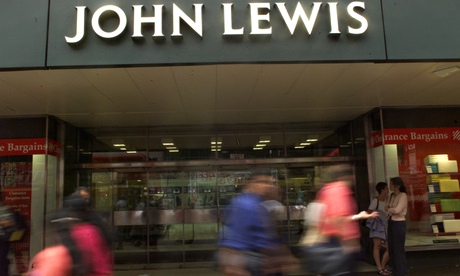
More than three-quarters of consumers say they would trust retailer John Lewis – whose Christmas ad was unveiled on Thursday – to take care of their banking.
That was one of the eye-catching findings in a survey announced on the same day we learned that the UK’s major banks are to be subjected to an 18-month investigation into how they treat personal and small business customers.
The Competition and Markets Authority has concluded that customers are not getting a good enough deal from the major high street players.
Its move was welcomed by consumer bodies and new entrants trying to break the stranglehold of the “big four” – Barclays, HSBC, bailed-out Lloyds Banking Group and Royal Bank of Scotland – which have a 77% share of personal current accounts.
But concern has been expressed that this shake-up could mean the end of free current accounts. And with switching apparently easier than ever, and no shortage of challenger banks battling for our custom – from the financial arms of Tesco and Marks & Spencer to Metro – some might take the view that maybe things aren’t quite as bad as all that.
The finding about John Lewis was contained in new research from price comparison site uSwitch.com, which claimed that the wave of new entrants to the banking sector has created even more appetite for an alternative to the big four, with four in 10 (40%) more likely to bank with a new entrant than a year ago.
The findings suggest that if other high street retailers moved into banking, they could enjoy quite a warm welcome from the public.
When asked which companies they would trust if they moved into personal banking, 77% said John Lewis, 45% Waitrose, 30% Debenhams, 27% House of Fraser and Amazon, 25% Boots, 18% Morrisons, 12% Aldi, 11% WH Smith and Argos, 10% BHS, 7% Lidl, 2.3% Poundland, and 1.8% Sports Direct.
Sylvia Waycot, editor at financial data website Moneyfacts.co.uk, says the investigation “must be seen as good news for consumers”.
She adds: “Over recent months we have seen first hand how, in a bid to be innovative, many current account providers have introduced widely varying overdraft charging structures that, at first glance, seem to be great deals but upon closer investigation prove to be far from the bargains they first appeared.”
She says we should celebrate the many new providers that have joined the current account market, “but more are needed to maintain healthy competition and allow us to feel like valued customers and not just sales prospects”.