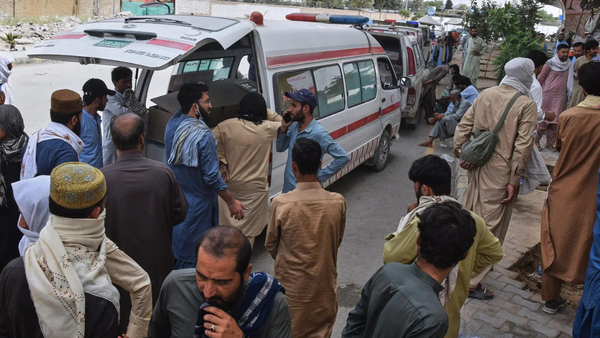
The Ebola death toll from the Bundibugyo strain outbreak in DR Congo and Uganda has risen above 130 and the World Health Organization (WHO) has sounded an international alarm. The WHO now considers testing an experimental Ebola vaccine to mitigate the rising death toll.
The rapidly escalating Ebola outbreak in DRC and Uganda has killed at least 131 people as of early 20 May 2026, with health officials warning that the true toll may be higher as infections continue to spread across remote and conflict-affected regions.
Spread of Ebola Across Borders and Urban Centres
The outbreak, which began in eastern DRC's Ituri province in late April 2026, is being driven by the rare Bundibugyo strain of Ebola, a form of the virus for which there is currently no approved vaccine or widely available treatment.
According to the WHO, the situation has already resulted in more than 500 suspected cases and over 130 suspected deaths as of mid-May.
Most of the suspected cases are between 20 and 39 years old, with females accounting for over 60%, suggesting significant risks associated with household and caregiver transmission.
Cases have now been confirmed not only in rural health zones such as Mongbwalu and Rwampara, but also in urban centres including Goma and even across the border in Uganda.
Ugandan health authorities have confirmed at least two cases, including one death, linked to travel from the DRC, raising fears of wider regional transmission.
The WHO has formally declared the outbreak a Public Health Emergency of International Concern (PHEIC), citing rapid spread, high fatality risk, and the challenge of tracking infections in densely populated and unstable areas.
Superspreader Events Enable Ebola Transmission
Investigators believe the outbreak may have been amplified by a so-called 'superspreader' event linked to a funeral in Bunia, where mourners were exposed to the virus after the death of a healthcare worker.
Ebola is known to spread through direct contact with infected bodily fluids, and traditional burial practices in the region have historically played a role in past outbreaks.
Health officials also say early detection was delayed because initial cases were misdiagnosed as other haemorrhagic illnesses. This allowed the virus to circulate undetected in communities with limited healthcare access and ongoing insecurity caused by armed conflict.
Experts warn that the combination of population displacement, weak surveillance systems, and cross-border movement is creating ideal conditions for further spread.
International Response and Urgent Containment Efforts
The WHO, alongside the Africa Centres for Disease Control and Prevention (Africa CDC), has deployed emergency teams and medical supplies to affected areas. Treatment centres are being expanded, while contact tracing and community surveillance efforts have intensified across both countries.
Uganda has introduced screening at key border crossings and suspended certain public gatherings in high-risk districts. Rwanda and South Sudan have also increased monitoring of travellers from affected regions.
An American medical worker infected in the DRC has been evacuated to Germany for specialist care, highlighting the international dimension of the outbreak response.
Experimental Ebola Vaccine
Global health officials are now urgently assessing experimental treatments, including vaccine candidates originally developed for other Ebola strains, though deployment is expected to take time.
There are approved vaccines for the Zaire strain of the Ebola virus, which is the strain that has historically caused the most severe and widespread outbreaks. However, there are no approved vaccines or specific treatments for other Ebola strains, such as the Bundibugyo or Sudan strains.
The current Ebola outbreak in the DRC and Uganda concerns the Bundibugyo strain that has a mortality rate between 30% and 50%.
Following the declaration of a Public Health Emergency of International Concern (PHEIC) on May 17, 2026, the World Health Organization (WHO) convened an emergency committee of external experts to prioritize candidate vaccines for clinical trials.
As of now, experts warn that the situation remains highly fluid. The WHO has cautioned that reported figures likely underestimate the true scale of infection, with ongoing transmission still not fully mapped in remote areas.
With the death toll already surpassing 130, authorities stress that swift containment is critical to prevent the outbreak from becoming the region's most severe Ebola crisis in years.