White House staff updated the so-called “Presidential Walk of Fame” Wednesday by adding lengthy descriptions of each former president, in rhetoric that aligns with President Donald Trump’s – such as calling former President Joe Biden “the worst President in American History.”
As part of the president’s ongoing effort to customize the White House to his liking, Trump set his well-known opinions of each former president in stone by adding plaques underneath the portraits that now hang along the colonnade.
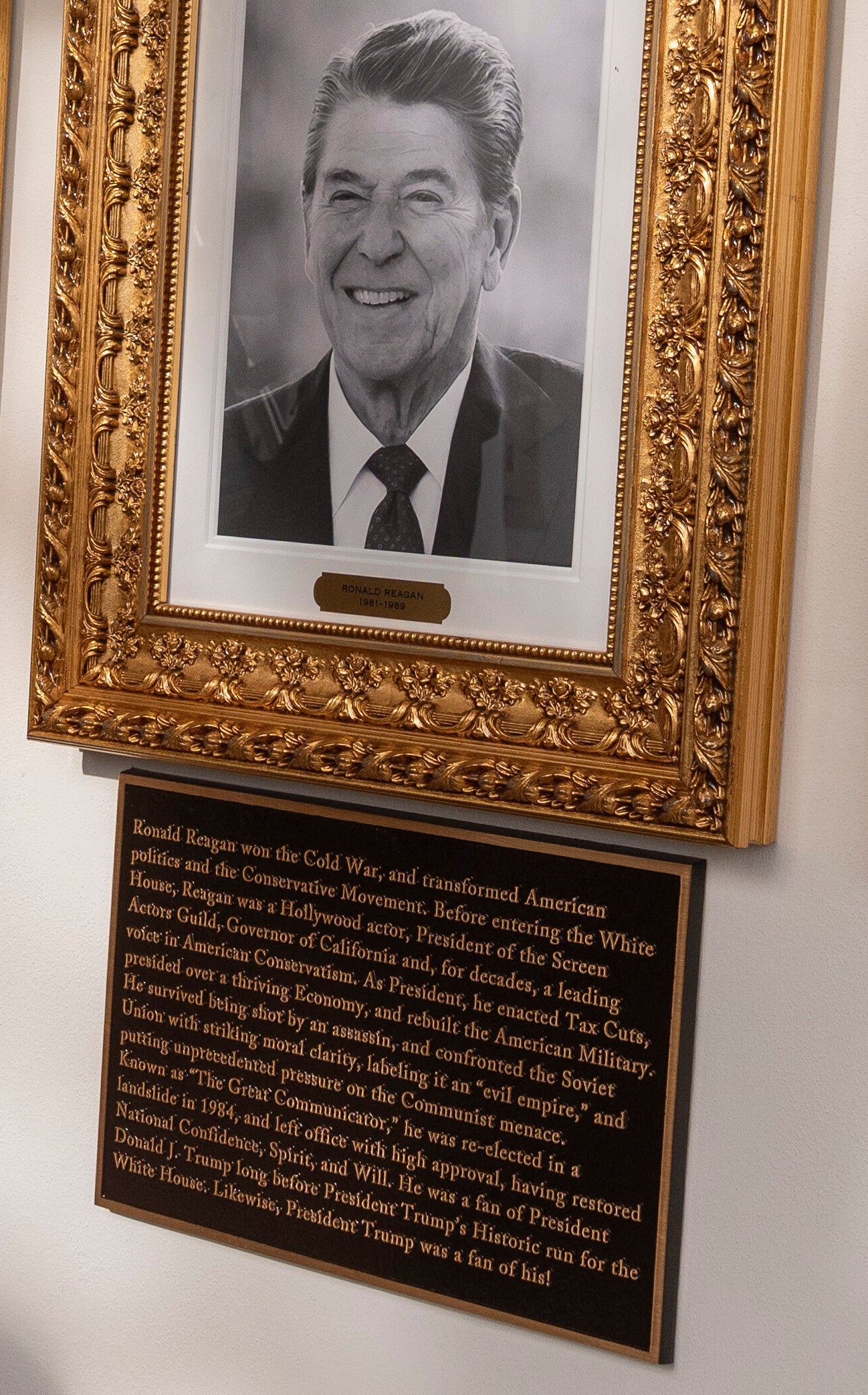
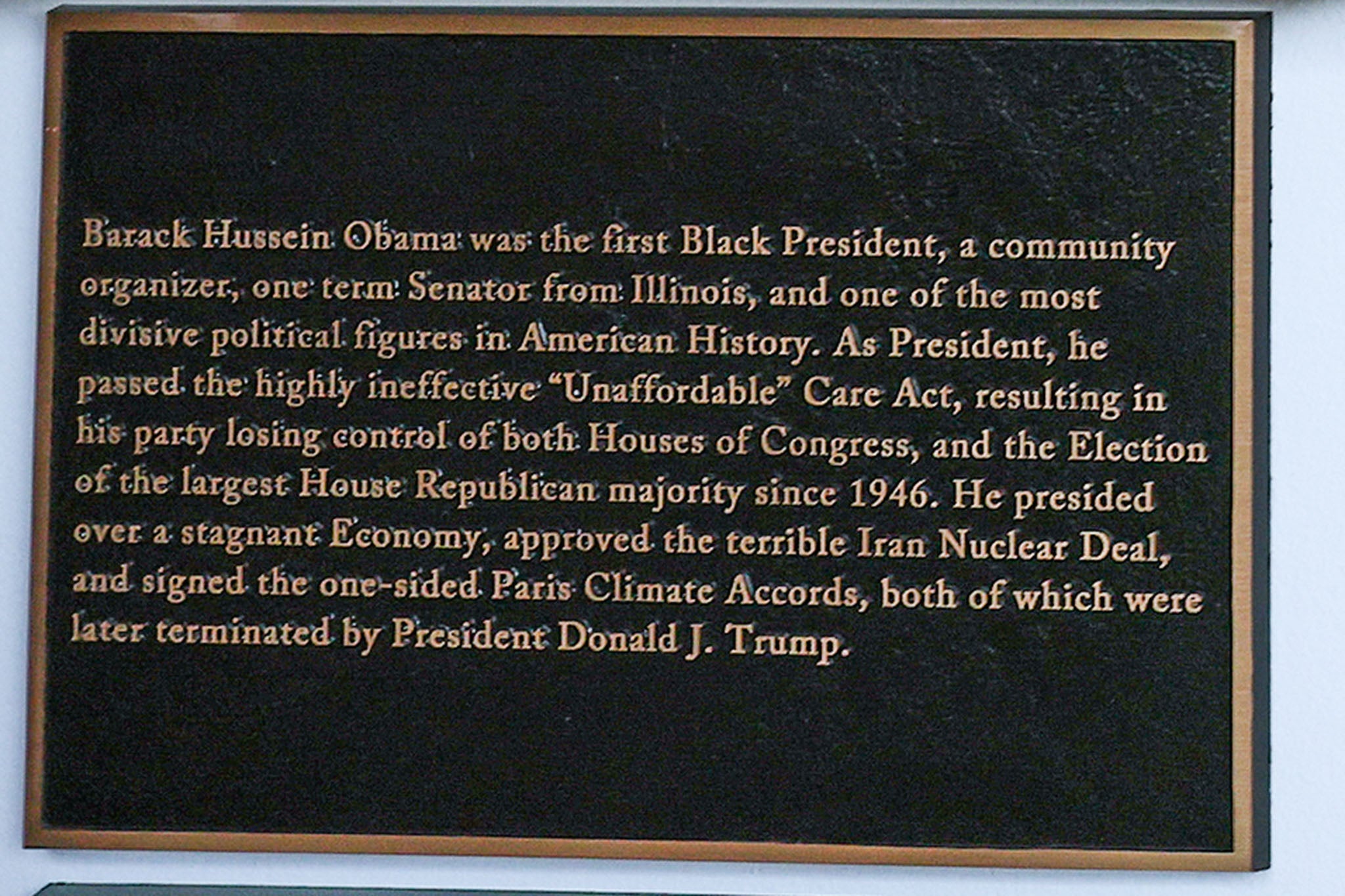
But rather than neutrally describing each president, Trump chose to invoke more color – claiming former President Barack Obama is “one of the most divisive political figures” and asserting former President Ronald Reagan “was a fan.”
White House Press Secretary Karoline Leavitt said, “The plaques are eloquently written descriptions of each President and the legacy they left behind. As a student of history, many were written directly by the President himself.”
“Sleepy Joe was, by far, the worst President in American History,” the plaque underneath Biden’s portrait, which is an autopen as opposed to his official portrait, reads. “Taking office as a result of the most corrupt Election ever seen in the United States.”

As part of Obama’s description, the White House wrote: “As President, he passed the highly ineffective ‘Unaffordable’ Care Act, resulting in his party losing control of both Houses of Congress, and the Election of the largest House Republican majority since 1946.”
For former President Bill Clinton, the White House attributed his legislative successes to “Republicans in Congress,” and boasted that Trump terminated the North American Free Trade Agreement, the trade deal struck under Clinton. The White House also included a line about how Hillary Clinton lost the 2016 presidential election in Bill Clinton’s description.
However, some former presidents, more aligned with Trump on policies, such as Reagan, receive more of a doting description.
For Reagan, the White House wrote: “Known as ‘The Great Communicator,’ he was re-elected in a landslide in 1984, and left office with high approval... He was a fan of President Donald J. Trump long before President Trump’s Historic run for the White House. Likewise, President Trump was a fan of his!”
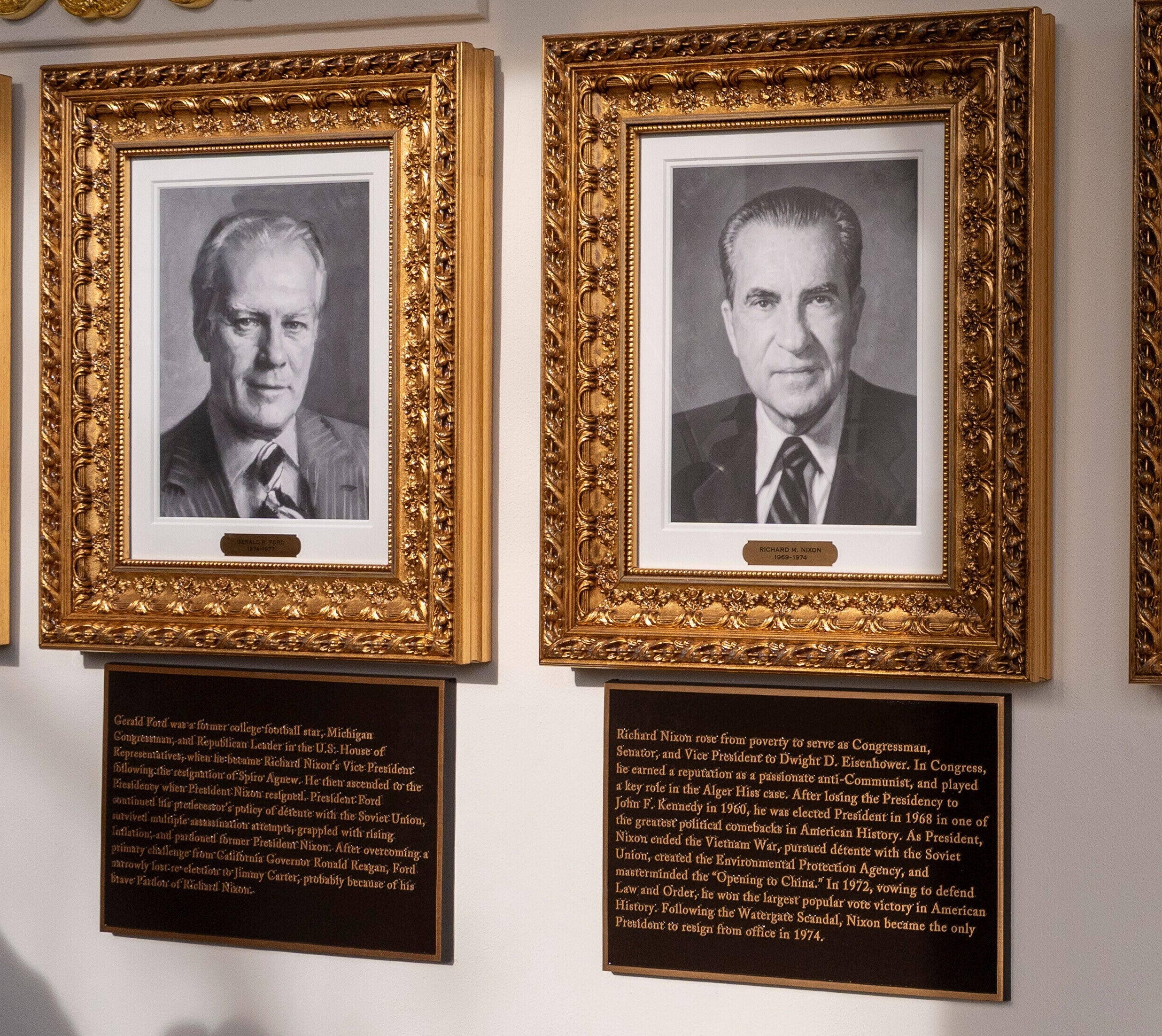
Under former President Richard Nixon, the description claims Nixon had “one of the greatest political comebacks in American History” and “won the largest popular vote victory in American History.”
The White House seemingly gave props to former President Gerald Ford in his description for issuing a “brave Pardon to Richard Nixon.”
The new plaques are part of the White House’s “Wall of Fame” – a once-blank wall outside the West Wing that now hangs portraits of every president in order of office. The only one exempt is Biden, whose portrait was replaced with a photo of the autopen – a reference to the claims by Republicans that Biden staffers utilized the device in the former president’s place.
Since returning to the White House in January, the Trump administration has used its prominence to “troll” the opponents of Trump through social media, speeches and other means.
The new “Wall of Fame” plaques appear to be the latest format for the administration to lash out at specific former presidents or policies that do not align with the current president.

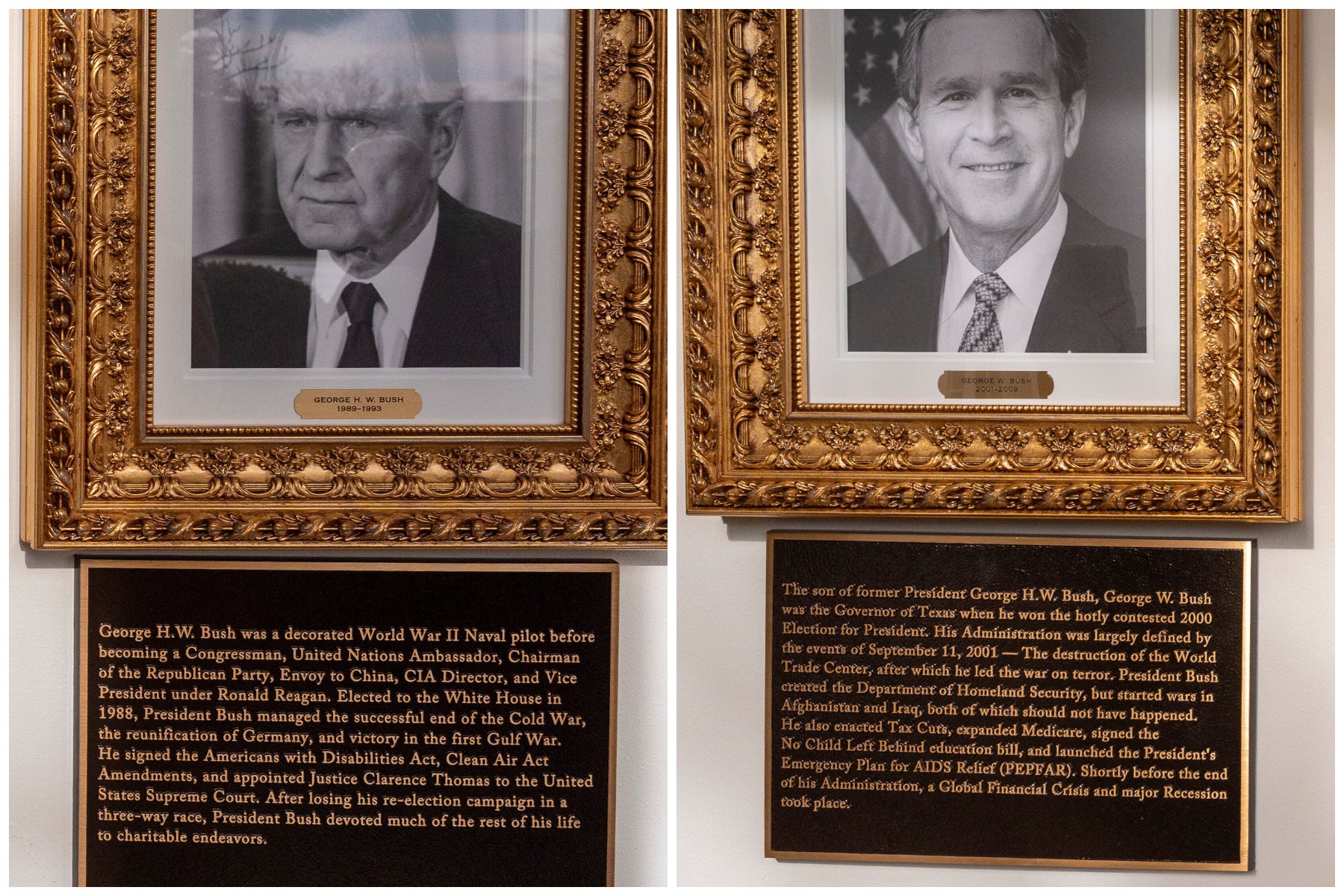
Under former President George W. Bush, the White House included lines such as: “President Bush created the Department of Homeland Security, but started wars in Afghanistan and Iraq, both of which should not have happened;” and “Shortly before the end of his Administration, a Global Financial Crisis and major Recession took place.”
But to describe former President George H. W. Bush, the White House only included his accomplishments.
Former President John F. Kennedy’s plaque acknowledges the “failed Bay of Pigs Invasion,” and former President Lyndon B. Johnson’s says “discontent over the Vietnam War led to National unrest and greatly damaged his Presidency.”
To describe Former President Jimmy Carter, the White House listed mostly negative events such as the Iran hostage crisis, inflation, the spread of Communism, the Soviet Union’s invasion of Afghanistan and more. But the description ends by acknowledging Carter did “wonderful things for Humanity” after leaving office.
California Governor Gavin Newsom, no stranger to mocking Trump online, slammed the stunt.
“Inflation is up. Unemployment is up. Grocery prices are up. Electricity costs are up. And Donald Trump is spending his time doing this bull***t,” he wrote on X.
Retired US Army General Barry R McCaffrey also took to X to share his disbelief.
“Appalling. Embarrassing. Juvenile. Something very wrong here,” he wrote on X.
US military kills four in Venezuela boat strike after Trump touts achievements: Live
Russia’s sabotage campaign seeks to overwhelm Europe
Melania Trump drops new trailer for her $40M Amazon documentary
China files tit-for-tat lawsuit against Missouri for Covid-19 allegations
World Cup nations Senegal and Côte d’Ivoire added to Trump travel ban
Trump claims checks are ‘on the way’ to military members for a ‘warrior dividend’