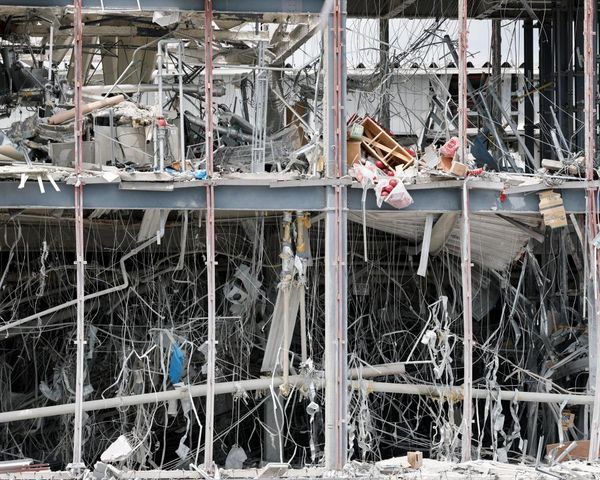
The fire at a major oil refinery in the Victorian city of Geelong has now reportedly been extinguished. But with thick smoke from the blaze lingering in the air on Thursday, many residents in Geelong and surrounding areas will understandably be worried.
What is released into the air when a refinery burns? And is the smoke bad for your health?
For most people, serious long-term health effects are unlikely. However, there can be short-term risks, and some groups are more vulnerable than others. So here’s what to look out for and how to stay safe.
What is in the air when an oil refinery burns?
Smoke from an oil refinery fire is made up of many different pollutants. The exact mix depends on what material is burning, how hot the fire is, and how long it lasts.
Typically, these fires release fine particles, known as PM2.5 and PM10, which are small enough to travel deep into the lungs.
They can also release toxic gases such as sulfur dioxide, nitrogen oxides and carbon monoxide, along with volatile organic compounds including benzene.
For people living further from the fire, fine particles are typically the main concern because they can travel long distances and linger in the air.
What are the health risks?
For most healthy adults living in the area, short-term exposure to these pollutants will cause irritation rather than lasting harm.
You may notice sore or watery eyes, a scratchy throat, coughing, headaches or a feeling of chest tightness. These symptoms are unpleasant but usually settle once air quality improves and exposure is reduced.
This kind of exposure is very different from the long-term occupational exposure experienced by refinery workers or emergency responders, for whom risks of cancer and lung diseases are much higher and better studied.
Who is most at risk?
When air quality worsens, people with existing lung conditions such as asthma or chronic obstructive pulmonary disease are more likely to experience symptom flare-ups.
Smoke particles can irritate already inflamed airways, leading to increased breathlessness and coughing. For those with existing respiratory conditions, this may mean needing to use reliever medications more frequently than normal.
Those with heart disease are also at greater risk as air pollution can place extra strain on the cardiovascular system, increasing the risk of chest pain, irregular heartbeat and heart failure.
Older people are also generally more sensitive to poor air quality because they are more likely to have chronic diseases and their heart and lungs might not work as well as they did when they were young.
Children have the greatest risk of developing health issues in the longer term, as their lungs are still developing. But the risks from an isolated exposure, such as the Geelong fire, are relatively low.
Some studies suggest repeated or prolonged exposure to air pollution during pregnancy may increase the likelihood of adverse outcomes for babies, such as low birth weight. But again, the risk for pregnant people from an isolated incident such as this is low.
These kind of events often make people worry about cancer risk. But based on what we know, being exposed in the short term, from a single fire, does not meaningfully increase your risk of developing cancer – though these kinds of events are difficult to study, so evidence remains limited.
Cancers associated with oil refinery emissions are linked to years or decades of exposure, usually among workers and those in heavily polluted environments.
So while monitoring the air pollution and for any health issues is still necessary, it’s important to keep the risk in perspective.
Continued follow-up of workers directly involved in firefighting or cleanup will be essential, as their exposure levels are likely to be much higher than those in the surrounding community.
How to protect yourself from smoke
There are practical steps people can take to reduce their exposure if smoke or poor air quality persists.
It sounds obvious, but the less time you spend outside in smoke, the lower your risk of health issues cause by smoke inhalation.
Staying indoors with windows and doors closed can significantly reduce your exposure to particles, especially if air conditioning is set to recirculate indoor air.
If you have asthma or other chronic lung diseases, it’s important to keep your reliever close at hand, follow your existing written action plan, and seek medical advice early if symptoms worsen. This can prevent more serious flare-ups.
Well-fitting P2 or N95 masks can reduce inhalation of fine particles when worn correctly. Loose-fitting surgical or cloth masks provide much less protection against smoke.
Residents in and around Geelong concerned about air quality can check real-time monitoring data for the area at the Victorian Environment Protection Authority website.
If your symptoms worsen or persist, you should speak to a health-care professional, and in emergency always call triple 0.

Brian Oliver receives funding from the ARC and the NHMRC. He is affiliated with both the University of Technology Sydney and the Woolcock Institute of Medical Research.
Peter J Irga receives funding from the Australian Research Council, the US Air Force Office of Scientific Research, the NSW Office of the Chief Scientist and Engineer. He is affiliated with the University of Technology Sydney. He is a member of the Clean Air Society of Australia and New Zealand (CASANZ), the Chartered Institution of Building Services Engineers (CIBSE), and the Australian Institute of Refrigeration, Air Conditioning and Heating (AIRAH).
This article was originally published on The Conversation. Read the original article.