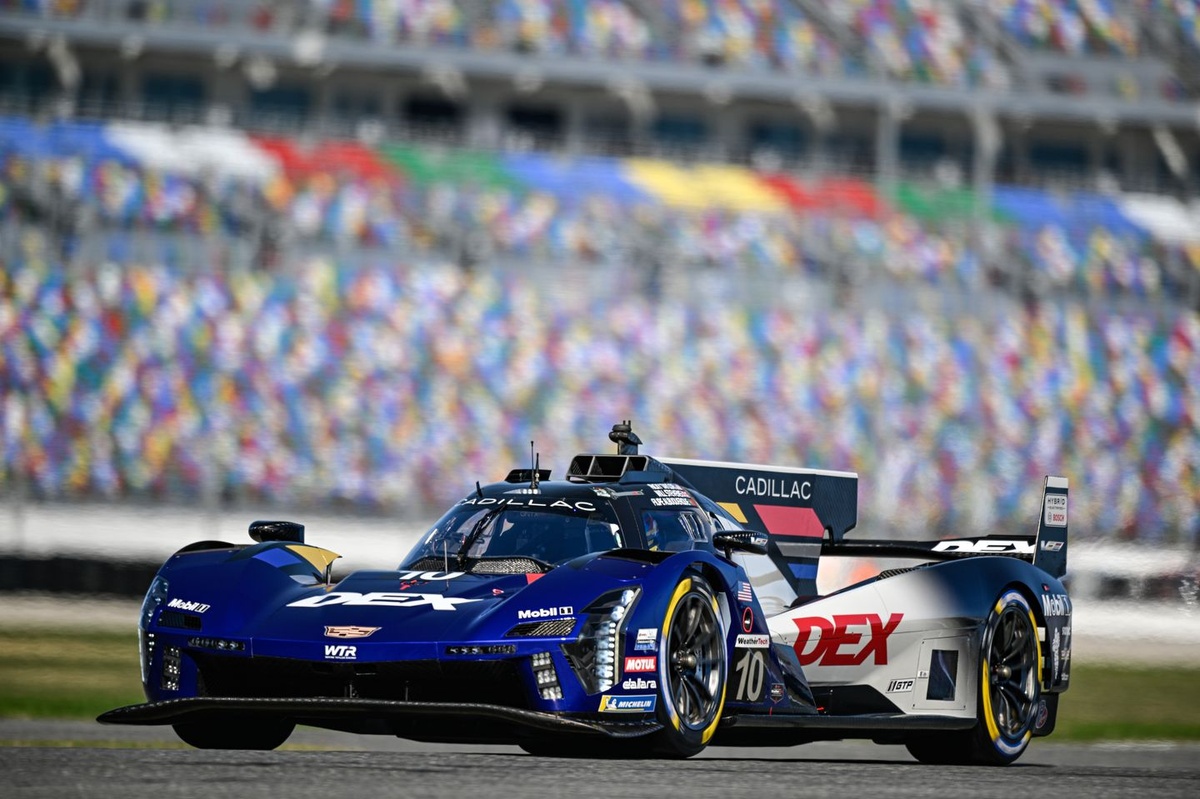
The Cadillac V-Series.R’s new rear wing for 2026 is an immediate eye-catcher. But the change it made wasn't about aesthetics, as the new rear wing marks a fundamental shift in Cadillac's aerodynamic philosophy.
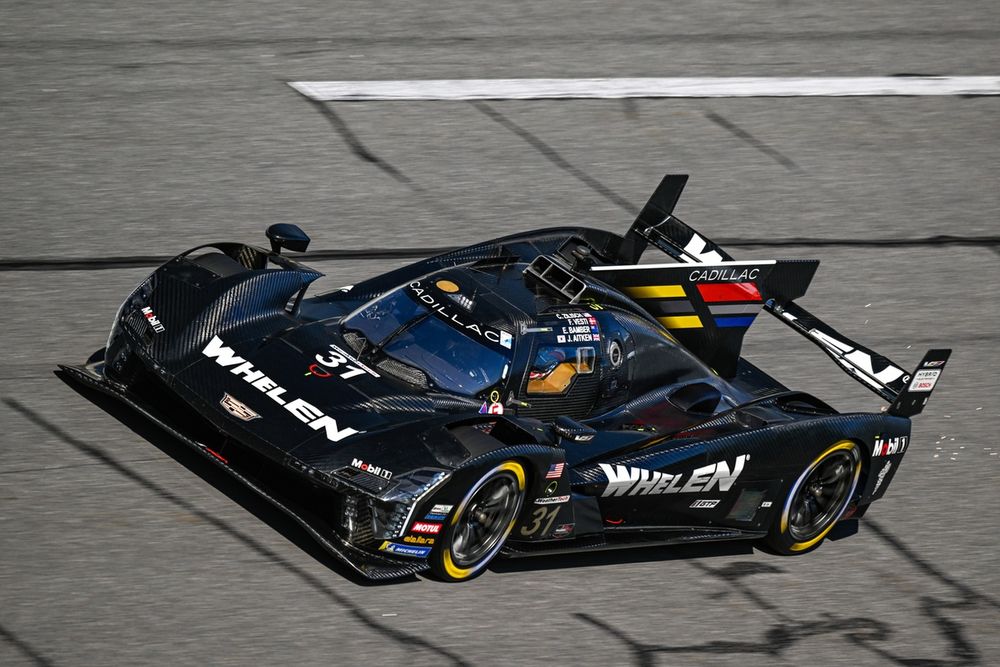
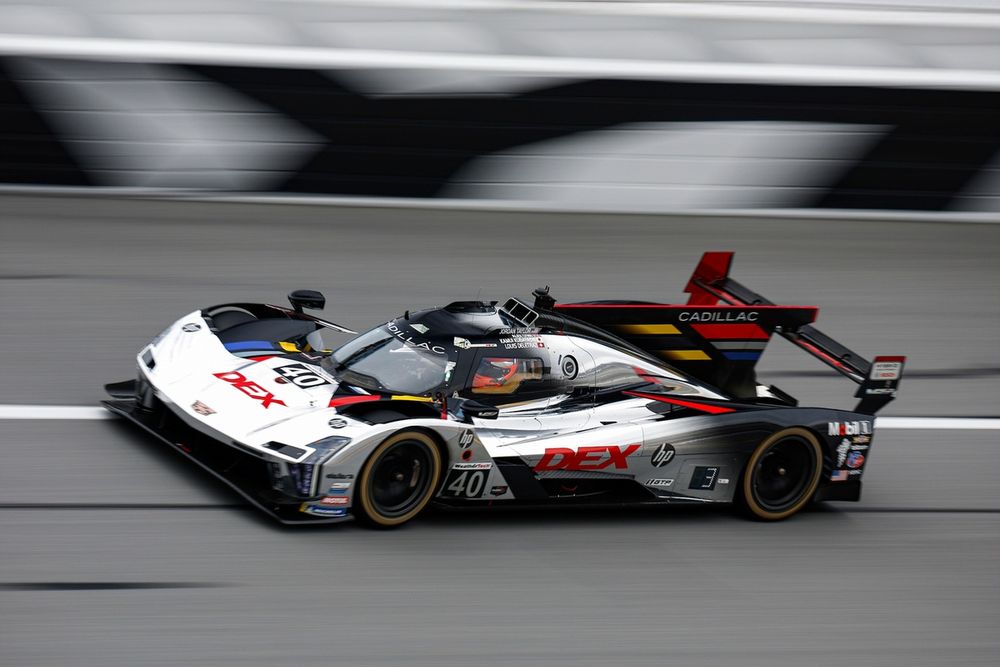
The ultra-low rear wing of Cadillac's LMDh prototype immediately caught everyone’s attention at the 2026 Rolex 24 at Daytona. And it wasn’t just the fans who were buzzing, the drivers noticed it too.
"It looks really cool and aggressive. Last year it was a standard wing, but now it has this sleek profile,” Jordan Taylor told Motorsport.com at Daytona. By then, the drivers had already grown accustomed to the look after countless testing kilometres during the November pre-test and the “Roar.”
The reason for the unique look goes far beyond visual drama, however, as it is a deeply-rooted engineering decision. Under LMDh regulations, manufacturers are only permitted one adjustable aerodynamic device on the car. Previously, Cadillac utilised the front splitter to tune the car. The aero balance across different tracks was primarily managed through splitter adjustments and the vehicle's rake. With the 2026 Evo package, Cadillac has flipped the script: the rear wing is now the sole adjustable element.
"Last year, we could only tune the front. This year, we adjust the rear," Taylor explained. The primary goal was stability and simplified handling. His brother, Ricky Taylor, added that the shift has become a "great tuning tool for the team" to fine-tune the car’s balance more effectively.
Taming the "Dirty Air"
The predecessor’s sensitivity to turbulent air was the main driver behind the upgrade. Dieter Gass, team principal of Cadillac's World Endurance Championship partner Jota, highlighted this struggle to Motorsport.com after the Bahrain finale: "The car was great in clean air, but as soon as we caught traffic, it became incredibly difficult for us. It made overtaking a nightmare, even if we had the pace on paper."
By dropping the wing element lower, the airflow is now better managed by the bodywork ahead, effectively "smoothing out" the air before it hits the wing. With the old high-mounted wing being fully exposed to the turbulent aerowash of cars ahead, the lower position guarantees a more consistent flow.
"It’s much easier in traffic and when following other cars. It’s simply a better race car now," Louis Deletraz confirmed to Motorsport.com.
Despite its sleek appearance, the car isn't lacking grip. All Hypercars/GTPs operate within a strictly defined aero window for both downforce and drag, and the V-Series.R remains firmly within those parameters. "It doesn’t feel like you’ve lost downforce. The car still feels very planted in the high-speed sections," Colton Herta noted.
In fact, Deletraz believes the new setup solves a long-standing Cadillac weakness: "We always seemed to lack a bit of top-end speed whilst being very fast in the corners. I think with this design we found a better compromise, keeping us fast in the turns but making us a threat on the straights."
Herta also pointed out a quirky side effect: the view from the cockpit — or lack thereof. Because the element sits so low, it has vanished from the drivers' traditional line of sight. "It’s a completely different perspective out the back. You don’t really see the wing at all in the mirrors, maybe just the very bottom of it. It’s unlike anything I’ve ever raced," the 2026 Cadillac F1 reserve driver said.
Bamber: Daytona showed mission accomplished
Endurance racing is about consistency, and the early signs are promising. "It widens the window for us. In endurance racing, you need a user-friendly car that can handle changing conditions. We have that now," Jordan Taylor summarised.
At Daytona, the upgrade faced its first real test. The #31 Action Express Cadillac fought for the win until the final stages, narrowly missing out to the #7 Penske Porsche. Earl Bamber, who was in the midst of the fight during his charge through the field, confirmed the aero update did exactly what it was supposed to.
"We definitely achieved our goal. The car felt much better in traffic, especially when carving through the GTs. It’s still not easy to follow because the field is so tight and any loss of downforce hurts, but it’s a successful update for us," he said after the race.