Victoria’s equal opportunity and human rights commissioner, Kristen Hilton, has questioned the state government on the evidence behind sweeping youth justice and law-and-order reforms, saying such measures provide short-term comfort to the community while doing little to reduce crime rates.
Hilton has been in her role with the commission for a year, a period that has seen the state government and the premier, Daniel Andrews, put under intense pressure over violent youth crime and the treatment of young offenders.
“I do think the Andrews government has shown tremendous leadership with the royal commission into family violence and by implementing the state’s first gender equality strategy,” says Hilton, who is a lawyer. “They have done a lot of good work with the LGBTI community and have been really progressive in areas that the commission is also interested in.
“But, in terms of a push for bail changes and harsher sentences for young offenders, my question to the government would be: what is the evidence base?
“That is really crucial. With law and order you have to ask; do these tougher conditions reduce crime? I haven’t see the evidence base for that and, if you look at evidence from countries with more of a rehabilitation focus, that is what has reduced offending.”
The comments are strong given the commission traditionally tries to separate its role as a human rights oversight from any political commentary.
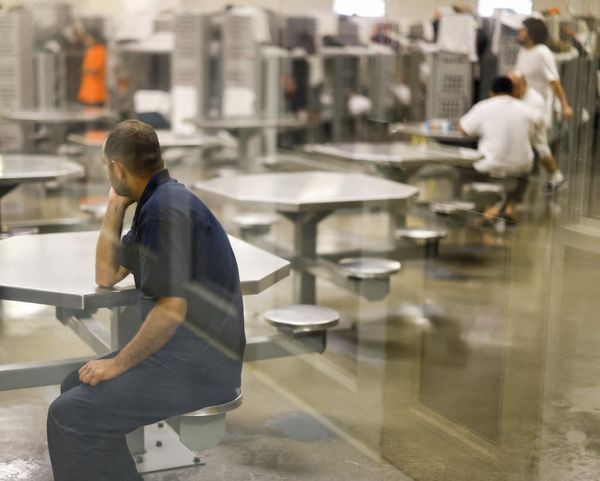
Moving young detainees to Barwon adult prison was the government’s response to riots in two of the state’s youth detention centres. Human rights lawyers took the government to the supreme court, which in May found detaining youth in Barwon was unlawful. Children were not receiving schooling and endured long periods in isolation, the court found.
As the 2018 election draws nearer, harsher penalties for young offenders are part of the government’s tough-on-crime approach, fuelled by media reports of a “crime epidemic” and out-of-control youth gangs. However, the latest crime figures show that, in the year to March, youth crime fell by almost 18%. The government argues that some of those young offenders are now more violent, meaning the impact of their crimes is more severe.

Under reforms announced in December, young offenders now face longer detention periods and more intensive supervision programs.
Victoria also tightened laws for serious and violent adult offenders last month. Legislation passed parliament that will see bail refused for a range of new offences, including aggravated home invasion and aggravated carjacking.
Following the Brighton siege in June, there have been moves to tighten parole laws around the country. Though Victoria’s parole laws are already among the most stringent, the opposition called on Andrews to resign over the siege, saying it showed he had lost control of law and order. However, concerns have been raised that denying violent offenders parole means they will be released into the community at the end of their sentence without any supervision.
But law and order has become a sensitive issue for Andrews that has refused to go away.
“Public leaders must not respond in a way that might provide short-term comfort to a community in fear,” Hilton says. “Unfortunately successive governments have done it. In some ways I understand the politics behind it. Particularly when crimes are committed of a very public nature. But we mustn’t rush policy based on a few isolated incidents.”
Part of Hilton’s role is to hold politicians and policymakers accountable for their legislation. The commission’s work includes unravelling the impact of legislation on people long term, including on marginalised and disadvantaged groups. At times, there is resistance to this work.
One of Hilton’s first tasks as commissioner last year was to begin implementing wide-ranging reforms to the state’s police force, after a review of police culture found entrenched sexism and a high tolerance for sexual harassment. It was the largest organisational review of its kind outside of the US military and its findings were damning. Hilton is now overseeing the recommended changes, including ensuring a redress scheme to provide financial and non-financial support to victims is implemented; and that a gender and diversity strategy with promotion pathways for women is introduced.
But the upper echelons of Victoria police as well as the union were largely supportive of the review, and agreed there was urgent need for reform. The then police commissioner, Ken Lay, who often spoke out against sexism and family violence, was central to ensuring cooperation from police while the review was conducted. Hilton says police and their union are now cooperating with introducing the recommended reforms.
“There is an increasing number of complaints people have made about sexual harassment and intimidation [within the police], which shows more people feel confident and empowered in coming forward,” Hilton says. “I’m confident in five years time Victoria police will be stronger and more inclusive.”
Reviewing the state’s fire workforce has been a different story. In 2016, the commission was asked to independently equity and diversity within the Metropolitan Fire Brigade and Country Fire Authority after a review of fire services uncovered cultural concerns.
From the time the review was announced, the United Firefighters Union has criticised it, questioning the need to include volunteer firefighters in surveys about bullying and harassment and accusing the commission of being biased against the union.
The resistance came despite less than 4% of the fire workforce being comprised of women and despite reports of bullying and sexual harassment.
With Hilton preparing to release her final report before September, the union last month took the extraordinary step of taking the commission to court to block it from “continuing to conduct the review or taking any steps whatsoever in the conduct of the review”. The union has ordered its members not to take part in the review.
The head of the union, Peter Marshall, told Fairfax Media last month that the union had already been tackling sexism for years and that “there are bulletins that go back to the late 80s and early 90s where we have told members, ‘Things have changed. Get the porn off the fridge or we’ll get it off for you.’ The union has done that.”
Hilton is unmoved.
“The government requested this review off the back of toxicity of culture in the organisations,” she says. “Both the Metropolitan Fire Brigade and Country Fire Authority have been really supportive of the review and they have worked with us along the way.
“We’ve met with their representatives on the project governance group to give them an update on the review and they provided us with data. We conducted 40 site visits across the state and spoken to hundreds of people.”
Despite this, the union had “persistently opposed” the review, she said.
“This is an opportunity that many other organisations in the emergency sector have grasped to acknowledge they may be out of step with what’s expected from a modern emergency services agency. All the research shows a more diverse organisation makes a stronger and more sustainable organisation.”
She urges the union to, “instead of hypothesising about what it [the review] does or doesn’t contain”, use the review as an opportunity to make fire services more inclusive and to improve workplace culture. The final report is due imminently and its findings and recommendations will be a key focus as Hilton enters her second year as commissioner.
“Our interest is ensuring workplaces are as good as they can be,” Hilton says.